


Every organisation depends on a growing number of digital assets to keep its business running. Servers, endpoints, cloud resources, applications, databases, virtual machines, and network devices all play an essential role in daily operations.
However, as IT environments expand, so does the challenge of knowing exactly what assets exist, where they are located, who owns them, and whether they are secure.
Many organisations focus on protecting their infrastructure with firewalls, antivirus solutions, and security tools. But if they don't have complete visibility into their assets, important systems may remain unmanaged, outdated, or vulnerable without anyone realising it.
You cannot secure what you cannot see.
This is why asset visibility has become the foundation of modern enterprise security.
In this blog, we'll explore why asset visibility is critical, how it strengthens cybersecurity, and how Threat Console, powered by iSense, helps organisations build a complete and accurate view of their enterprise assets.
What is asset visibility?
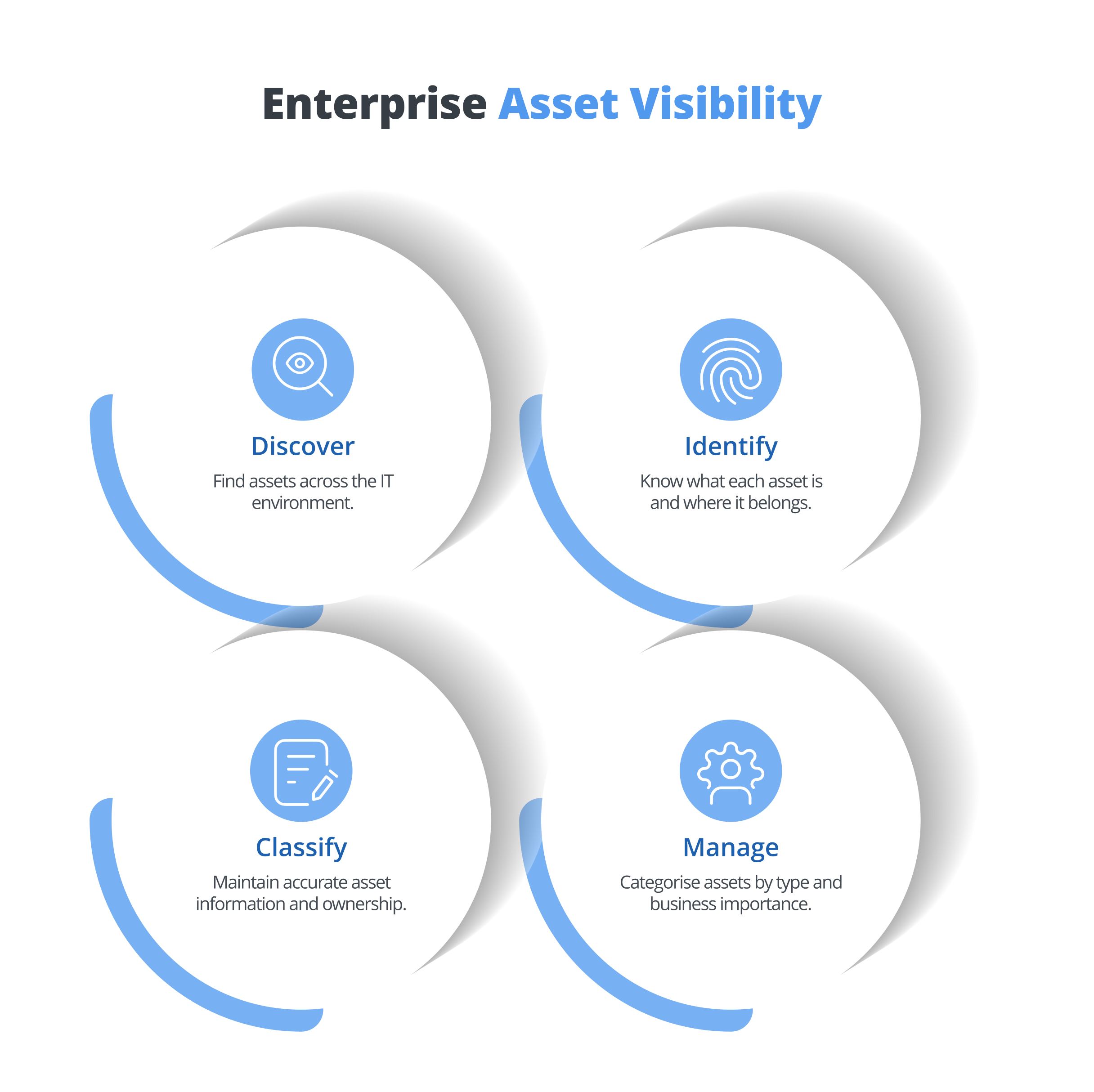
Asset visibility is the ability to identify, discover, classify, and maintain an accurate inventory of every IT asset across an organisation.
These assets may include:
- Servers
- Endpoints
- Cloud resources
- Applications
- Databases
- Network devices
- Virtual machines
- IoT devices
Asset visibility provides security and IT teams with a complete understanding of what exists in the environment so they can make informed decisions and reduce potential risks.
Why is asset visibility so important?
Modern IT environments are constantly changing.
New devices are added, cloud workloads are created, applications are updated, and employees connect from different locations.
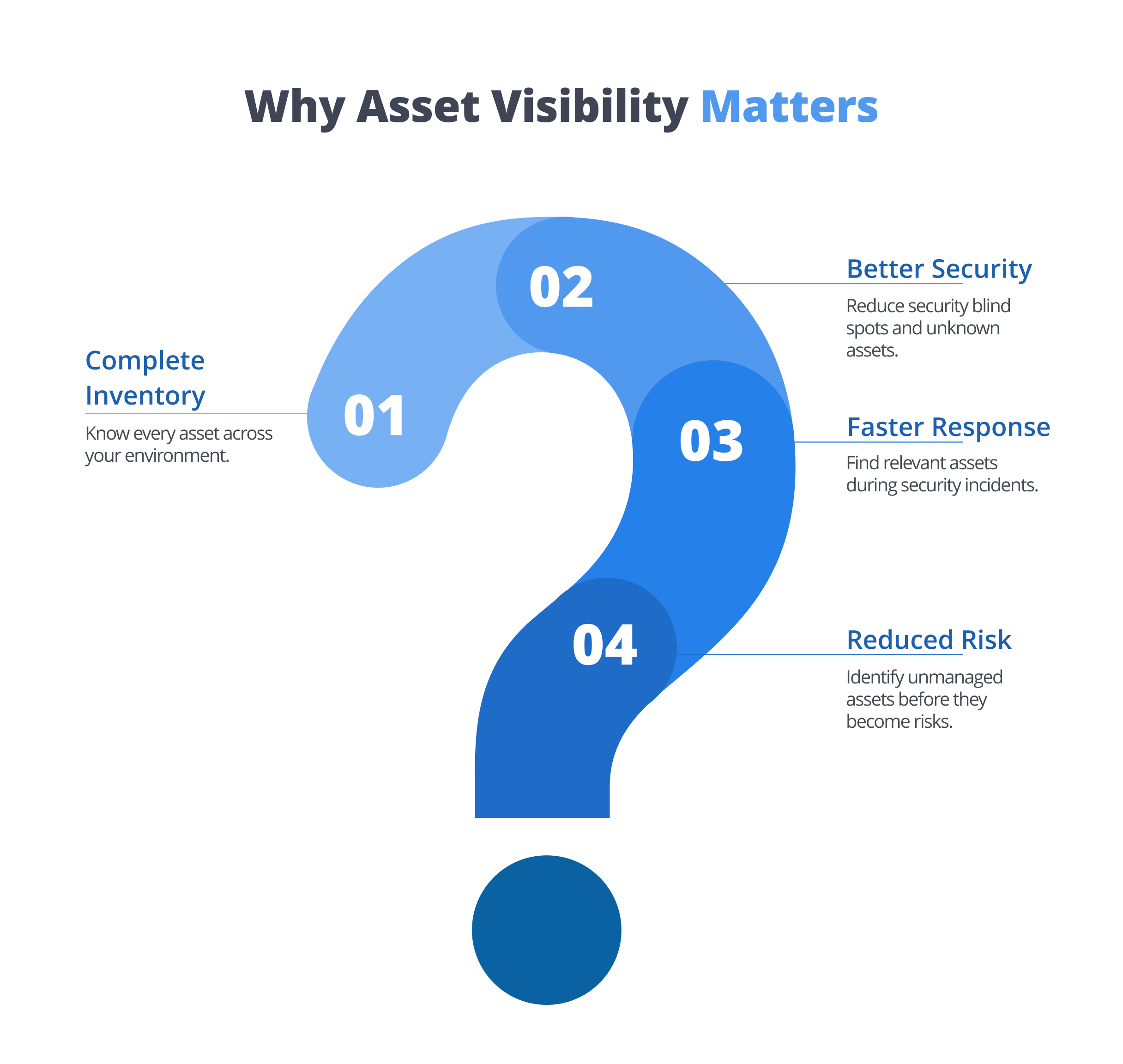
Without complete asset visibility, organisations may face challenges such as:
- Unknown devices
- Incomplete asset inventories
- Security blind spots
- Delayed vulnerability management
- Configuration inconsistencies
- Limited operational visibility
Knowing what assets exist is the first step towards protecting them.
How asset visibility strengthens enterprise security
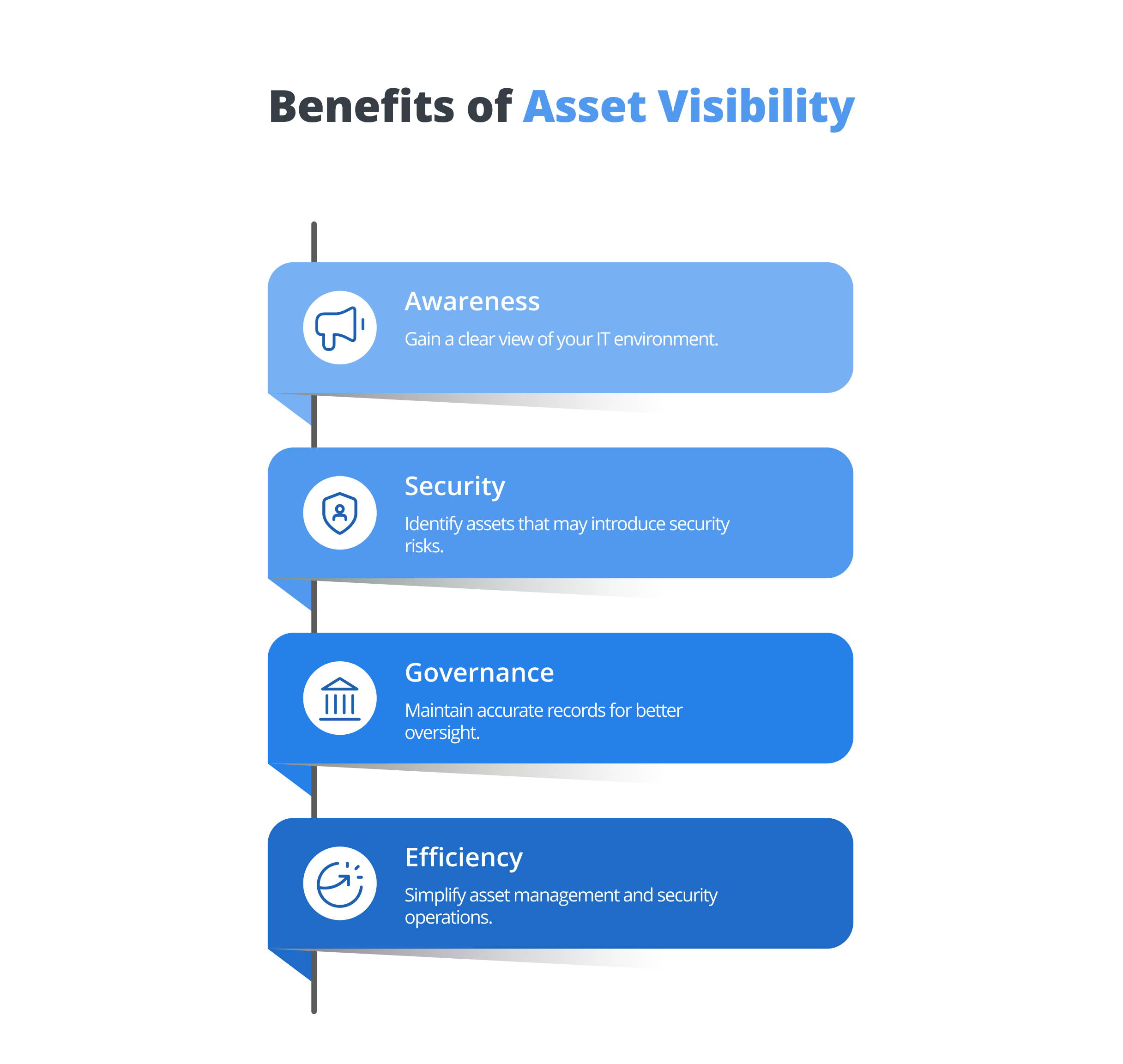
Asset visibility supports multiple areas of enterprise security.
Identifies unknown assets
Assets that are not properly identified may remain unmanaged, increasing security risks. Comprehensive discovery helps ensure every asset is accounted for.
Benefits
- Better awareness
- Fewer blind spots
Supports vulnerability management
Security teams can only assess vulnerabilities if they know which assets exist. Accurate inventories improve vulnerability identification and remediation planning.
Benefits
- Better prioritisation
- Faster remediation
Improves risk assessment
Asset visibility provides the context needed to understand which systems are most important to the business.
Benefits
- Better decision-making
- Risk-based security
Simplifies security operations
Centralised asset information reduces the need to search across multiple tools and systems.
Benefits
- Improved efficiency
- Unified visibility
Strengthens compliance
Accurate asset inventories help organisations demonstrate governance and maintain security documentation.
Benefits
- Easier audits
- Better governance
Supports incident response
Knowing where assets are located and how they relate to each other helps security teams respond more effectively.
Benefits
- Faster investigations
- Better coordination
Asset visibility vs traditional asset management
| Traditional Asset Management | Modern Asset Visibility |
|---|---|
| Static asset lists | Continuous asset discovery |
| Manual updates | Automated visibility |
| Limited business context | Business-aware asset insights |
| Separate security tools | Unified security platform |
| Periodic reviews | Continuous asset awareness |
| Incomplete inventories | Comprehensive asset visibility |
| Reactive security | Proactive security management |
Asset visibility goes beyond maintaining an inventory; it provides continuous awareness of the organisation's entire IT environment.
Best practices for improving asset visibility
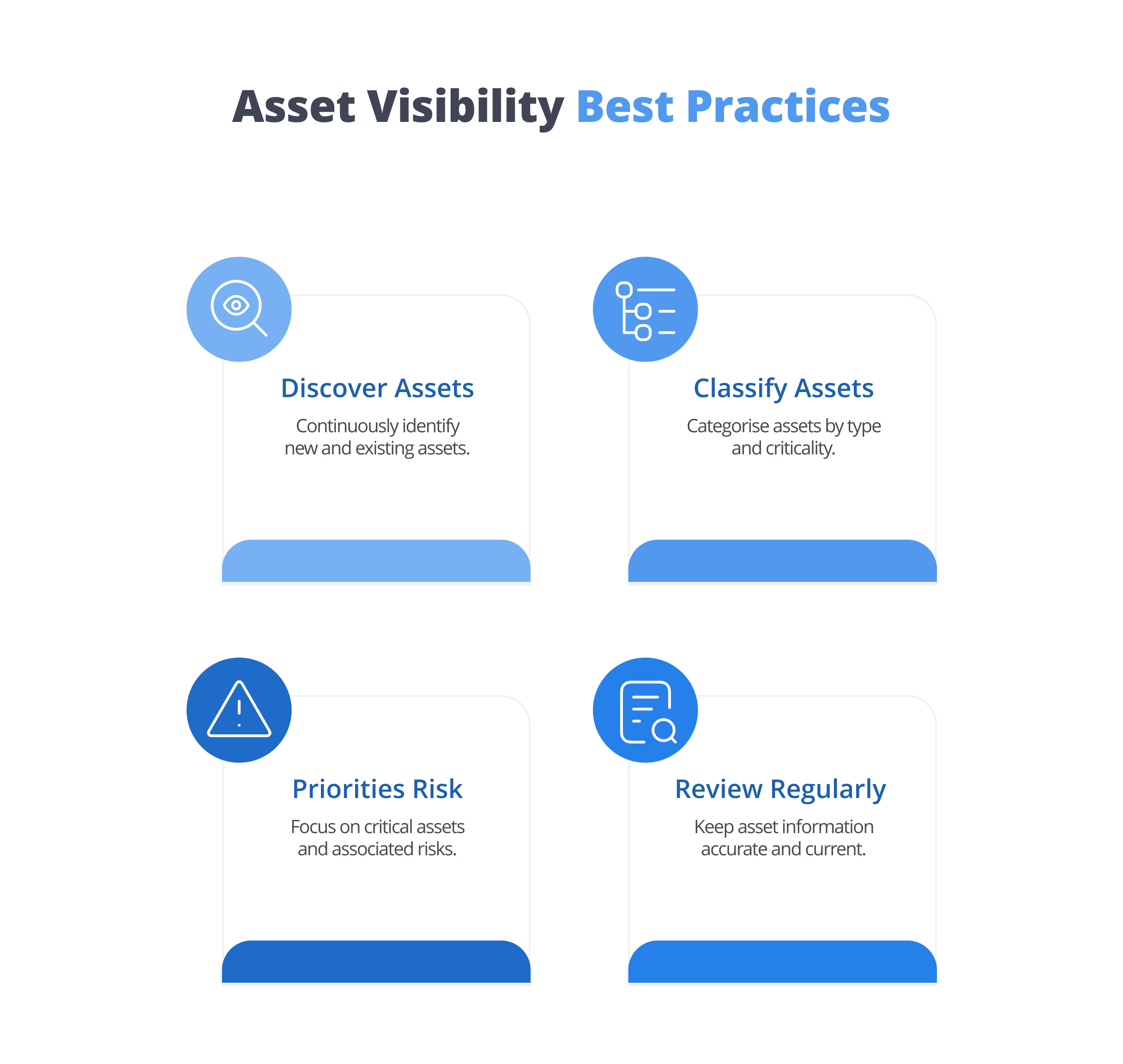
Organisations can strengthen their security posture by following these best practices:
- Continuously discover new assets
- Maintain a centralised asset inventory
- Classify assets by business importance
- Integrate asset information with security workflows
- Review asset inventories regularly
- Prioritise critical business assets
These practices help organisations maintain accurate visibility while supporting stronger cybersecurity.
Why choose Threat Console for enterprise asset visibility?
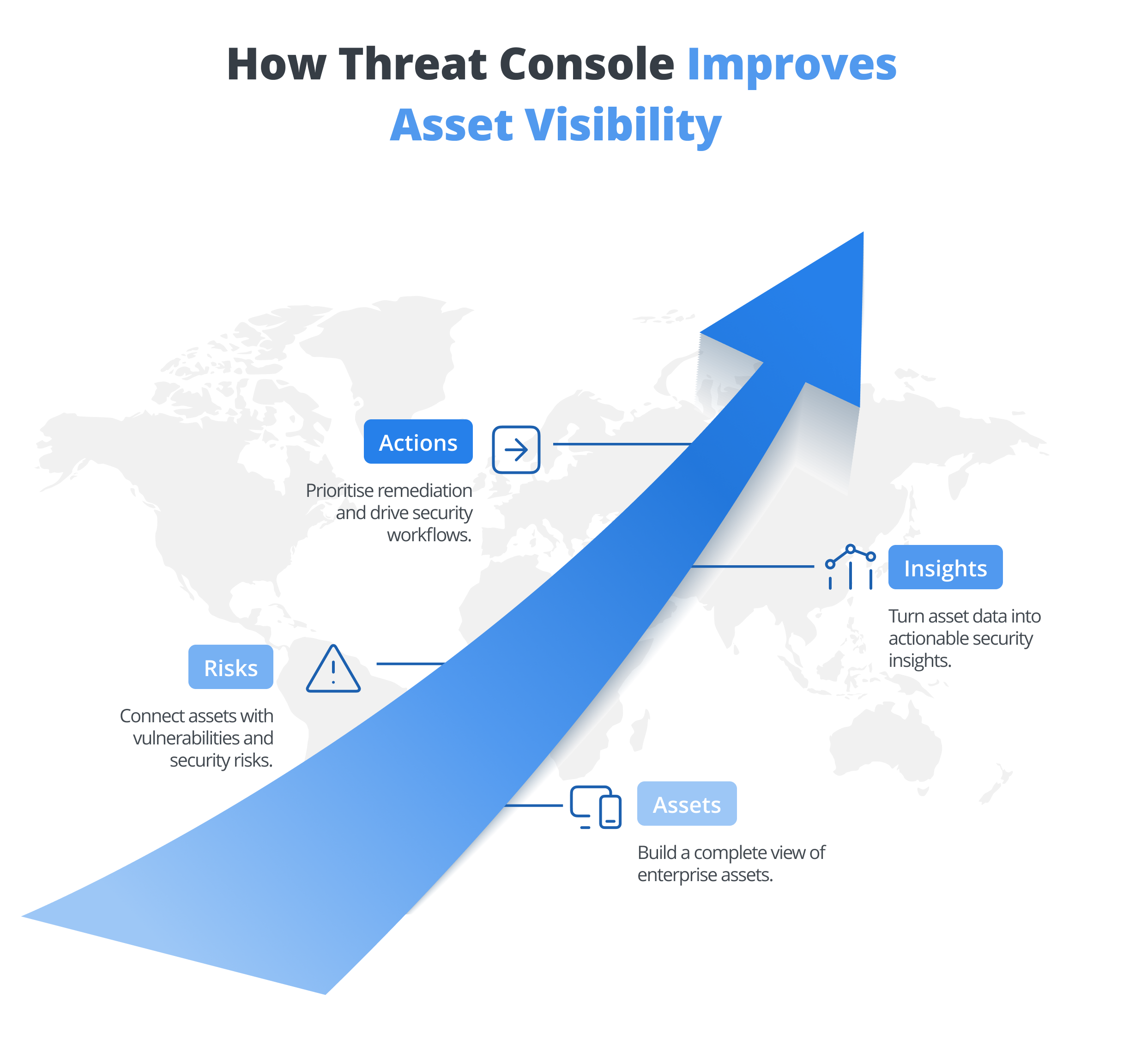
Effective cybersecurity begins with knowing exactly what assets exist across the organisation. Businesses need a platform that not only identifies assets but also connects them with vulnerabilities, risks, and remediation activities.
Threat Console by CATS4U is a unified asset visibility and vulnerability management platform that helps organisations build a complete view of their IT environment.
By bringing together asset discovery, vulnerability intelligence, risk prioritisation, and remediation tracking, Threat Console enables security teams to make faster, more informed decisions.
As a specialised use case of the iSense platform, Threat Console extends iSense's operational intelligence capabilities while also functioning as a powerful standalone solution for enterprise asset visibility and cyber risk management.
Key features of Threat Console:
- Centralised asset discovery
- Unified asset inventory
- Vulnerability visibility
- Risk prioritisation
- Remediation tracking
- Security dashboards
- Compliance reporting
- Threat intelligence integration
- Workflow automation
- Standalone platform or integrated with iSense
Whether you're managing cloud infrastructure, on-premises systems, or hybrid environments, Threat Console provides the visibility needed to strengthen enterprise security and reduce cyber risk.
Conclusion
Asset visibility is the starting point for every successful cybersecurity strategy. Without knowing what assets exist, organisations cannot effectively identify vulnerabilities, prioritise risks, or protect critical systems.
As enterprise environments continue to grow and evolve, maintaining accurate and continuous asset visibility becomes increasingly important for reducing cyber risk and supporting informed security decisions.
With Threat Console, organisations gain a centralised platform that connects asset visibility with vulnerability management, risk assessment, and remediation activities. Whether deployed as a standalone solution or as a specialised security use case within the iSense ecosystem, Threat Console provides the visibility needed to build a stronger, more resilient security posture.
Frequently asked questions
Asset visibility is the ability to discover, identify, classify, and maintain an accurate inventory of all IT assets across an organisation.
Asset visibility helps organisations understand what assets exist, identify potential risks, support vulnerability management, and improve overall security operations.
Common enterprise assets include:
- Servers
- Endpoints
- Cloud resources
- Applications
- Databases
- Network devices
Asset visibility ensures security teams know which systems exist, allowing them to identify vulnerabilities, prioritise remediation, and strengthen overall security.
Key benefits include:
- Better security
- Improved risk management
- Greater operational visibility
- Easier compliance
- Faster incident response
- Better decision-making
Threat Console provides centralised asset discovery, unified asset inventories, vulnerability visibility, risk prioritisation, remediation tracking, and security dashboards. It can be deployed as a standalone platform or as a specialised use case within the broader iSense ecosystem to strengthen enterprise security.
