


Modern IT environments generate thousands of alerts every day. Applications, servers, cloud services, network devices, databases, and monitoring tools continuously report events to IT operations teams.
While these alerts are designed to identify issues, they often create a new challenge: too much information.
When multiple systems report the same incident or generate repetitive notifications, IT teams spend valuable time sorting through alerts rather than addressing the underlying issue. This often results in delayed incident response, increased manual effort, and alert fatigue.
The solution is not just to reduce alerts, but to make them smarter.
This is where intelligent noise reduction plays a critical role. By filtering, correlating, and prioritising events, organisations can focus on the alerts that truly require attention while reducing unnecessary operational noise.
In this blog, we'll explore intelligent noise reduction, the causes of alert fatigue, and how iSense helps IT teams simplify operations through intelligent event management.
What is intelligent noise reduction?
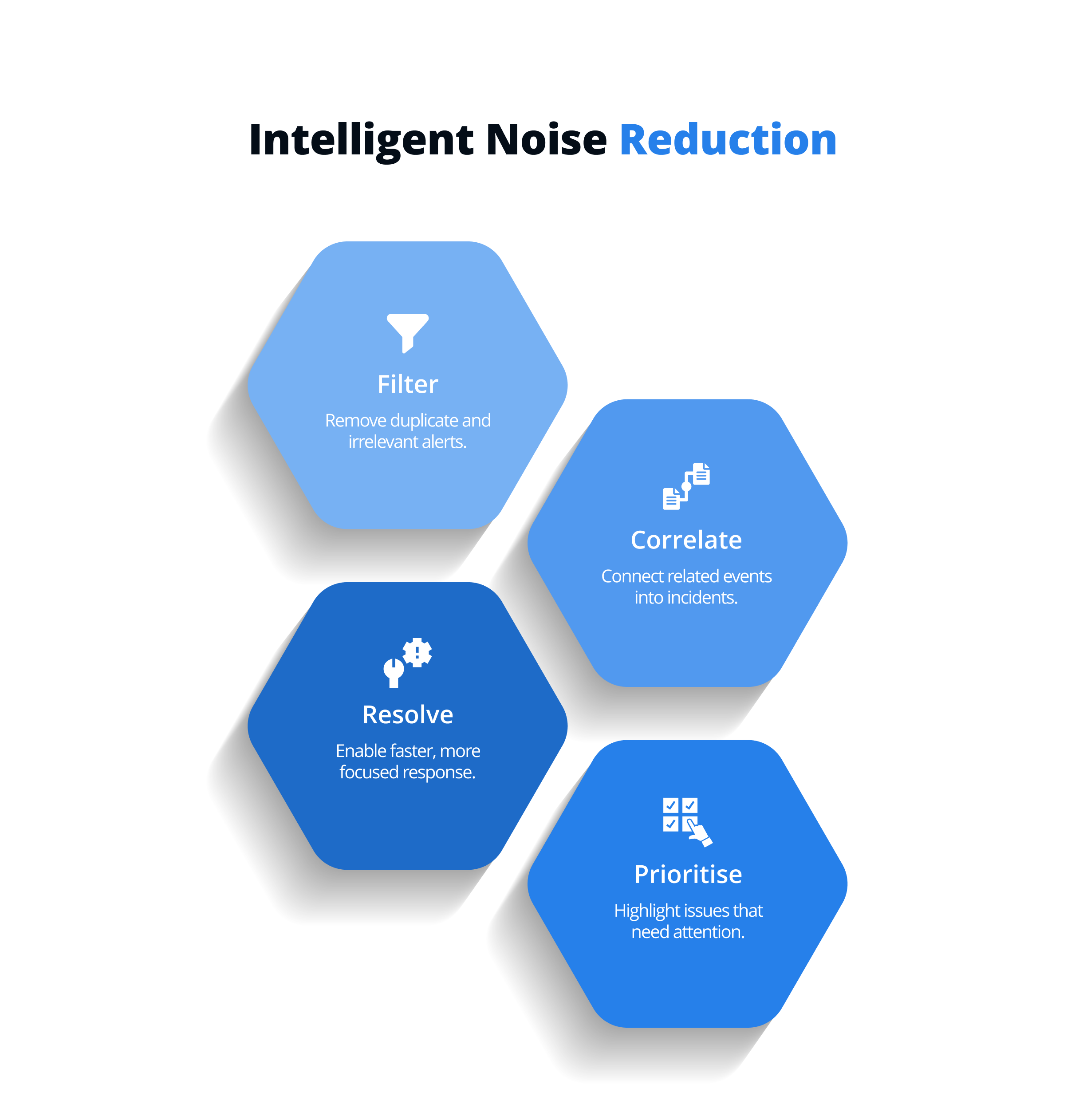
Intelligent noise reduction automatically filters, groups, and prioritises alerts, ensuring IT teams receive meaningful notifications rather than large volumes of repetitive events.
Instead of treating every alert as a separate issue, intelligent systems analyse relationships between alerts, identify patterns, and consolidate related events into a single actionable incident.
This enables organisations to address root causes rather than manage alert overload.
What causes alert fatigue?
As IT infrastructure grows in complexity, multiple monitoring tools often generate alerts for the same underlying issue.
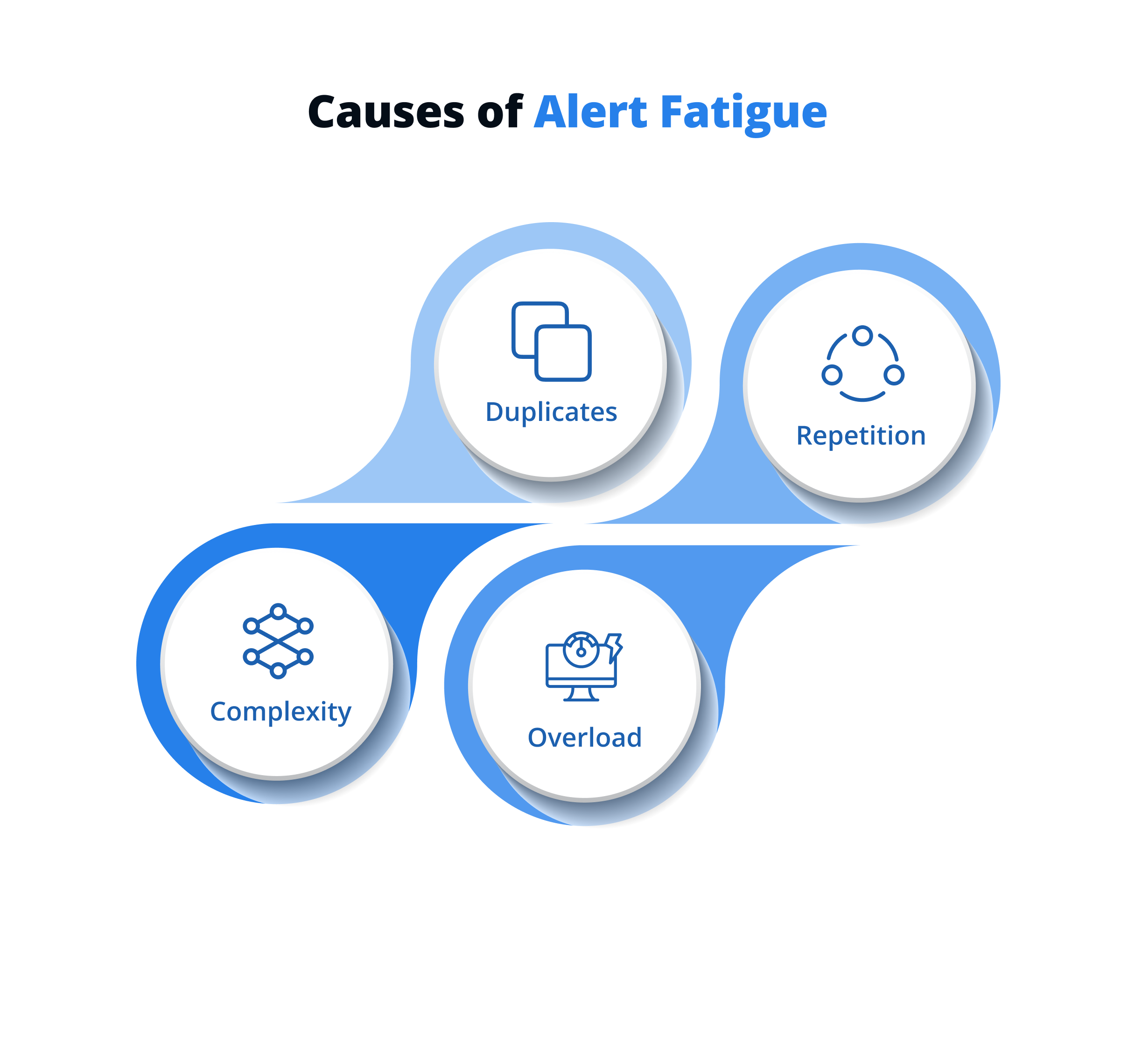
Common causes of alert fatigue include:
- Duplicate alerts
- Repetitive notifications
- Multiple monitoring tools
- Unrelated low-priority events
- Lack of event correlation
- Manual alert review
When all alerts appear equally important, teams may struggle to identify incidents that require immediate attention.
How intelligent noise reduction works
Modern AIOps platforms use automation and analytics to simplify event management.
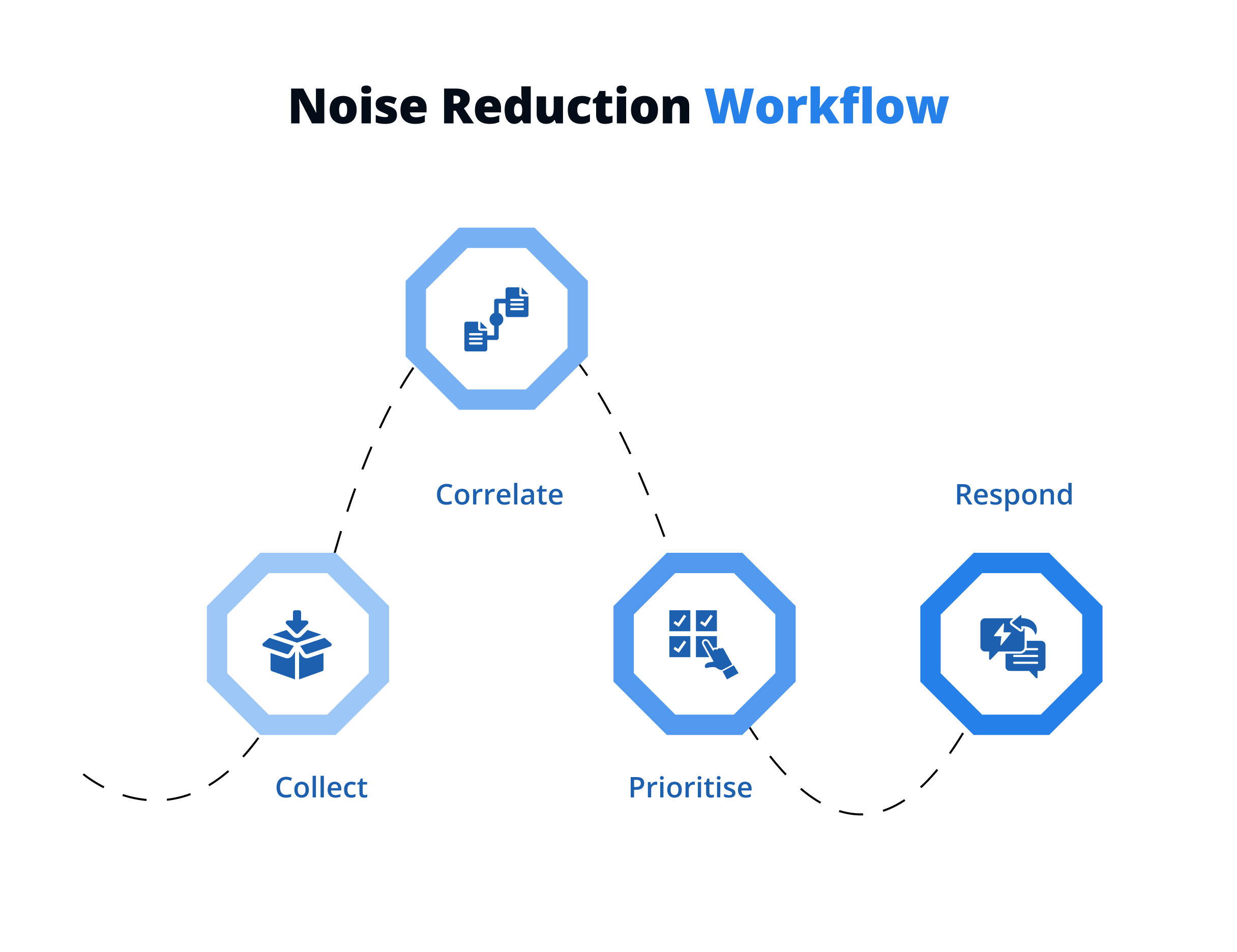
A typical intelligent noise reduction process includes:
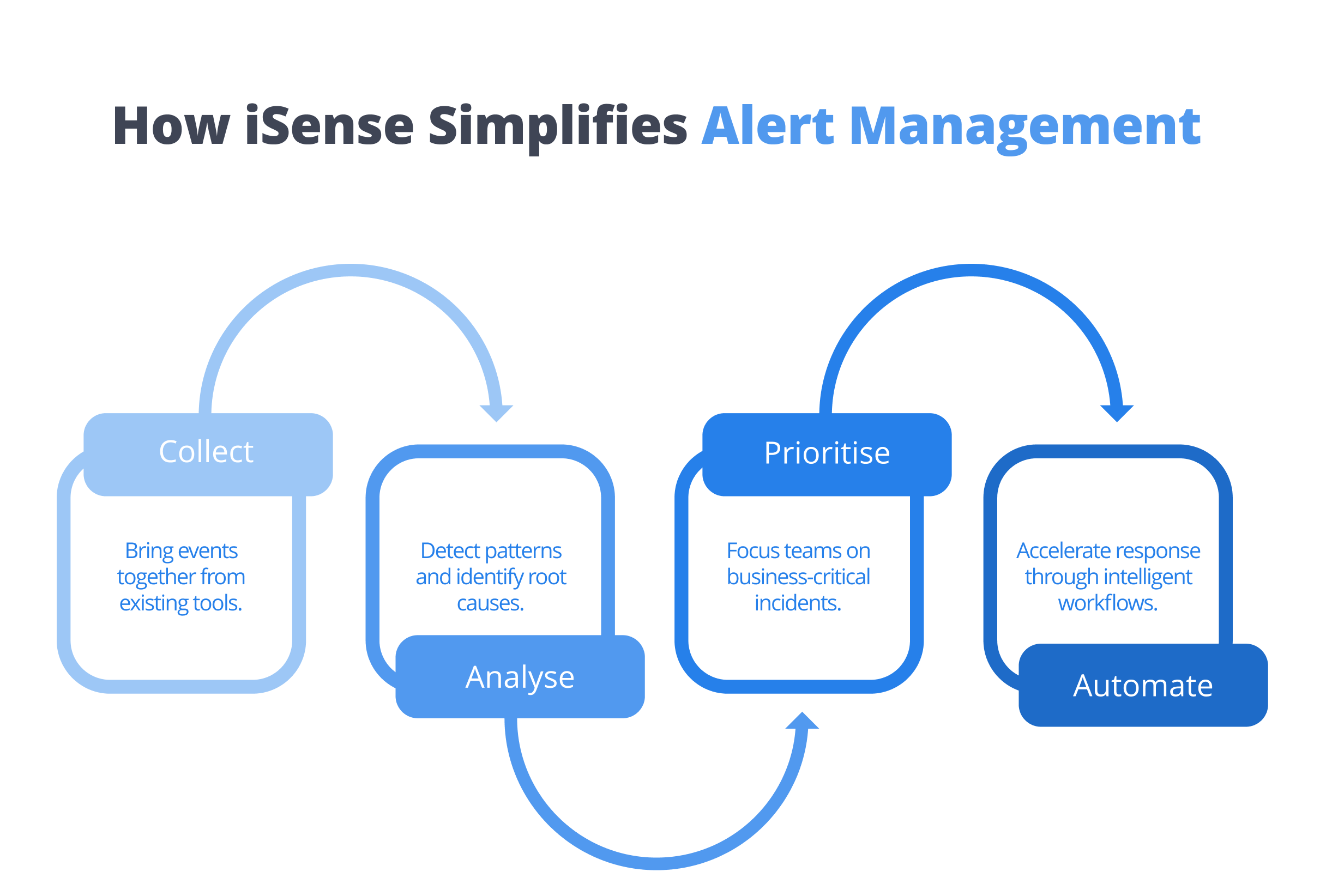
- Collect alerts from multiple monitoring tools.
- Identify duplicate and related events.
- Correlate alerts into meaningful incidents.
- Prioritise incidents based on business impact.
- Route actionable alerts to the right teams.
- Support faster incident resolution.
This approach enables IT teams to spend less time reviewing alerts and more time resolving issues.
Traditional alert management vs intelligent noise reduction
Although both manage operational alerts, traditional alert management and intelligent noise reduction take different approaches to handling events.
| Traditional Alert Management | Intelligent Noise Reduction |
|---|---|
| Individual alerts | Correlated incidents |
| High alert volume | Filtered, meaningful alerts |
| Manual review | Automated event correlation |
| Duplicate notifications | Consolidated events |
| Reactive operations | Intelligent prioritisation |
| Multiple tool views | Unified operational visibility |
| Slower incident response | Faster issue resolution |
Intelligent noise reduction transforms alert management from a reactive activity into a more efficient and actionable process.
Benefits of intelligent noise reduction
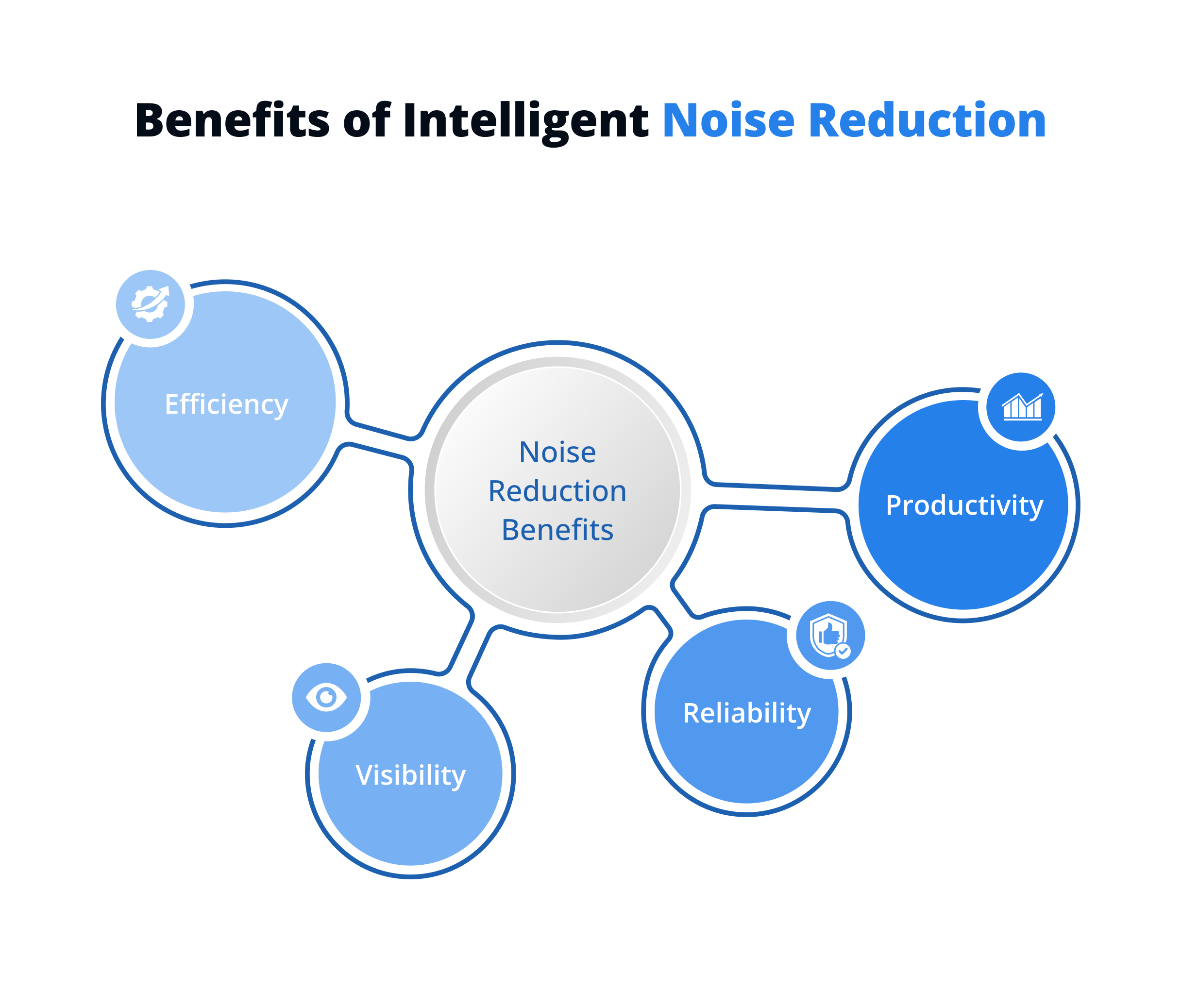
Intelligent noise reduction enhances operational efficiency and service quality.
Reduces alert overload
Filtering duplicate and repetitive alerts enables teams to focus on critical issues.
Benefits
- Cleaner dashboards
- Less manual effort
Improves incident prioritisation
Related alerts are grouped to highlight the most important incidents.
Benefits
- Better focus
- Faster action
Accelerates incident resolution
Faster identification of root causes enables teams to resolve issues more efficiently.
Benefits
- Reduced downtime
- Better service continuity
Improves operational efficiency
Automation minimises the effort needed to review and categorise alerts.
Benefits
- Higher productivity
- Streamlined operations
Supports better decision-making
Consolidated event information delivers clearer operational insights.
Benefits
- Better visibility
- Smarter decisions
Enhances service reliability
Meaningful alerts enable IT teams to maintain stable and reliable business services.
Benefits
- Improved availability
- Better user experience
Best practices for reducing alert fatigue
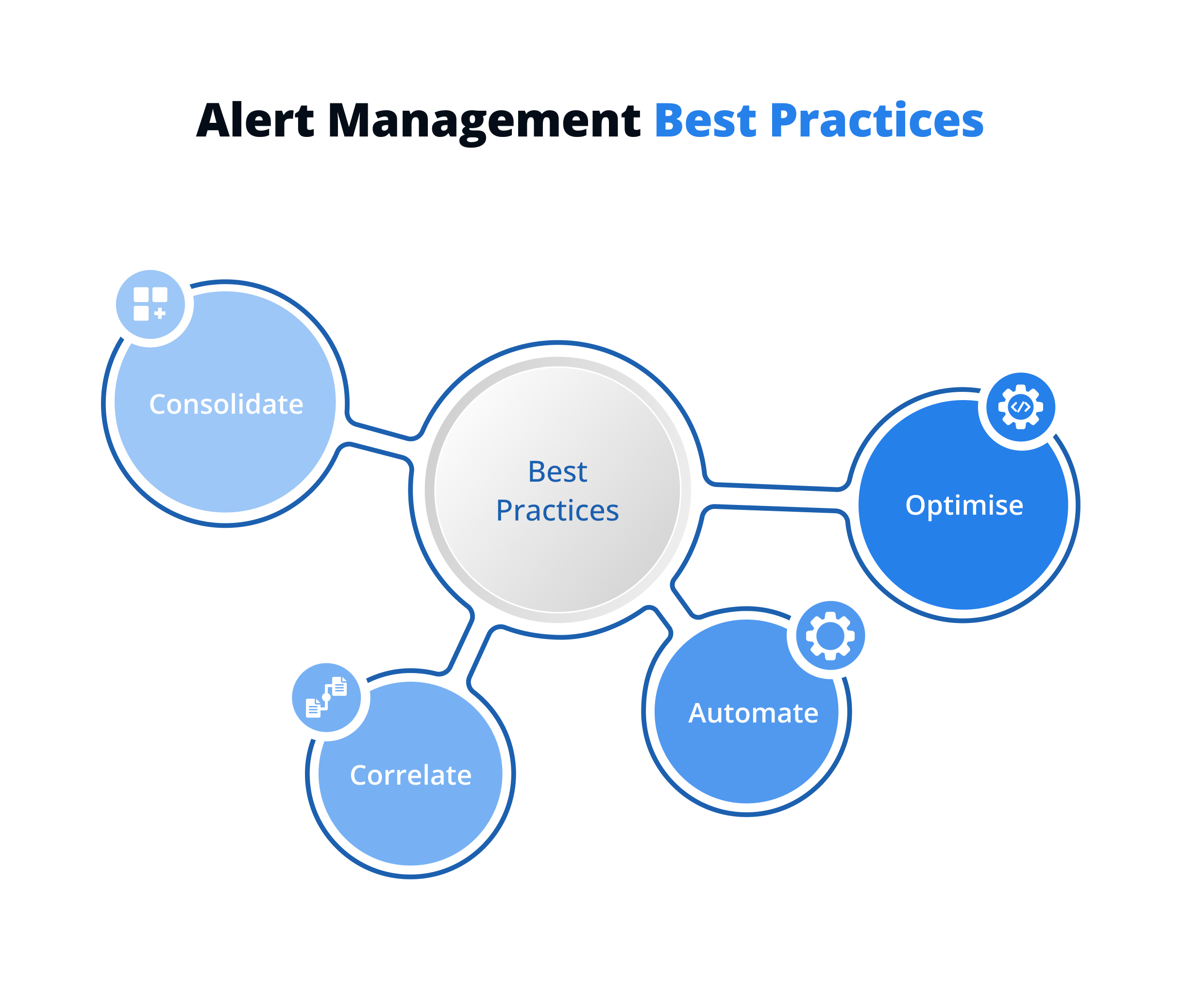
Organisations can improve IT operations and reduce alert fatigue by following these proven best practices:
- Consolidate monitoring data.
- Correlate related events.
- Prioritise business-critical alerts.
- Automate repetitive tasks.
- Continuously refine alert rules.
- Review operational insights regularly.
These practices help IT teams focus on delivering reliable services rather than managing excessive alerts.
Why choose iSense for intelligent noise reduction?
Managing alerts across modern IT environments requires more than collecting events from monitoring tools. Organisations need a platform that intelligently interprets operational data and helps teams focus on the issues that have the greatest business impact.
iSense integrates seamlessly with existing monitoring tools and IT platforms, making adoption straightforward and ensuring compatibility with current IT systems. This allows teams to leverage their existing investments while enhancing alert management capabilities.
iSense by CATS4U is an AIOps platform that brings together event collection, intelligent correlation, automation, and operational analytics into one unified solution. Unlike other AIOps or noise reduction tools, iSense offers advanced root cause analysis, real-time cross-platform integrations, and predictive incident analytics built specifically to minimise false positives and help IT teams take proactive action. Its intuitive dashboards and native compatibility with the entire CATS4U suite further set it apart, enabling rapid deployment and seamless operations even in complex enterprise environments.
By reducing unnecessary alert noise and presenting meaningful operational insights, iSense enables IT teams to improve service reliability, simplify incident management, and respond to issues more efficiently.
Key features of iSense:
- Intelligent event correlation
- Alert noise reduction
- Unified operational dashboards
- Incident prioritisation
- Automated workflows
- Predictive analytics
- Multi-tool integrations
- Real-time operational insights
- Root cause analysis
- Native integration across the CATS4U suite
Whether you're managing cloud infrastructure, enterprise applications, networks, or hybrid IT environments, iSense helps simplify IT operations by transforming large volumes of alerts into meaningful, actionable insights. iSense is built to seamlessly scale alongside your IT environment, supporting organisations as infrastructures grow in size and complexity. Its flexible architecture ensures reliable performance in large-scale, distributed, and hybrid settings, so IT teams can confidently adapt to future growth without sacrificing effectiveness.
Conclusion
As IT environments continue to grow in complexity, managing alerts manually becomes increasingly difficult. Large volumes of repetitive notifications can distract IT teams from the incidents that truly matter, reducing operational efficiency and slowing response times.
Intelligent noise reduction helps organisations overcome this challenge by filtering unnecessary alerts, correlating related events, and highlighting the incidents that require immediate attention.
With iSense, organisations can simplify IT operations through intelligent event management, reduce alert fatigue, improve service reliability, and empower IT teams with meaningful operational insights that support faster and more informed decision-making.
Frequently asked questions
Intelligent noise reduction is the process of filtering, correlating, and prioritising alerts to reduce unnecessary notifications and help IT teams focus on meaningful incidents.
Alert fatigue occurs when IT teams receive excessive alerts, making it difficult to identify and respond to the most important operational issues. It reduces team productivity and increases the risk of missing critical incidents.
Intelligent noise reduction works by:
- Collecting alerts
- Correlating related events
- Filtering duplicates
- Prioritising incidents
- Supporting faster resolution
Key benefits include:
- Reduced alert overload
- Faster incident response
- Better operational visibility
- Improved productivity
- Higher service reliability
- Smarter decision-making
Traditional alert management focuses on handling individual alerts, while intelligent noise reduction analyses relationships between events, consolidates related alerts, and prioritises incidents based on business impact. This makes it more efficient and reduces false positives.
iSense uses intelligent event correlation, advanced alert noise reduction, automation, predictive analytics, and unified operational dashboards to help IT teams focus on meaningful incidents and improve overall IT operations.
