


Every organisation depends on technology to run its daily operations. From servers and networks to cloud environments, applications, and endpoints, every digital asset plays an important role in supporting the business.
However, every asset can also become a potential entry point for cyber threats if it is not properly managed and secured.
Software vulnerabilities, outdated systems, configuration issues, and missing security updates can expose organisations to unnecessary risks. As IT environments continue to grow, identifying and addressing these weaknesses manually becomes increasingly difficult.
This is why Vulnerability Management becomes essential.
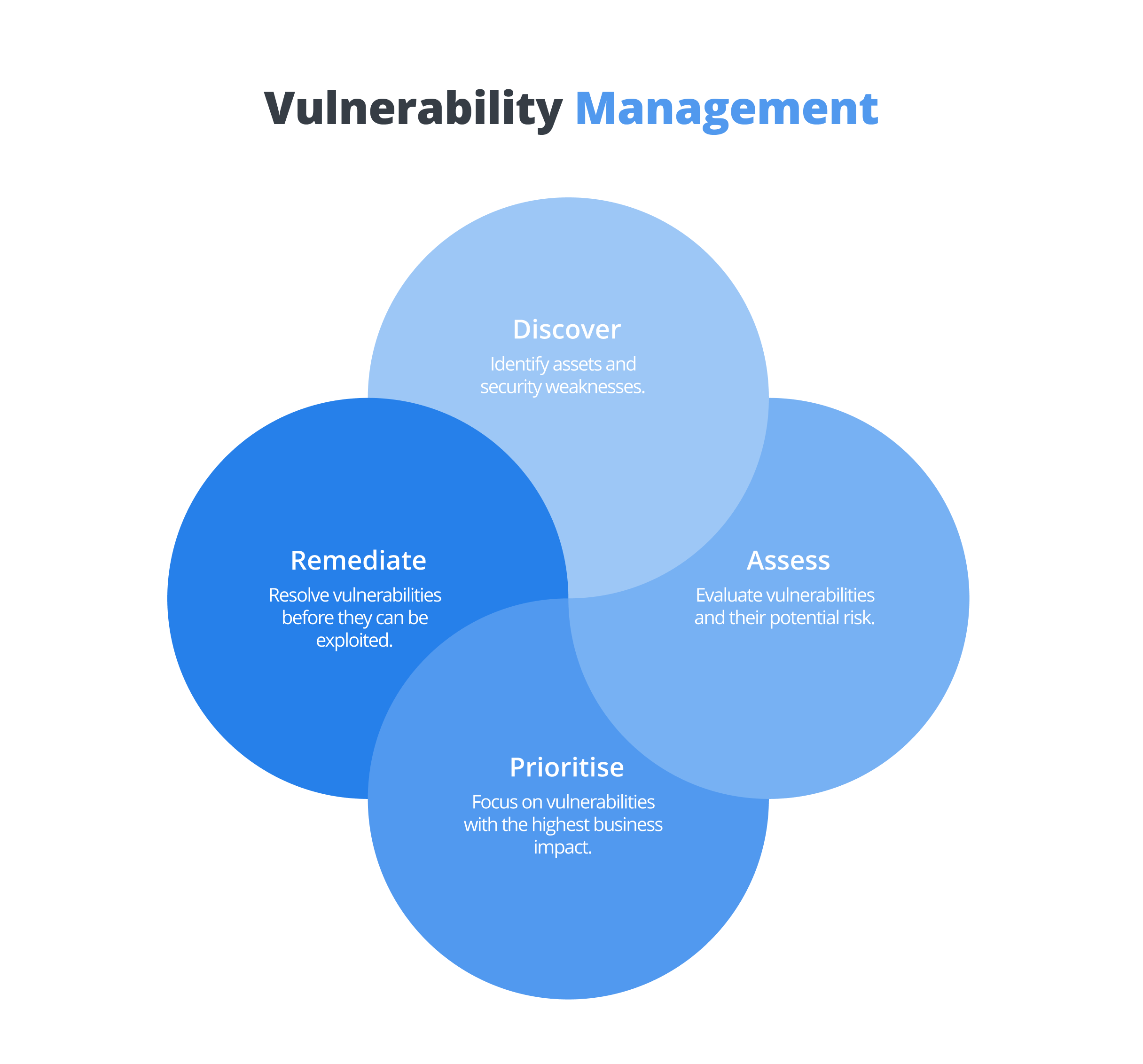
Vulnerability management helps organisations continuously identify, assess, prioritise, and remediate security weaknesses before they can be exploited. Rather than reacting after an incident occurs, it enables security teams to take a proactive approach to reducing cyber risk.
In this blog, we'll explain what vulnerability management is, why it matters, its key benefits, and how Threat Console, powered by iSense, helps organisations gain complete visibility into their security posture through a unified vulnerability management platform.
What is vulnerability management?
Vulnerability management is the continuous process of identifying, evaluating, prioritising, and resolving security vulnerabilities across an organisation's IT environment.
It helps security teams understand where vulnerabilities exist, determine which ones pose the highest risk, and take appropriate remediation actions.
A typical vulnerability management program includes:
- Asset discovery
- Vulnerability identification
- Risk assessment
- Prioritisation
- Remediation planning
- Verification
- Continuous visibility
- Reporting
The goal is to reduce cyber risk by addressing security weaknesses before they become serious threats.
Why is vulnerability management important?
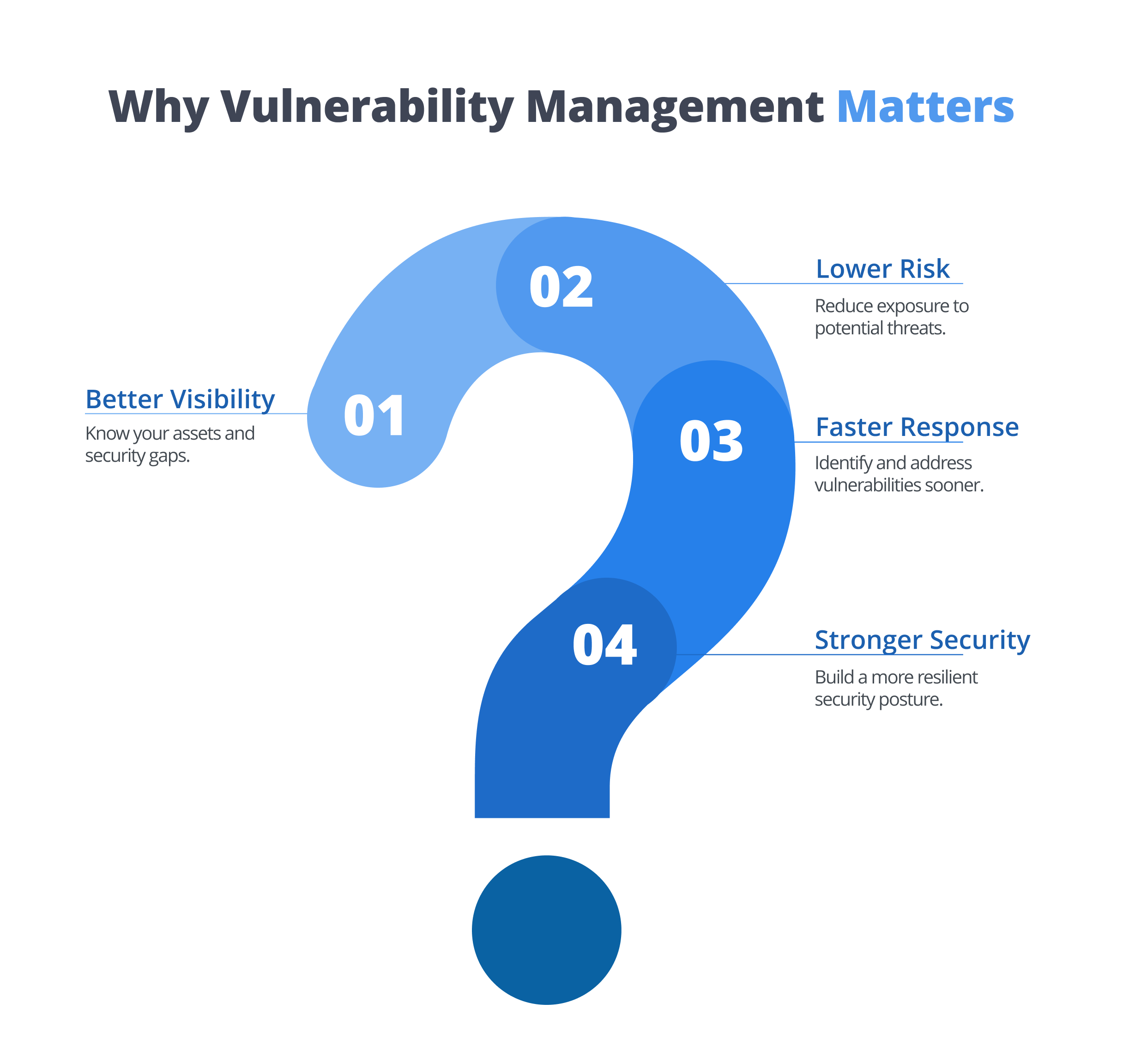
Modern IT environments are constantly changing. New devices, cloud services, applications, and software updates are introduced regularly, creating new security considerations.
Without a structured vulnerability management process, organisations may face challenges such as:
- Unknown security gaps
- Incomplete asset visibility
- Delayed remediation
- Increasing cyber risks
- Manual security processes
- Difficulty prioritising vulnerabilities
An effective vulnerability management program helps organisations stay ahead of potential risks by continuously improving their security posture.
How does vulnerability management work?
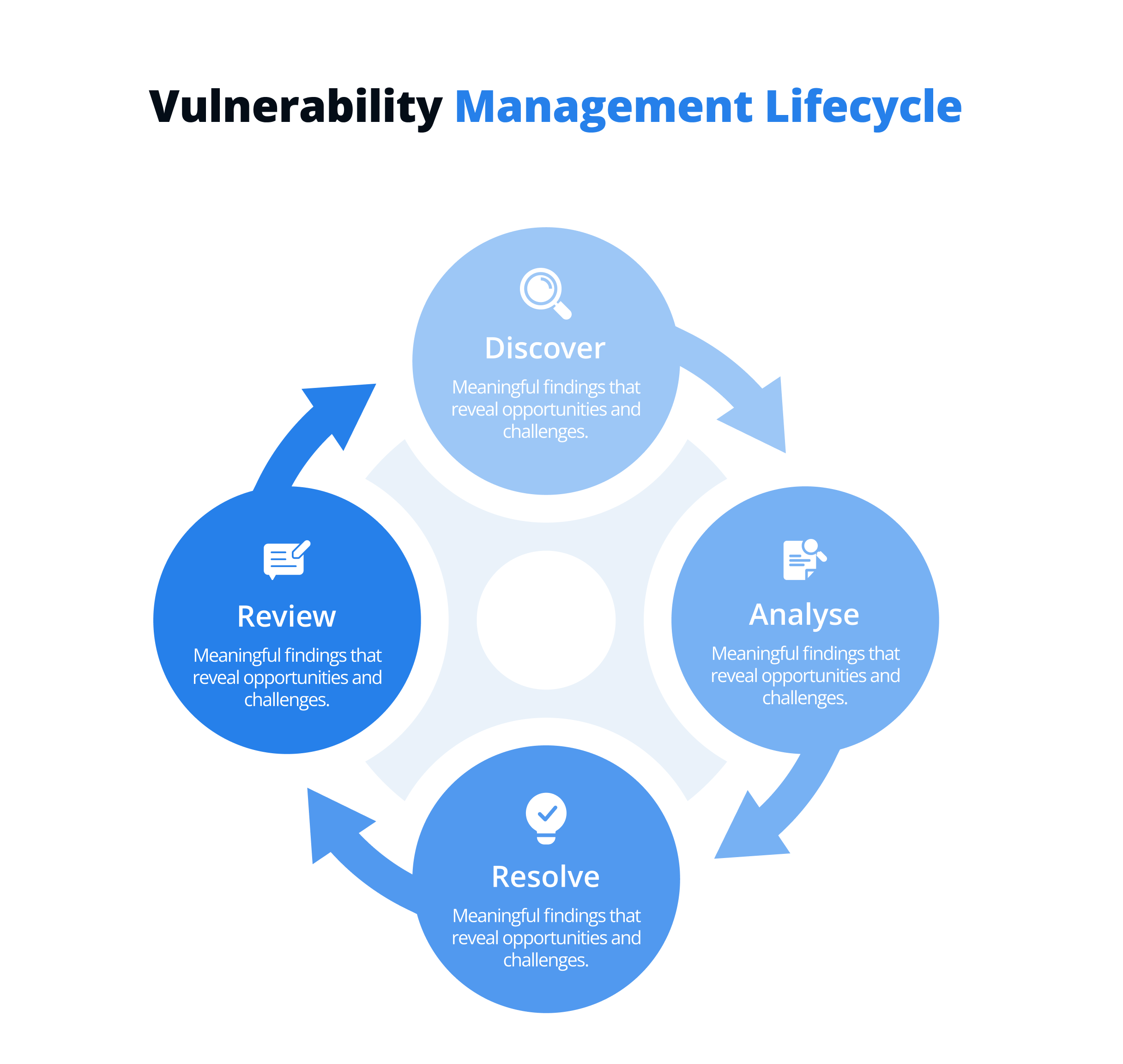
Vulnerability management follows a continuous lifecycle designed to strengthen enterprise security.
A typical process includes:
- Discover IT assets across the environment
- Identify security vulnerabilities
- Assess business and technical risk
- Prioritise vulnerabilities based on severity
- Assign remediation activities
- Verify that vulnerabilities have been addressed
- Continuously review and improve security posture
This ongoing cycle helps organisations maintain a proactive approach to cybersecurity.
Key benefits of vulnerability management
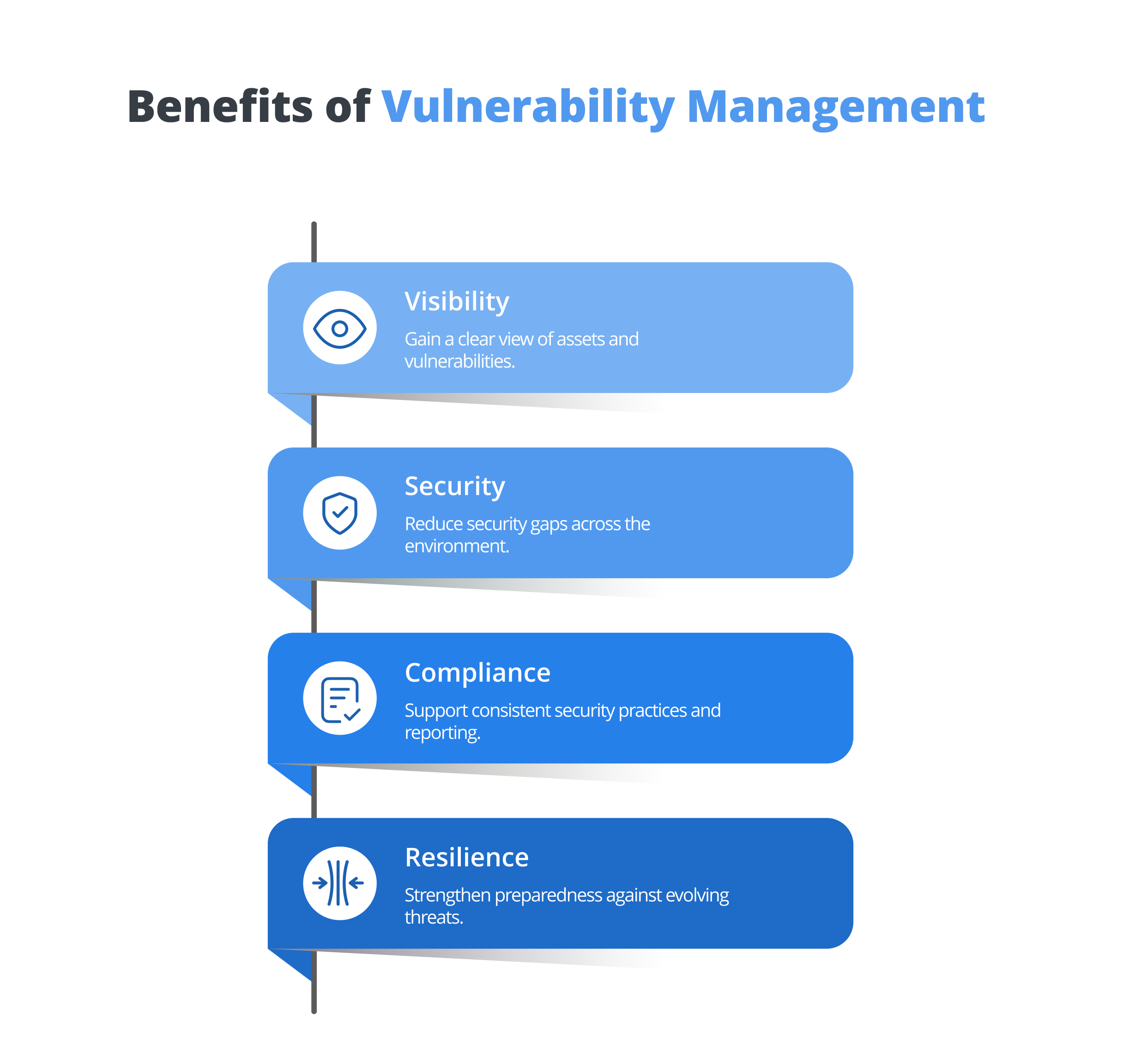
A structured vulnerability management program improves security while supporting business continuity.
Improve asset visibility
Knowing what assets exist is the foundation of effective cybersecurity.
Benefits
- Better inventory
- Improved awareness
Prioritise security risks
Not every vulnerability presents the same level of risk. Risk-based prioritisation helps teams focus on the issues that matter most.
Benefits
- Better resource allocation
- Faster remediation
Strengthen security posture
Continuous vulnerability management helps organisations reduce security gaps over time.
Benefits
- Improved resilience
- Better protection
Simplify security operations
Bringing vulnerability information into one platform makes it easier to manage remediation activities.
Benefits
- Centralised visibility
- Greater efficiency
Support compliance
A structured vulnerability management process helps organisations demonstrate consistent security practices.
Benefits
- Better governance
- Easier reporting
Enable continuous improvement
Security is an ongoing process rather than a one-time activity. Continuous reviews help organisations adapt to changing threats.
Benefits
- Ongoing optimisation
- Better preparedness
Traditional vulnerability management vs unified vulnerability management
| Traditional Approach | Unified Vulnerability Management |
|---|---|
| Multiple security tools | Single unified platform |
| Limited asset visibility | Complete asset visibility |
| Manual prioritisation | Risk-based prioritisation |
| Separate reporting systems | Centralised dashboards |
| Reactive security processes | Continuous vulnerability management |
| Difficult collaboration | Unified security operations |
| Limited business context | Context-aware risk insights |
A unified vulnerability management platform helps security teams make faster, more informed decisions while reducing operational complexity.
Best practices for effective vulnerability management
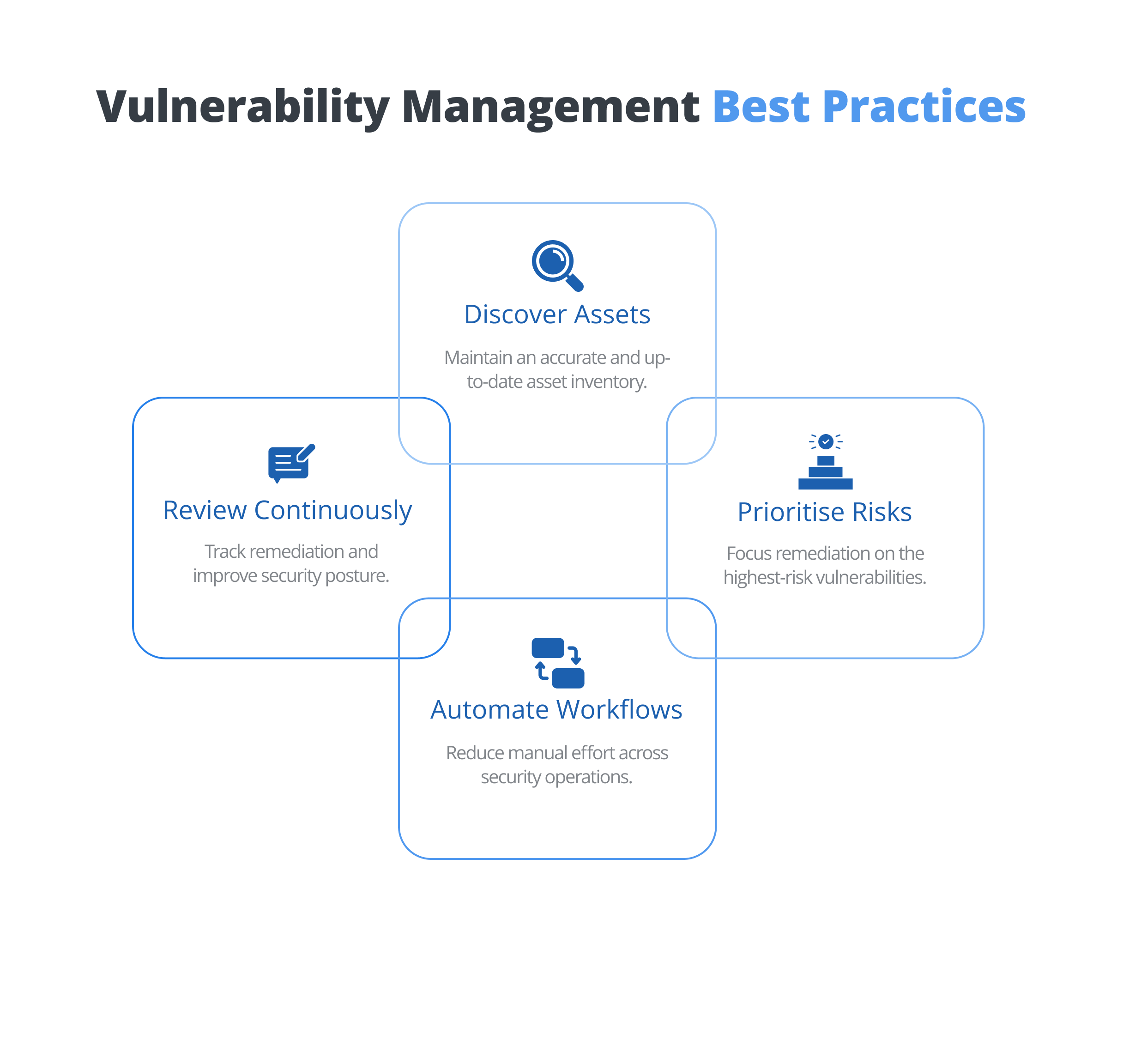
Organisations can strengthen their vulnerability management strategy by following these best practices:
- Maintain an accurate asset inventory
- Continuously identify new vulnerabilities
- Prioritise remediation based on business risk
- Automate security workflows where possible
- Review remediation progress regularly
- Use dashboards for ongoing visibility
These practices help organisations build a proactive and scalable approach to cybersecurity.
Why choose Threat Console for vulnerability management?
Managing vulnerabilities across modern IT environments requires more than isolated security tools. Organisations need a unified platform that brings together asset visibility, vulnerability intelligence, risk prioritisation, and remediation progress in one place.
Threat Console by CATS4U is a comprehensive vulnerability management platform that enables organisations to identify, assess, prioritise, and manage security risks through a centralised console.
As a specialised use case of the iSense platform, Threat Console leverages iSense's unified operations capabilities while also functioning as a powerful standalone solution for organisations focused on vulnerability and cyber risk management.
Key features of Threat Console:
- Centralised asset visibility
- Vulnerability discovery
- Risk-based prioritisation
- Remediation tracking
- Security dashboards
- Threat intelligence integration
- Risk analytics
- Compliance reporting
- Workflow automation
- Standalone platform or integrated with iSense
Whether you're managing on-premises infrastructure, cloud environments, or hybrid IT operations, Threat Console helps security teams reduce cyber risk through continuous visibility and intelligent vulnerability management.
Conclusion
As enterprise IT environments continue to expand, managing vulnerabilities manually becomes increasingly difficult. Without continuous visibility into assets and security risks, organisations may struggle to identify and address weaknesses before they impact business operations.
Vulnerability management provides a structured and proactive approach to identifying, prioritising, and resolving security risks while strengthening an organisation's overall cybersecurity posture.
With Threat Console, organisations gain a unified platform for managing vulnerabilities, assessing cyber risk, and driving remediation efforts. Whether deployed as a standalone vulnerability management solution or as part of the broader iSense ecosystem, Threat Console helps security teams improve visibility, simplify operations, and build stronger cyber resilience.
Frequently asked questions
Vulnerability management is the continuous process of identifying, assessing, prioritising, and resolving security vulnerabilities across an organisation's IT environment.
It helps organisations reduce cyber risk by identifying security weaknesses early, prioritising remediation efforts, and improving overall security posture.
The process typically includes:
- Asset discovery
- Vulnerability assessment
- Risk prioritisation
- Remediation
- Verification
- Continuous review
Key benefits include:
- Better asset visibility
- Stronger security
- Risk-based prioritisation
- Simplified security operations
- Improved compliance
- Continuous security improvement
Yes. Modern vulnerability management platforms are designed to provide visibility across on-premises, cloud, and hybrid IT environments from a single interface.
Threat Console provides centralised asset visibility, vulnerability discovery, risk prioritisation, remediation tracking, security dashboards, and workflow automation. It can be deployed as a standalone vulnerability management platform or used as a specialised security use case within the broader iSense platform.
