


Customers today expect more than just quality products and services. They expect personalised experiences, quick responses, seamless interactions, and consistent support throughout their journey.
At the same time, businesses are managing growing customer bases across multiple channels, including websites, emails, phone calls, social media, and mobile applications. Keeping track of every interaction manually or through disconnected systems is becoming increasingly difficult.
Without a centralised approach, businesses may struggle with fragmented customer information, missed sales opportunities, delayed responses, and inconsistent customer experiences.
This is why Customer Relationship Management (CRM) has become more important than ever.
A modern CRM platform helps organisations centralise customer information, streamline sales and service processes, strengthen customer relationships, and make informed business decisions through real-time insights.
In this blog, we’ll explore why customer relationship management has become a business necessity, the challenges it addresses, and how iCustomer helps organisations deliver better customer experiences while driving business growth.
What is customer relationship management?
Customer Relationship Management is the practice of managing every interaction and relationship a business has with its customers throughout their lifecycle.
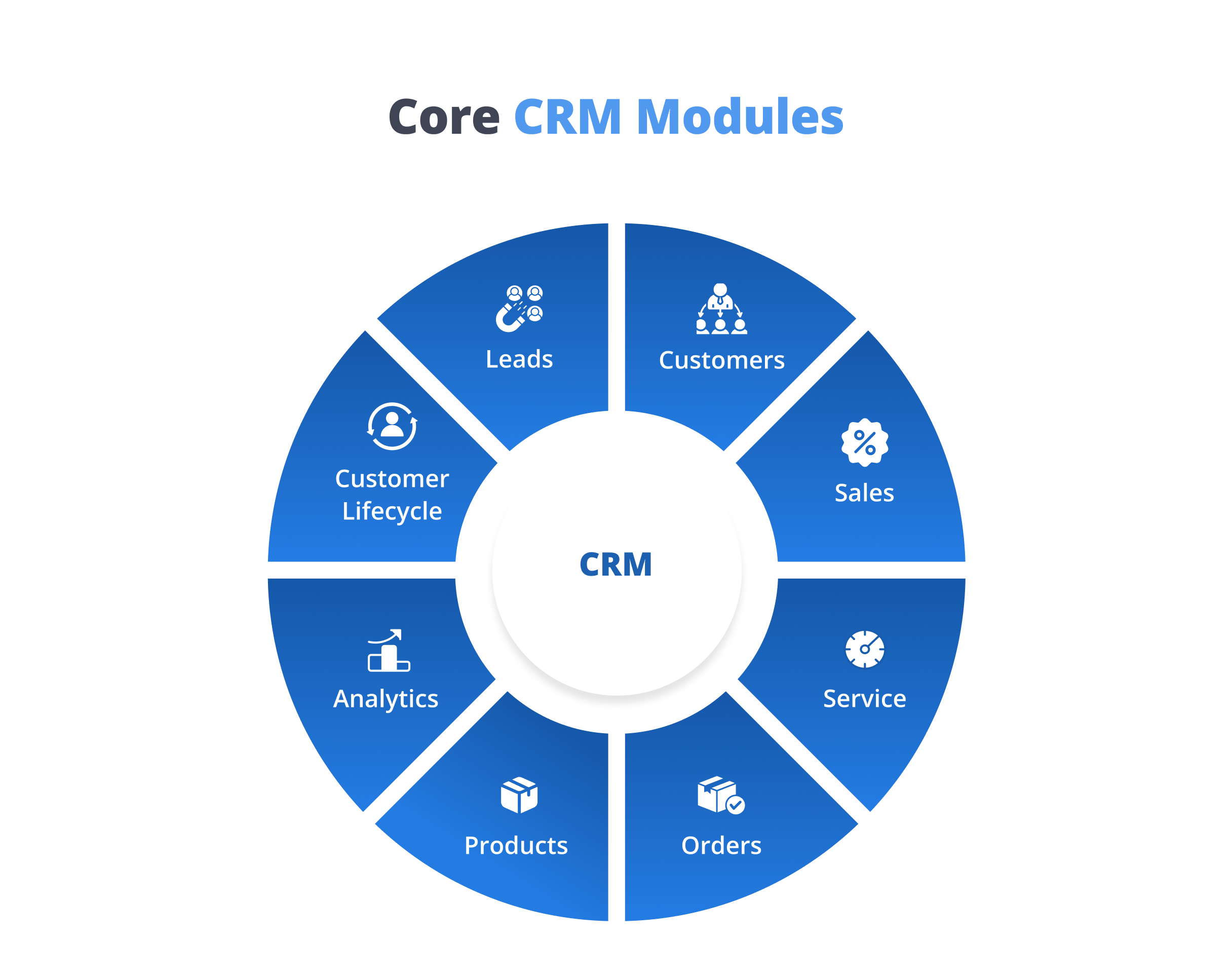
A CRM platform provides a single source of truth for customer information, enabling sales, marketing, and customer service teams to work together using the same data.
A modern CRM solution typically helps businesses:
- Manage leads and opportunities
- Store customer information
- Track customer interactions
- Manage sales pipelines
- Automate follow-ups
- Support customer service
- Monitor customer lifecycle
- Generate reports and insights
Instead of maintaining customer data across multiple spreadsheets and applications, CRM centralises everything into one platform.
Why is CRM more important than ever?
As businesses grow, customer expectations continue to evolve.
Customers expect organisations to understand their needs, respond quickly, and provide a consistent experience across every touchpoint.
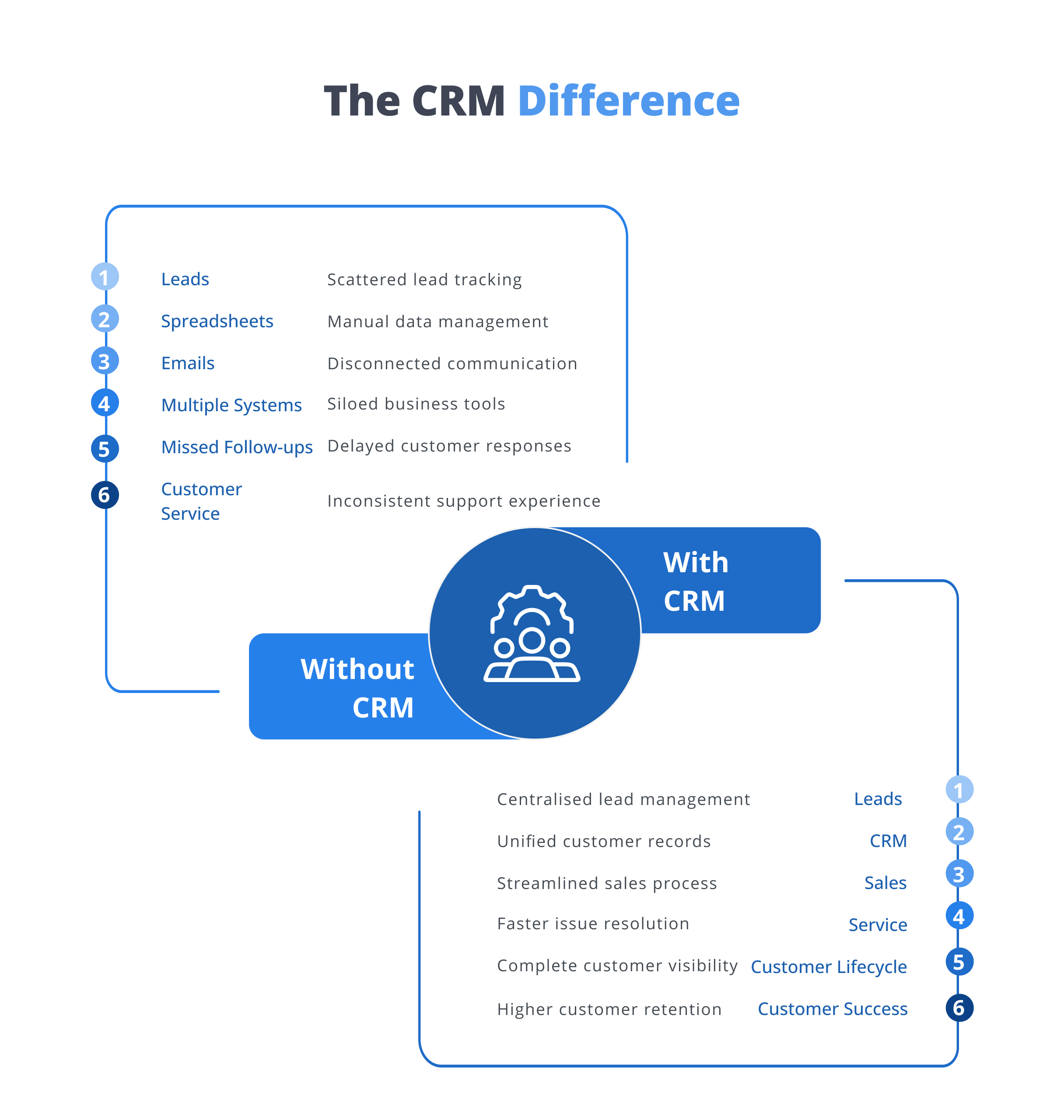
Without CRM, businesses often face challenges such as:
- Customer information stored in multiple systems
- Missed follow-ups
- Inconsistent communication
- Limited visibility into sales opportunities
- Difficulty managing customer lifecycles
- Poor collaboration between departments
- Delayed customer support
A CRM platform addresses these challenges by bringing customer data, processes, and teams together.
How CRM improves business operations
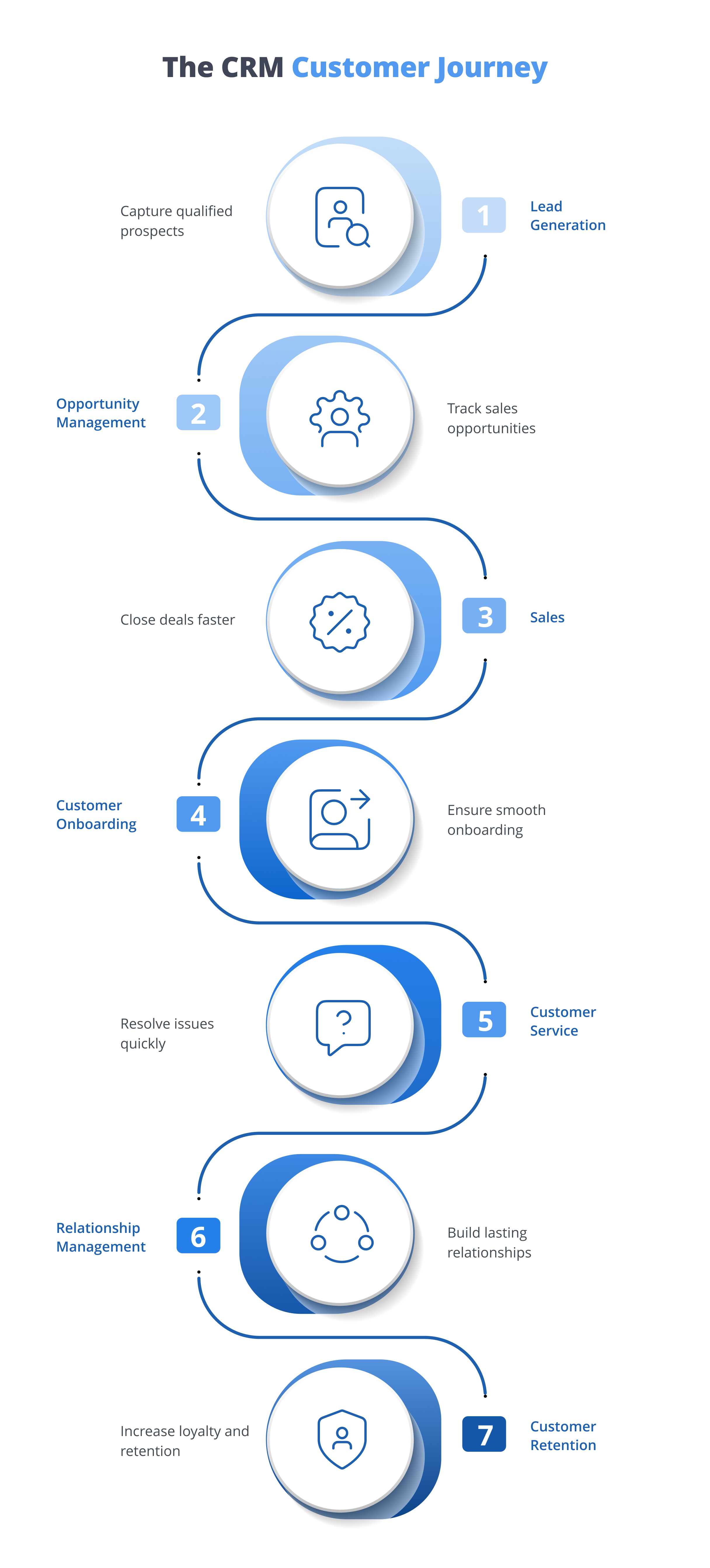
A CRM platform supports every stage of the customer journey, from the first interaction to long-term relationship management.
Creates a unified customer view
Customer information is often scattered across different systems. CRM consolidates all customer interactions, transactions, communications, and history into one place.
Benefits
- Complete customer visibility
- Better collaboration
- Faster access to information
Improves sales efficiency
Sales teams can manage leads, opportunities, and pipelines from a single platform. Automated reminders and task management help ensure that no opportunity is overlooked.
Benefits
- Better lead management
- Improved sales productivity
- Faster deal progression
Delivers better customer service
Support teams gain immediate access to customer history, enabling faster and more personalised responses.
Benefits
- Faster issue resolution
- Consistent customer experiences
- Improved customer satisfaction
Automates routine tasks
CRM automates repetitive activities such as:
- Follow-up reminders
- Lead assignments
- Customer notifications
- Workflow approvals
- Activity tracking
Benefits
- Reduced manual work
- Improved productivity
- Consistent processes
Supports smarter business decisions
CRM dashboards and reports provide insights into sales performance, customer behaviour, service quality, and business trends.
Benefits
- Better forecasting
- Improved planning
- Data-driven decisions
Traditional customer management vs CRM
| Traditional Customer Management | Modern CRM |
|---|---|
| Customer data stored in spreadsheets | Centralised customer database |
| Manual follow-ups | Automated reminders and workflows |
| Disconnected sales and service teams | Unified customer collaboration |
| Limited customer visibility | Complete customer lifecycle view |
| Manual reporting | Real-time dashboards and analytics |
| Difficult to scale | Supports business growth |
| Reactive customer service | Proactive customer engagement |
Benefits of customer relationship management
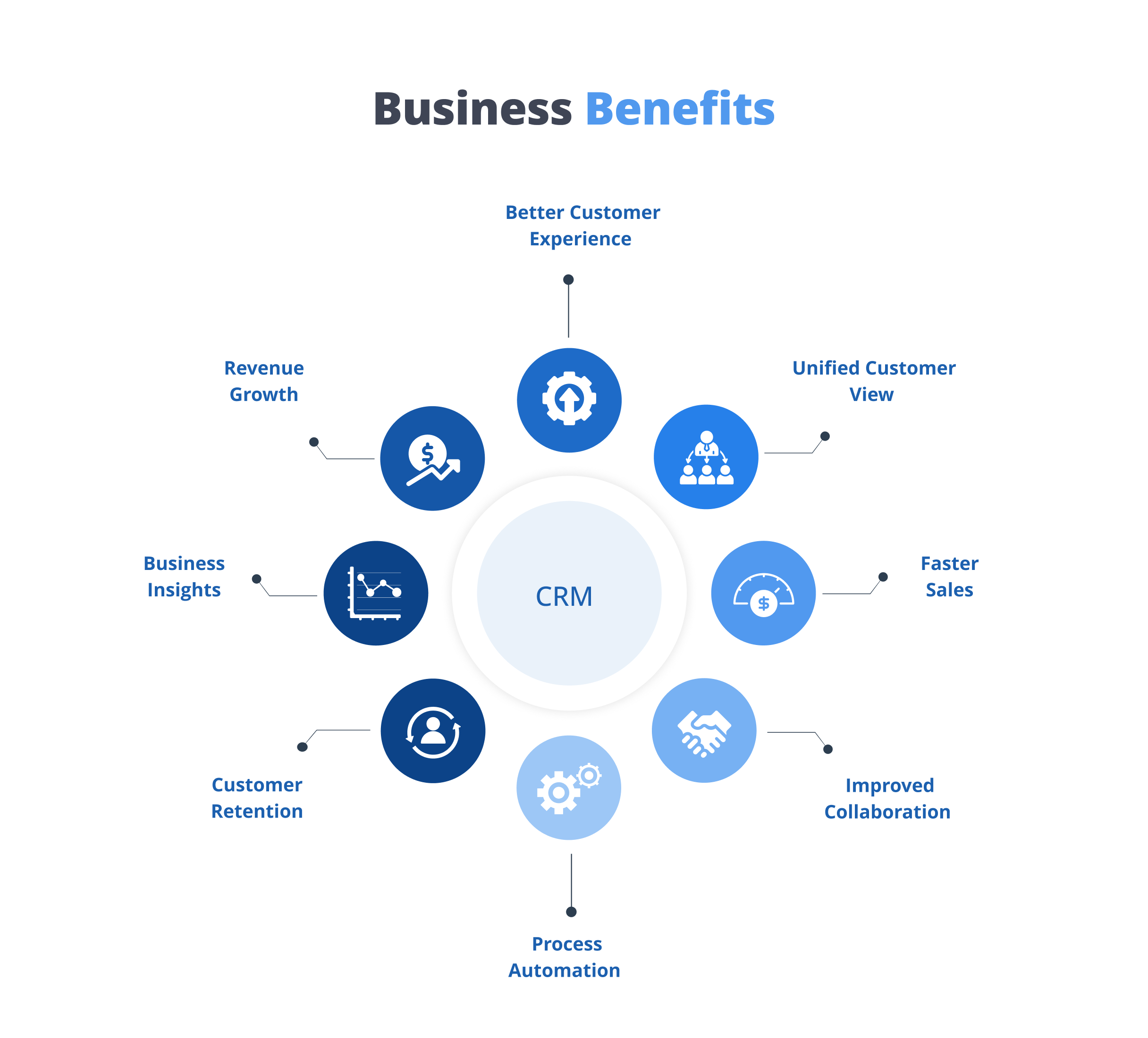
Implementing CRM creates value across every department.
Common business processes managed through CRM
A CRM platform supports multiple business functions.
Why choose iCustomer for enterprise customer relationship management?
Managing customer relationships requires more than storing contact information. Businesses need a platform that connects sales, service, customer interactions, and business processes into one unified customer experience.
iCustomer by CATS4U is an enterprise CRM platform designed to help organisations manage the complete customer lifecycle from a single, centralised solution.
It enables businesses to manage leads, customers, products, orders, and customer interactions while improving collaboration across sales, service, and support teams.
Key features of iCustomer:
- Unified customer view
- Lead and opportunity management
- Customer lifecycle management
- Sales pipeline management
- Order management
- Product management
- Workflow automation
- Customer service management
- Dashboards and analytics
- Native integration across the CATS4U suite
Whether you’re managing enterprise customers, distributors, partners, or growing customer bases, iCustomer helps build stronger relationships while improving operational efficiency and customer experiences.
Conclusion
Customer relationships have become one of the most valuable assets for modern businesses. As customer expectations continue to evolve, organisations need more than spreadsheets and disconnected systems to manage interactions effectively.
Customer Relationship Management provides a unified approach to managing leads, sales, service, and customer engagement throughout the entire lifecycle. It helps businesses improve collaboration, deliver better experiences, and make informed decisions based on real-time customer insights.
For organisations looking to strengthen customer relationships and support long-term growth, CRM is no longer just a sales tool; it’s a strategic business platform.
With iCustomer, businesses can centralise customer information, streamline customer-facing processes, and deliver consistent experiences that build stronger, long-lasting customer relationships.
Frequently asked questions
Customer Relationship Management is the practice of managing customer interactions, sales activities, service requests, and customer information through a centralised platform.
CRM helps businesses improve customer relationships, manage sales opportunities, automate workflows, enhance customer service, and gain better visibility into customer interactions.
Some major benefits include:
- Unified customer information
- Better lead management
- Improved customer service
- Sales automation
- Better collaboration
- Real-time business insights
CRM is commonly used by sales, marketing, customer service, business development, account management, and customer success teams.
Yes. Modern CRM platforms integrate with ERP, finance systems, marketing tools, customer service platforms, and other enterprise applications to create connected business workflows.
iCustomer provides a unified platform for managing leads, customers, products, orders, sales, customer service, and lifecycle management, helping organisations improve collaboration, strengthen customer relationships, and deliver better customer experiences.
