


Spreadsheets have long been a trusted tool for managing customer information. They are easy to create, simple to update, and often work well for small businesses with a limited customer base.
However, as a business grows, so do its customers, sales opportunities, support requests, and day-to-day interactions. What once seemed like a simple way to manage customer data can quickly become difficult to maintain.
Teams begin working from different spreadsheet versions, customer information gets duplicated, follow-ups are missed, and finding accurate information becomes increasingly time-consuming.
If these challenges sound familiar, your business may have outgrown spreadsheets.
In this blog, we’ll explore the common signs that indicate it’s time to move beyond spreadsheets, why a Customer Relationship Management (CRM) platform is the better alternative, and how iCustomer helps businesses manage customer relationships more effectively.
Why businesses start with spreadsheets
For many organisations, spreadsheets are the first step in managing customer information.
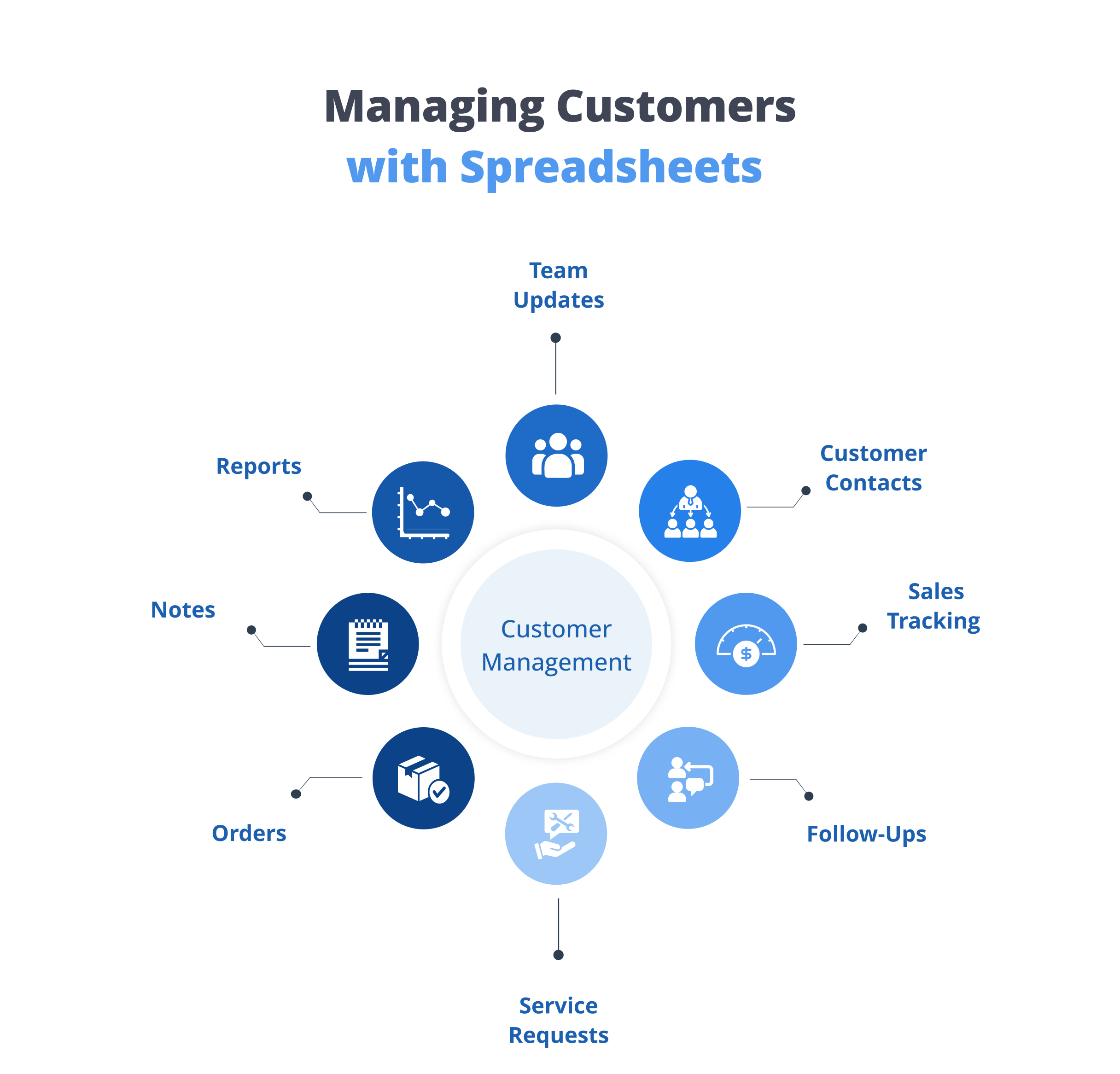
They are commonly used for:
- Customer contact lists
- Lead tracking
- Sales pipelines
- Follow-up reminders
- Order tracking
- Customer service records
- Account management
While spreadsheets are useful initially, they weren’t designed to manage growing customer relationships across multiple teams and business functions.
Signs your business has outgrown spreadsheets
Here are some clear indicators that it’s time to adopt a CRM platform.
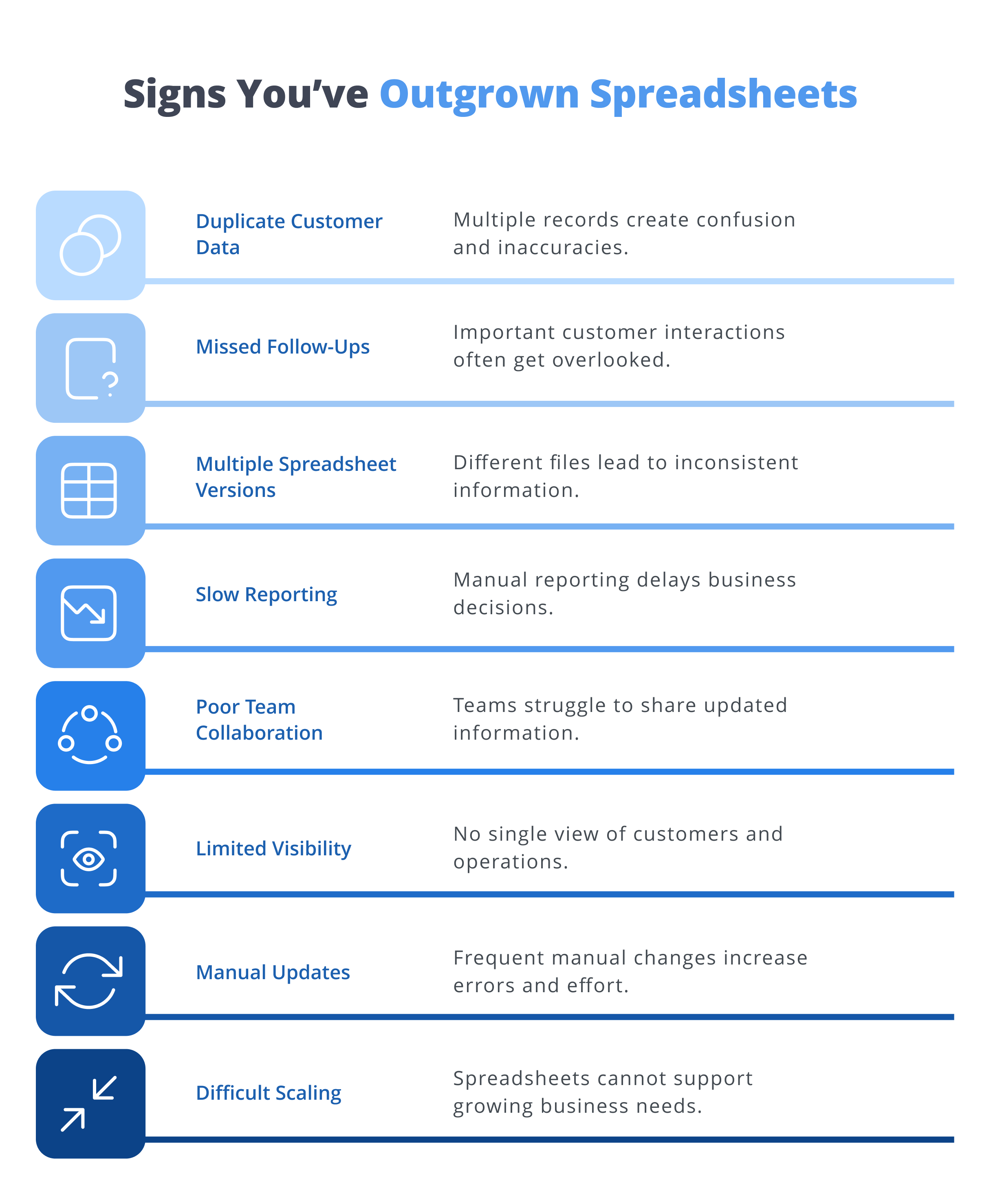
Customer information is stored in multiple files
Different departments often maintain their own spreadsheets.
As a result
- Customer records become duplicated
- Information becomes inconsistent
- Teams work with outdated data
Without a single source of truth, collaboration becomes difficult.
You’re missing follow-ups
Sales opportunities and customer requests often depend on timely follow-ups.
When reminders are managed manually, it’s easy to overlook
- Sales calls
- Customer meetings
- Renewal dates
- Service requests
- Payment follow-ups
Missed follow-ups can affect both customer relationships and business growth.
Finding customer information takes too long
As spreadsheets grow, locating the right information becomes increasingly difficult.
Employees spend valuable time searching through multiple files instead of helping customers.
A centralised system provides immediate access to customer information.
Your teams aren’t working together
Sales, customer service, marketing, and account management often maintain separate customer records.
Without shared visibility
- Teams repeat the same work
- Customer interactions become inconsistent
- Internal communication slows down
Reporting is manual and time-consuming
Generating reports from spreadsheets often requires manual compilation and data validation.
This makes it difficult to answer questions such as
- Which leads are progressing?
- Which customers need follow-ups?
- What is the current sales pipeline?
- Which accounts require attention?
A CRM platform provides these insights automatically through dashboards and reports.
Customer growth is becoming difficult to manage
As the customer base expands, spreadsheets become increasingly difficult to maintain.
Managing thousands of interactions, orders, communications, and service requests manually doesn’t scale.
A CRM platform grows with your business.
Spreadsheet-based customer management vs CRM
| Spreadsheet-Based Customer Management | CRM Platform |
|---|---|
| Customer data spread across files | Centralised customer database |
| Manual follow-up tracking | Automated reminders and workflows |
| Limited collaboration | Shared customer information across teams |
| Manual reporting | Real-time dashboards and analytics |
| Difficult to manage customer growth | Easily scales with the business |
| Higher risk of errors | Accurate and consistent customer records |
| Time-consuming updates | Automated data management |
A CRM platform replaces scattered spreadsheets with a connected, organised system that supports the entire customer lifecycle.
How CRM improves customer management
Modern CRM platforms help businesses move beyond simply storing customer information.
They enable organisations to:
- Manage leads and opportunities
- Track customer interactions
- Automate follow-ups
- Manage customer service requests
- Monitor sales pipelines
- Improve collaboration
- Generate business insights
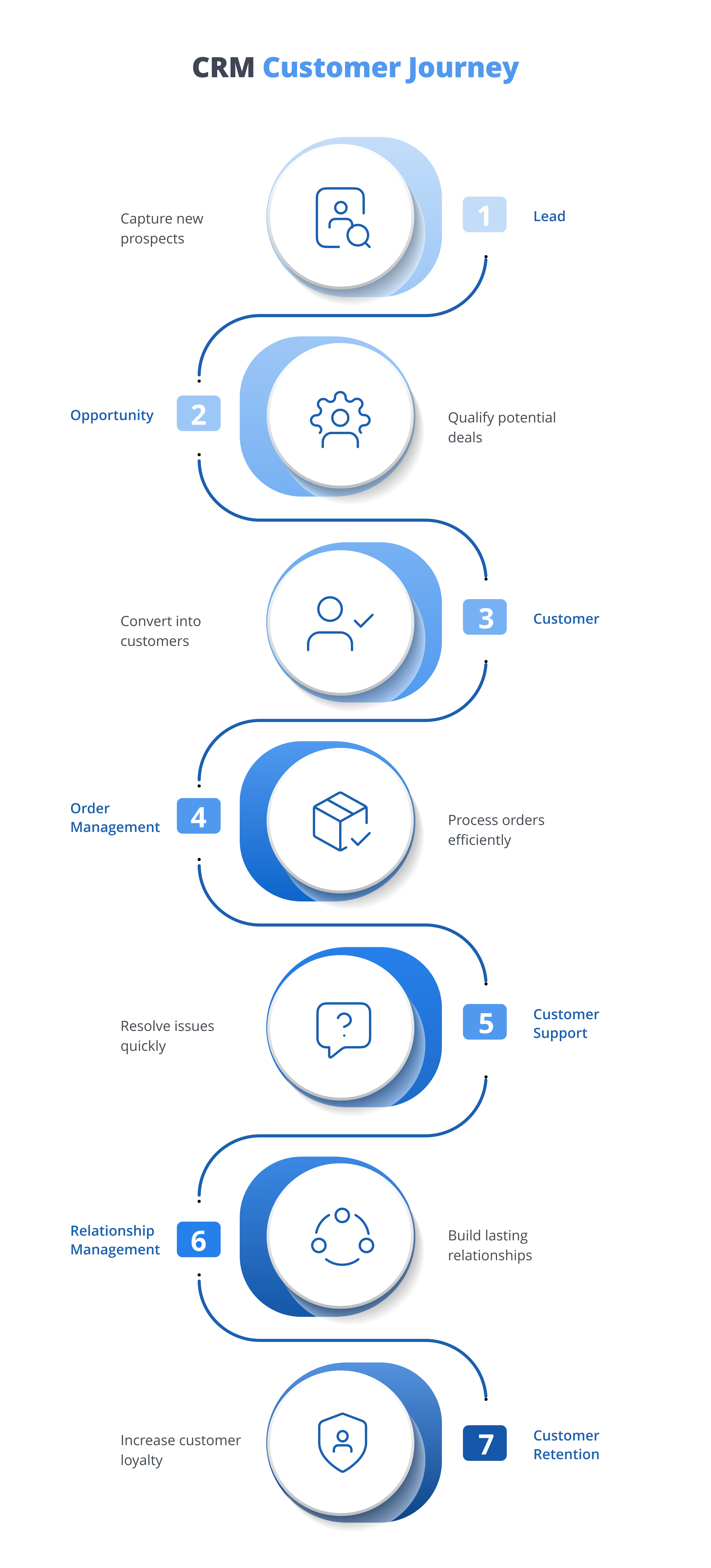
- Support customer lifecycle management
Every customer interaction becomes easier to manage from one platform.
Benefits of moving from spreadsheets to CRM
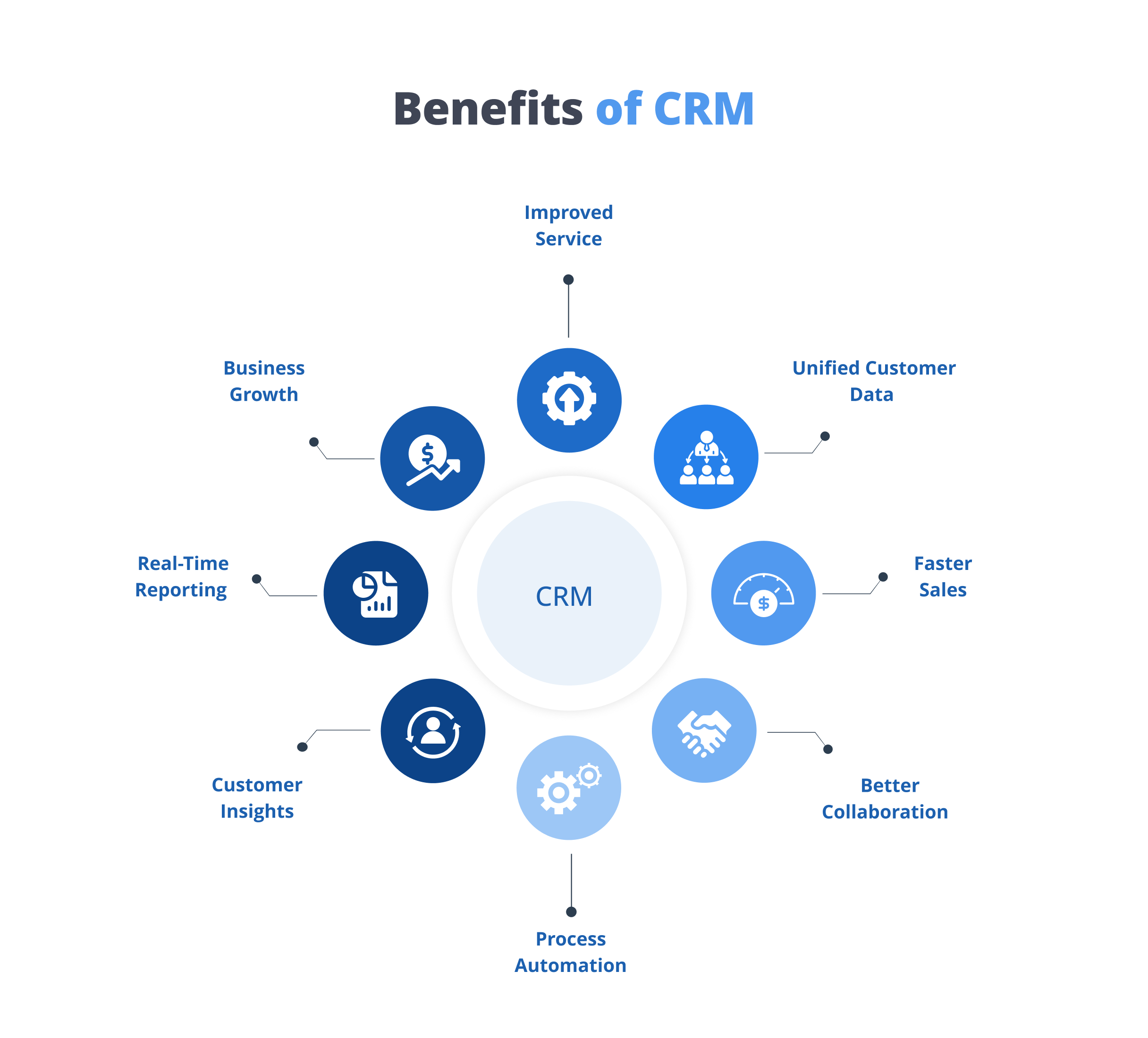
A CRM platform creates value for every department.
Why choose iCustomer for enterprise customer management?
As customer relationships become more complex, businesses need more than spreadsheets to manage interactions effectively. They need a platform that connects sales, service, products, orders, and customer information into one unified view.
iCustomer by CATS4U is an enterprise CRM platform designed to help organisations manage the complete customer lifecycle from a single solution.
It enables businesses to centralise customer information, streamline sales activities, automate workflows, and improve collaboration across customer-facing teams.
Key features of iCustomer:
- Unified customer view
- Lead and opportunity management
- Customer lifecycle management
- Sales pipeline management
- Product and order management
- Workflow automation
- Customer service management
- Dashboards and analytics
- Role-based access controls
- Native integration across the CATS4U suite
Whether you’re managing enterprise customers, distributors, partners, or growing sales teams, iCustomer helps eliminate disconnected customer records while delivering a more connected customer experience.
Conclusion
Spreadsheets may work well in the early stages of business, but they become increasingly difficult to manage as customer relationships grow.
If your teams are struggling with duplicate records, missed follow-ups, manual reporting, or limited visibility, it’s a clear sign that your business has outgrown spreadsheet-based customer management.
A modern CRM platform provides the tools needed to centralise customer information, automate routine tasks, improve collaboration, and strengthen customer relationships.
With iCustomer, businesses can move beyond spreadsheets and manage the complete customer lifecycle through one intelligent, scalable platform that supports long-term growth.
Frequently asked questions
Spreadsheets become difficult to manage as customer data grows. They often lead to duplicate records, manual updates, limited collaboration, and reporting challenges.
Businesses should consider CRM when customer information becomes difficult to manage, teams struggle with collaboration, follow-ups are missed, or reporting becomes time-consuming.
Some key advantages include:
- Centralised customer information
- Automated follow-ups
- Better collaboration
- Real-time reporting
- Improved customer visibility
- Easier scalability
Yes. CRM platforms support sales, marketing, customer service, account management, and leadership teams through shared customer information and workflows.
CRM provides a complete view of every customer, enabling faster responses, personalised communication, consistent service, and better relationship management.
iCustomer centralises customer information, automates sales and service processes, manages the customer lifecycle, and provides real-time insights, helping businesses replace disconnected spreadsheets with a unified CRM platform.
