


A customer relationship begins long before the first purchase.
A person may discover your brand through a website, social media, referral, advertisement, or direct interaction. From that first interaction, every experience shapes their decision to engage with your business.
Once they become a customer, the relationship continues. Businesses need to understand their needs, provide timely support, encourage repeat purchases, and create experiences that keep them coming back.
Managing all these interactions can become challenging when customer information is spread across different systems and teams.
This is where Customer Lifecycle Management becomes important.
Customer Lifecycle Management helps businesses understand and manage customer interactions across every stage of the relationship, from the first interaction and lead generation to conversion, retention, and loyalty.
In this blog, we'll explore what Customer Lifecycle Management means, its different stages, why it matters, and how iCustomer helps businesses build stronger, more connected customer relationships.
What is customer lifecycle management?
Customer Lifecycle Management is the process of managing and improving customer relationships throughout the entire customer journey.
It involves understanding where a customer is in their journey and providing the right communication, service, and experience at each stage.
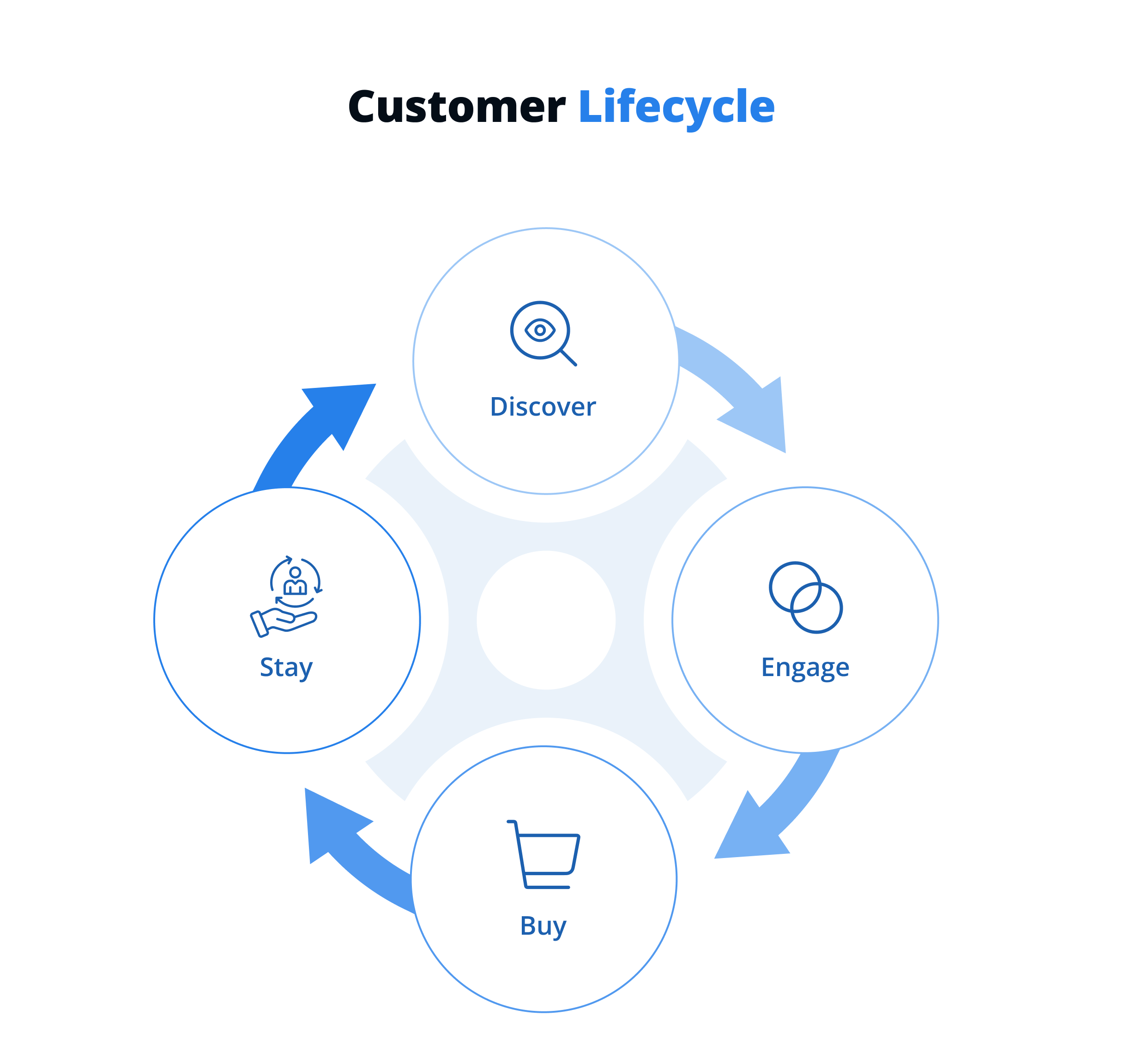
A typical customer lifecycle includes:
- Awareness
- Engagement
- Conversion
- Retention
- Loyalty
The journey isn't always linear. Customers may move between stages depending on their needs, experiences, and interactions with the business.
Why is customer lifecycle management important?
Customers interact with businesses through multiple channels and departments.
A customer may speak with sales, contact customer support, receive marketing communication, and use a product or service, all during the same relationship.
If these interactions aren't connected, businesses may struggle to understand the customer's complete journey.
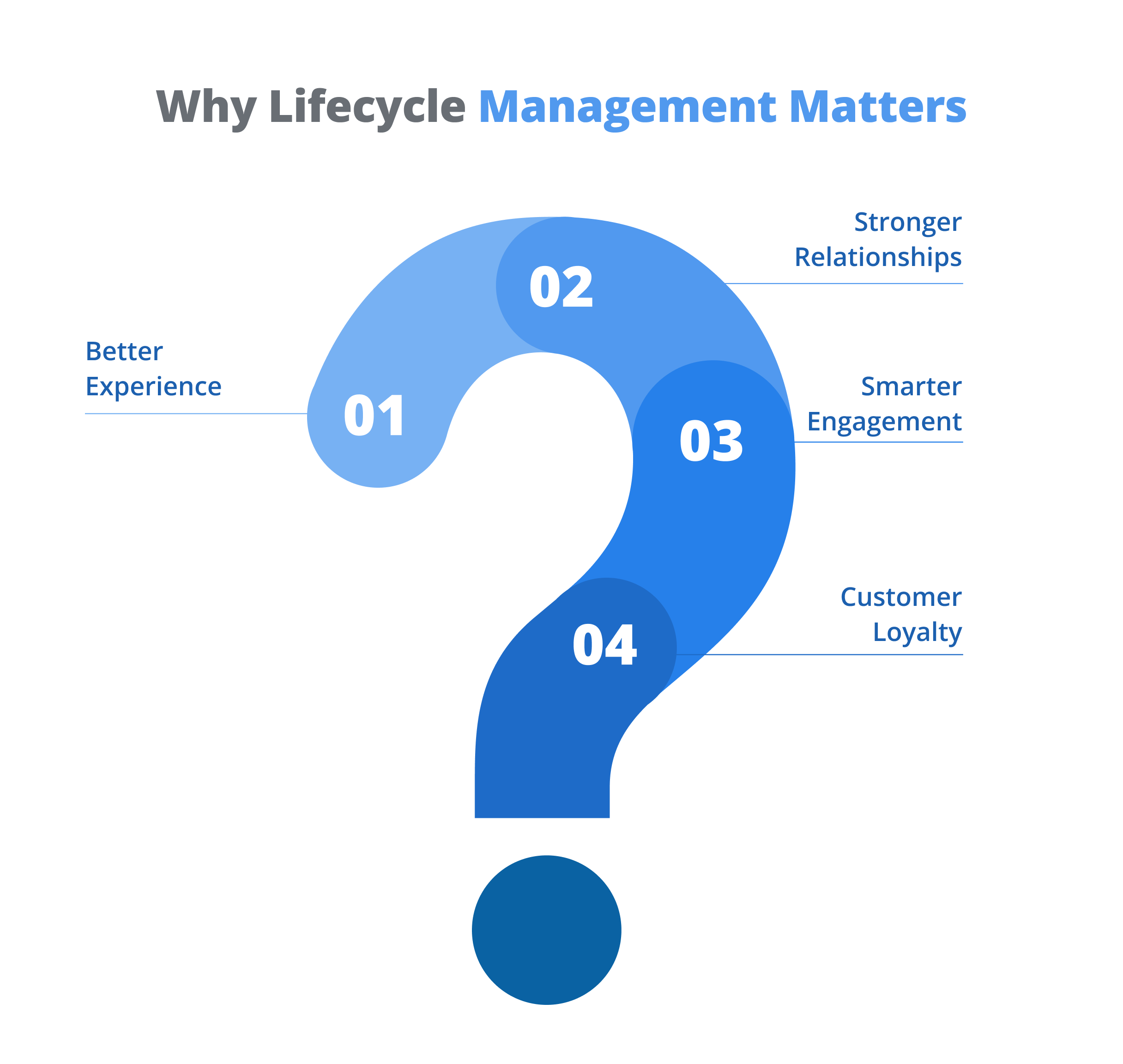
Effective lifecycle management helps businesses:
- Understand customer needs
- Personalise interactions
- Improve customer experience
- Strengthen relationships
- Identify growth opportunities
- Improve customer retention
Instead of treating every interaction separately, businesses can look at the customer relationship as a complete journey.
The 5 stages of the customer lifecycle
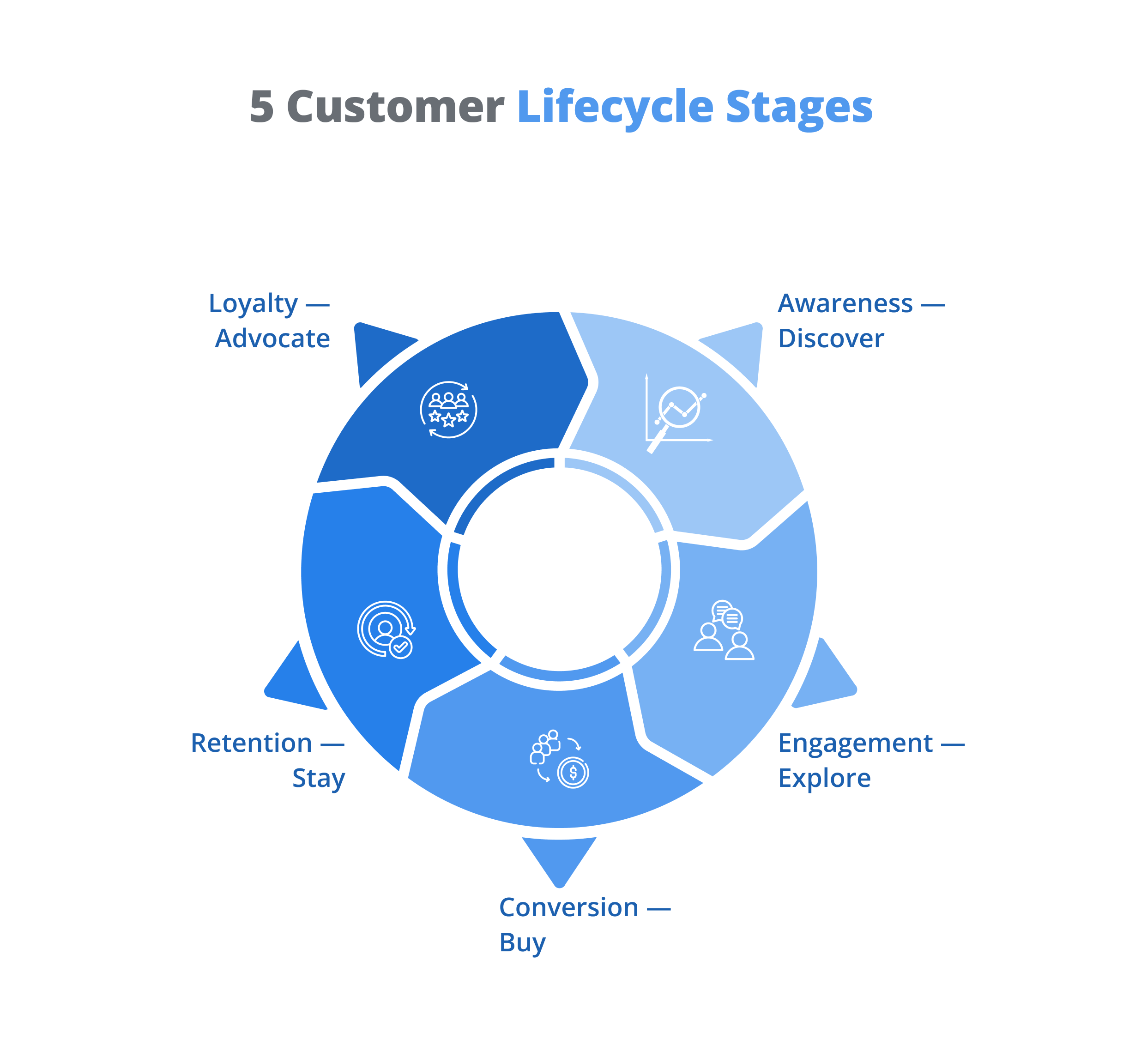
Understanding each stage helps businesses create more relevant customer experiences.
Awareness: getting discovered
The customer journey begins when a potential customer becomes aware of your business.
They may discover your brand through:
- Search engines
- Social media
- Referrals
- Advertising
- Website content
- Events
At this stage, the goal is to create awareness and encourage potential customers to learn more.
Business focus
Create awareness and build interest.
Engagement: building interest
Once a potential customer knows about your business, the next step is to build engagement.
Customers may explore your website, download resources, ask questions, interact with sales teams, or compare different solutions.
Businesses should use this stage to understand customer needs and provide useful information.
Business focus
Build trust and understand customer needs.
Conversion: turning leads into customers
When a prospect is ready to decide, businesses need to make the buying process simple and seamless.
Sales teams can use customer information and previous interactions to provide relevant recommendations and address concerns.
Business focus
Make conversion simple and valuable.
Retention: keeping customers engaged
The relationship doesn't end after a purchase.
Businesses need to continue supporting customers through onboarding, service, communication, and ongoing engagement.
A positive experience encourages customers to continue using the product or service.
Business focus
Deliver consistent value after the purchase.
Loyalty: creating long-term relationships
Loyal customers can become some of a business's strongest advocates.
They may make repeat purchases, recommend the brand, provide feedback, and explore additional products or services.
Businesses can strengthen loyalty through personalised experiences, rewards, proactive communication, and excellent service.
Business focus
Turn positive experiences into long-term relationships.
Customer lifecycle management vs traditional customer management
Customer Lifecycle Management shifts the focus from individual transactions to long-term customer relationships.
| Traditional Customer Management | Customer Lifecycle Management |
|---|---|
| Focuses on individual interactions | Focuses on the complete customer journey |
| Customer information may be fragmented | Centralised customer information |
| Reactive communication | Timely and personalised engagement |
| Limited customer context | Complete interaction history |
| Separate sales and service activities | Connected customer experience |
| Focus on acquiring customers | Focus on acquiring and retaining customers |
| Manual reporting | Data-driven customer insights |
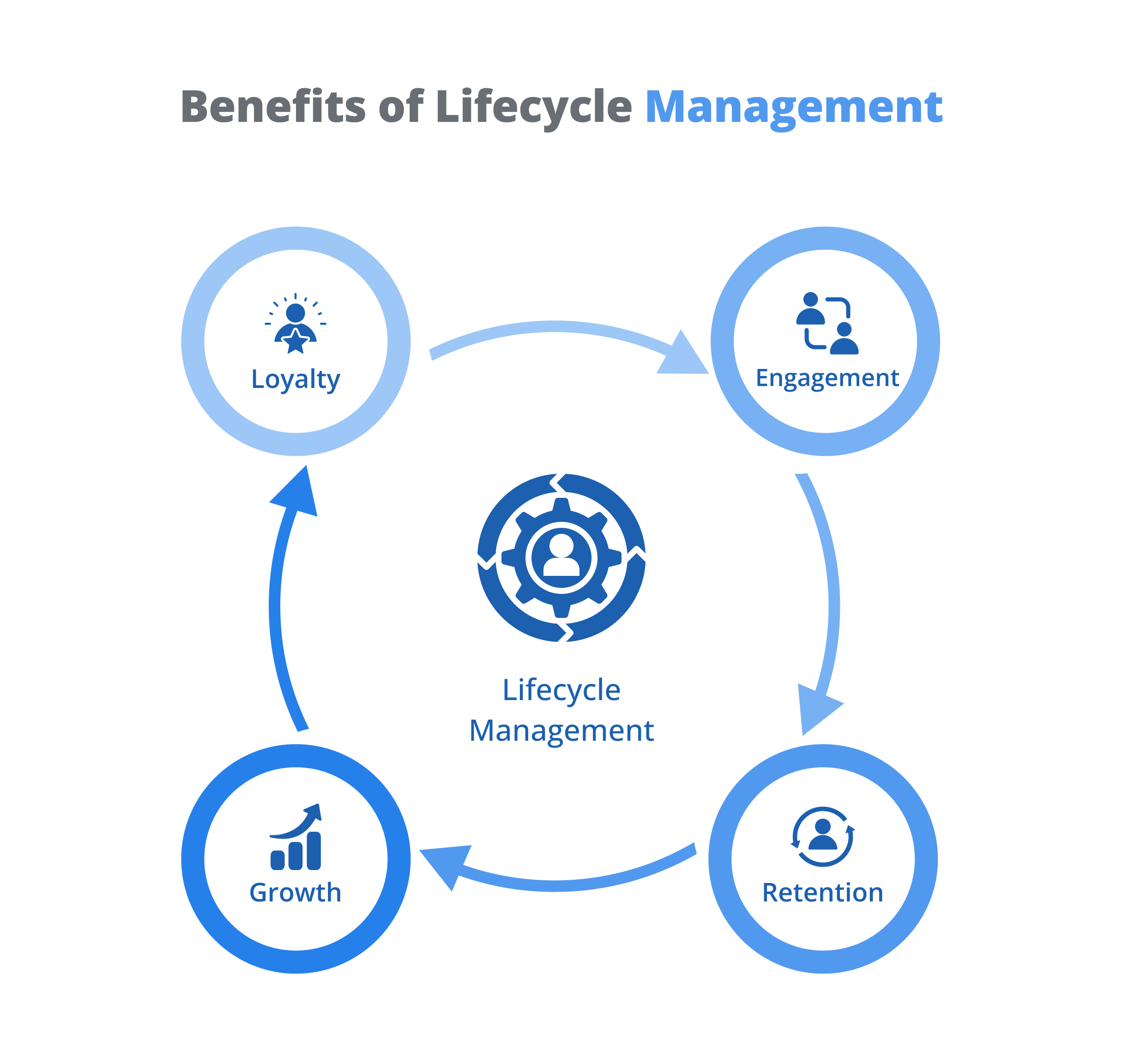
Key benefits of customer lifecycle management
A well-managed customer lifecycle can benefit businesses across sales, marketing, customer service, and leadership teams.
Better customer understanding
Businesses can bring together customer information and interactions to understand their needs and preferences.
Benefits
- Better customer context
- More relevant engagement
Personalised customer experiences
Understanding where customers are in their journey helps businesses deliver more relevant communication and support.
Benefits
- Better engagement
- Stronger relationships
Improved customer retention
Consistent experiences and timely support help businesses maintain stronger customer relationships.
Benefits
- Higher customer satisfaction
- Long-term relationships
Better sales opportunities
Lifecycle insights can help sales teams identify opportunities for upselling, cross-selling, and customer expansion.
Benefits
- Better opportunities
- Stronger customer value
Improved team collaboration
When customer information is available across relevant teams, sales, marketing, and service teams can work with greater context.
Benefits
- Better coordination
- Consistent communication
Data-driven decision-making
Customer data can help businesses identify trends, understand behaviour, and improve their customer strategies.
Benefits
- Better planning
- Smarter decisions
How businesses can improve customer lifecycle management
Managing the customer lifecycle effectively requires a combination of technology, processes, and customer-focused thinking.
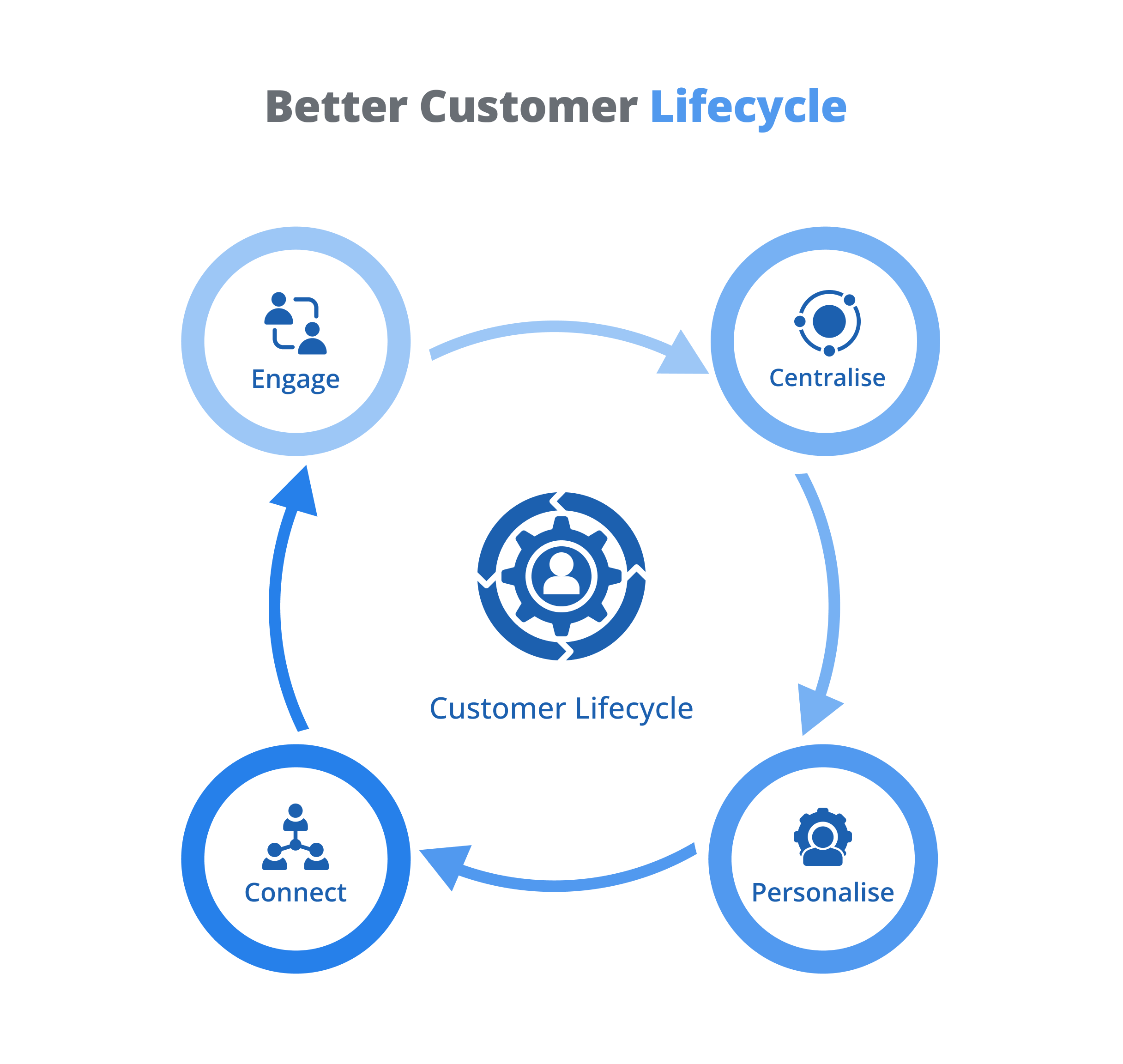
Centralise customer information
Bring customer details, interactions, requests, and activities into one connected platform.
Understand customer needs
Use customer information to understand preferences, behaviour, and expectations.
Personalise communication
Deliver relevant messages based on the customer's stage and interactions.
Connect sales and service
Ensure customer-facing teams have access to the information they need to provide consistent experiences.
Use customer insights
Analyse customer trends to identify opportunities for improvement and growth.
Continue engagement after purchase
Maintain relationships through support, useful communication, feedback, and relevant offers.
Common customer lifecycle management challenges
Despite its benefits, managing the customer lifecycle can be difficult when businesses rely on disconnected systems and manual processes.
Common challenges include:
- Scattered customer information
- Duplicate customer records
- Inconsistent communication
- Limited customer history
- Manual follow-ups
- Disconnected sales and service teams
- Difficulty identifying customer opportunities
- Limited visibility into customer journeys
A connected CRM platform can help address these challenges by bringing customer information and interactions into one central environment.
Why choose iCustomer for customer lifecycle management?
Managing customer relationships across the entire lifecycle requires more than a traditional contact database. Businesses need a platform that connects customer information, interactions, sales activities, service requests, and engagement.
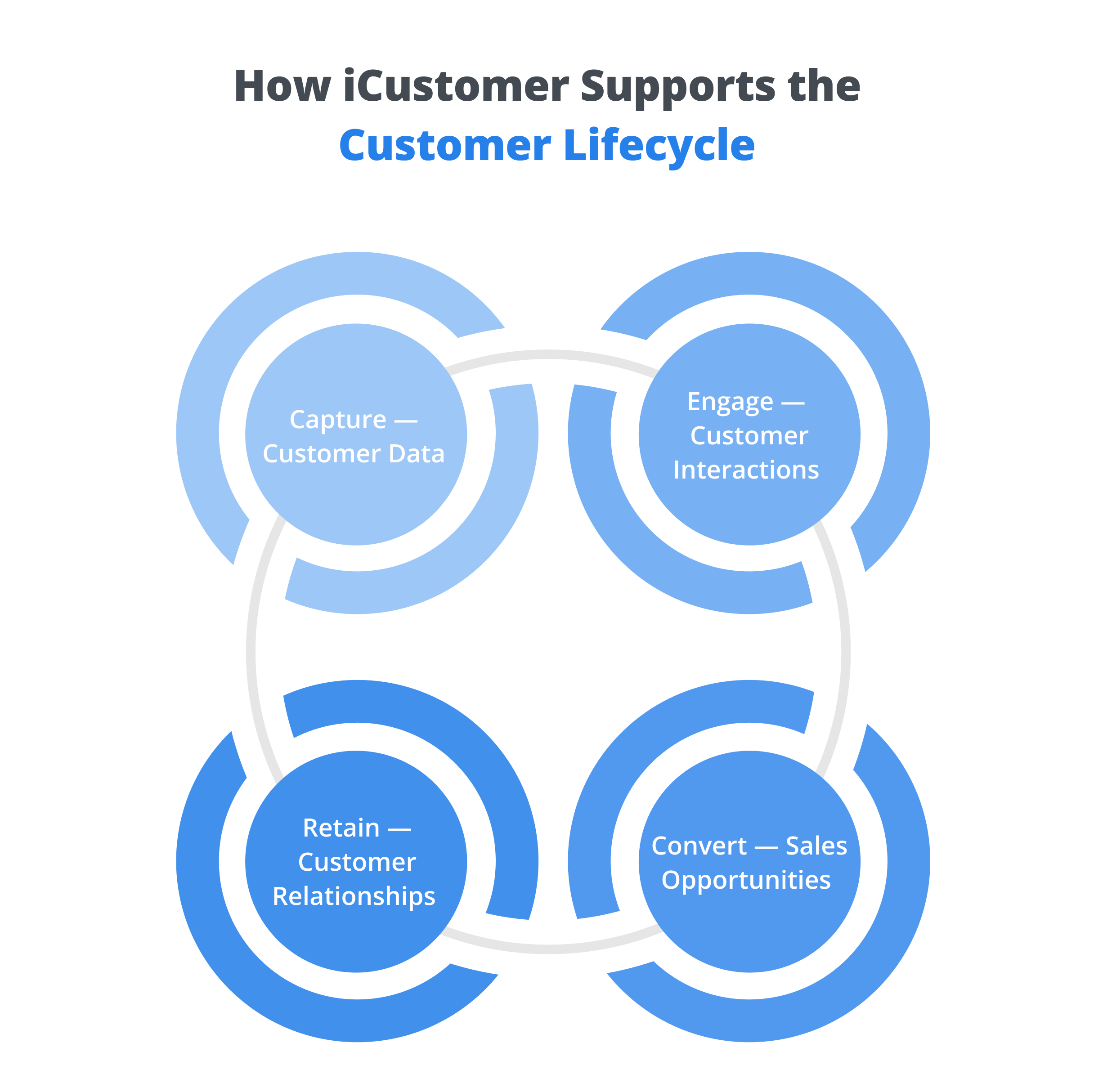
iCustomer by CATS4U is a Customer Relationship Management platform designed to help organisations manage customer relationships from initial engagement through long-term retention and loyalty.
By bringing customer information and interactions into a unified platform, iCustomer helps teams understand customer needs, improve engagement, streamline sales activities, and deliver more consistent customer experiences.
Key features of iCustomer:
- Centralised customer profiles
- Lead and opportunity management
- Customer interaction history
- Sales pipeline management
- Customer service management
- Follow-up management
- Customer communication
- Customer insights and reporting
- Activity management
- Native integration across the CATS4U suite
Whether you're managing new leads, supporting existing customers, or developing long-term relationships, iCustomer provides the visibility and tools needed to manage the complete customer lifecycle.
Conclusion
Customer relationships are built over time. A successful customer journey doesn't end with a purchase; it continues through support, engagement, personalisation, and ongoing value.
Customer Lifecycle Management helps businesses look beyond individual transactions and understand the complete relationship with every customer.
By centralising customer information, connecting teams, personalising interactions, and using customer insights, businesses can create better experiences while identifying opportunities for retention and growth.
With iCustomer, organisations can manage customer relationships across the entire lifecycle, from lead generation and sales engagement to customer service and long-term loyalty.
The result is a more connected customer experience and a stronger foundation for lasting business relationships.
Frequently asked questions
Customer Lifecycle Management is the process of managing and improving customer relationships across every stage of the customer journey, from initial awareness to long-term loyalty.
The customer lifecycle typically includes:
- Awareness
- Engagement
- Conversion
- Retention
- Loyalty
It helps businesses understand customer needs, personalise interactions, improve customer experiences, strengthen retention, and build long-term relationships.
A CRM platform centralises customer information, interactions, sales activities, service requests, and communication, giving teams a more complete view of the customer relationship.
Businesses can improve retention by providing consistent service, understanding customer needs, personalising communication, responding to feedback, and continuing engagement after purchase.
iCustomer helps businesses manage customer profiles, leads, opportunities, interactions, sales activities, service activities, and customer insights through a unified CRM platform, supporting the customer journey from initial engagement to long-term relationships.
