


The way businesses operate is changing quickly.
Customers expect better digital experiences. Employees rely on connected tools to get work done. Business leaders need faster access to information. At the same time, technologies such as Artificial Intelligence, automation, cloud computing, and advanced analytics are changing how organisations operate.
In this environment, modern technology alone is not enough.
A future-ready enterprise can adapt to change without constantly rebuilding its entire business.
It has the right technology, processes, people, and culture to respond to new opportunities and challenges.
But what exactly makes an organisation future-ready?
In this blog, we'll explore the key characteristics of a future-ready enterprise and how businesses can build a stronger foundation for continuous digital transformation—with CATS4U as an integrated enterprise technology ecosystem.
What is a future-ready enterprise?
A future-ready enterprise is an organisation that is prepared to adapt to changing technology, customer expectations, market conditions, and business requirements.
It doesn't mean predicting exactly what the future will look like.
Instead, it means building a business that can respond to change quickly and confidently.
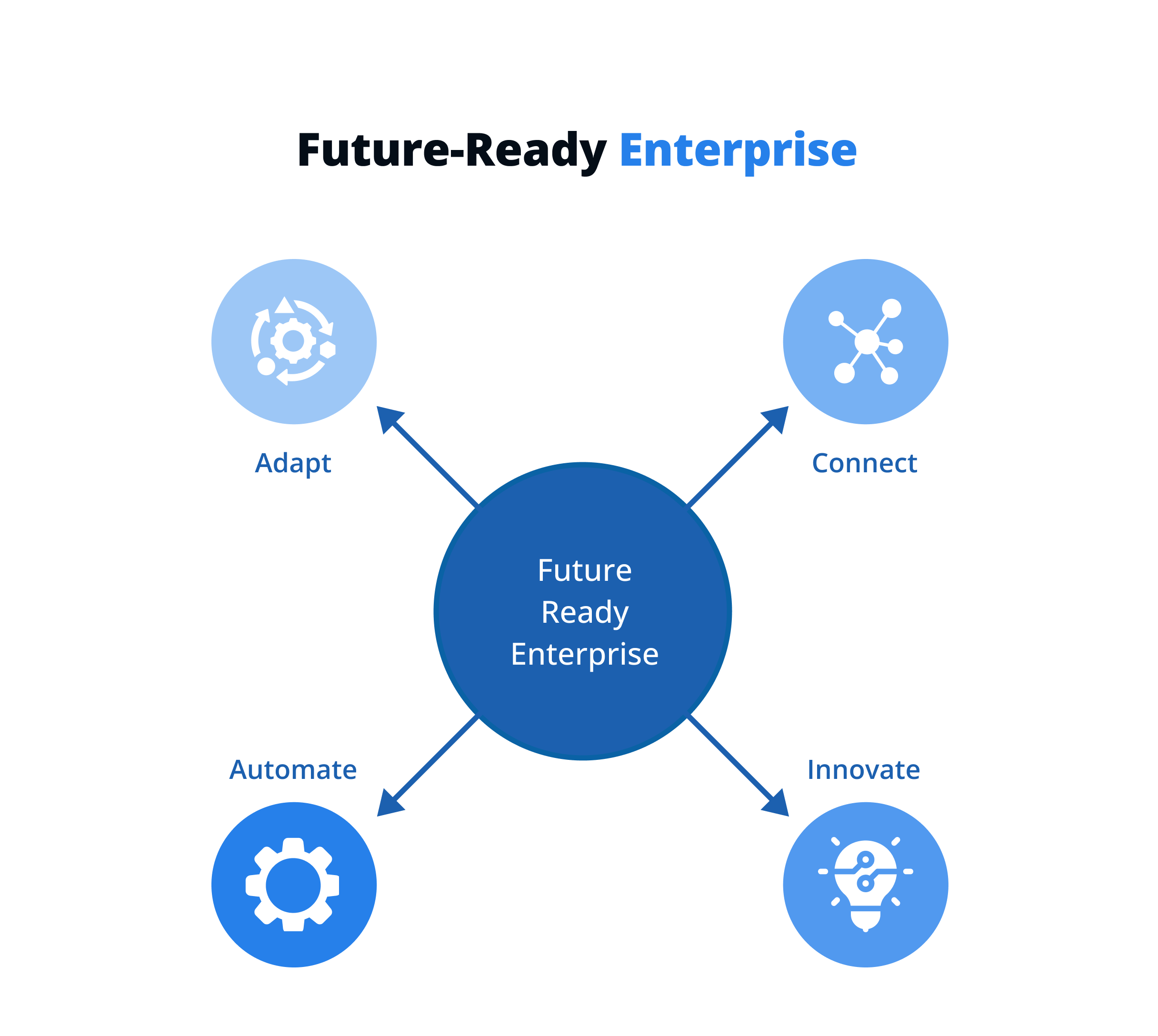
A future-ready organisation typically focuses on:
- Digital transformation
- Business agility
- Intelligent automation
- Data-driven decisions
- Cybersecurity
- Connected systems
- Employee experience
- Customer experience
- Continuous innovation
The goal is simple: build a business that can evolve without losing momentum.
Why do businesses need to become future-ready?
Business change doesn't happen only when a new technology is introduced.
Customer expectations change. Competitors introduce new services. Regulations evolve. Employees adopt new ways of working. Business processes become more complex.
An organisation that cannot adapt quickly may spend more time fixing outdated processes than creating new opportunities.
A future-ready approach helps businesses:
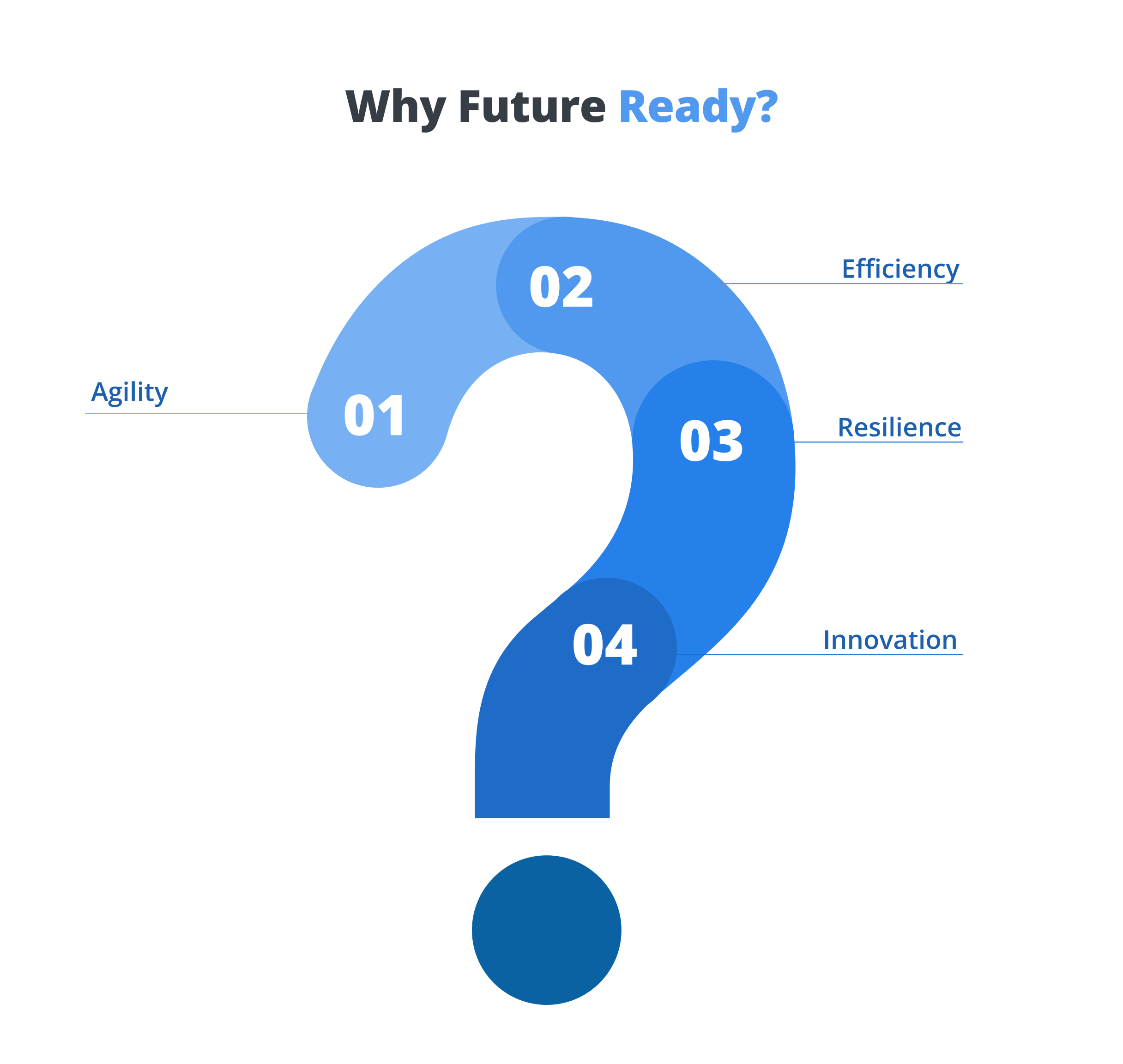
- Respond faster to change
- Improve operational efficiency
- Make informed decisions
- Deliver better customer experiences
- Support employees
- Reduce operational complexity
- Adopt emerging technologies more effectively
Being future-ready is less about having the newest technology and more about using technology effectively when it matters.
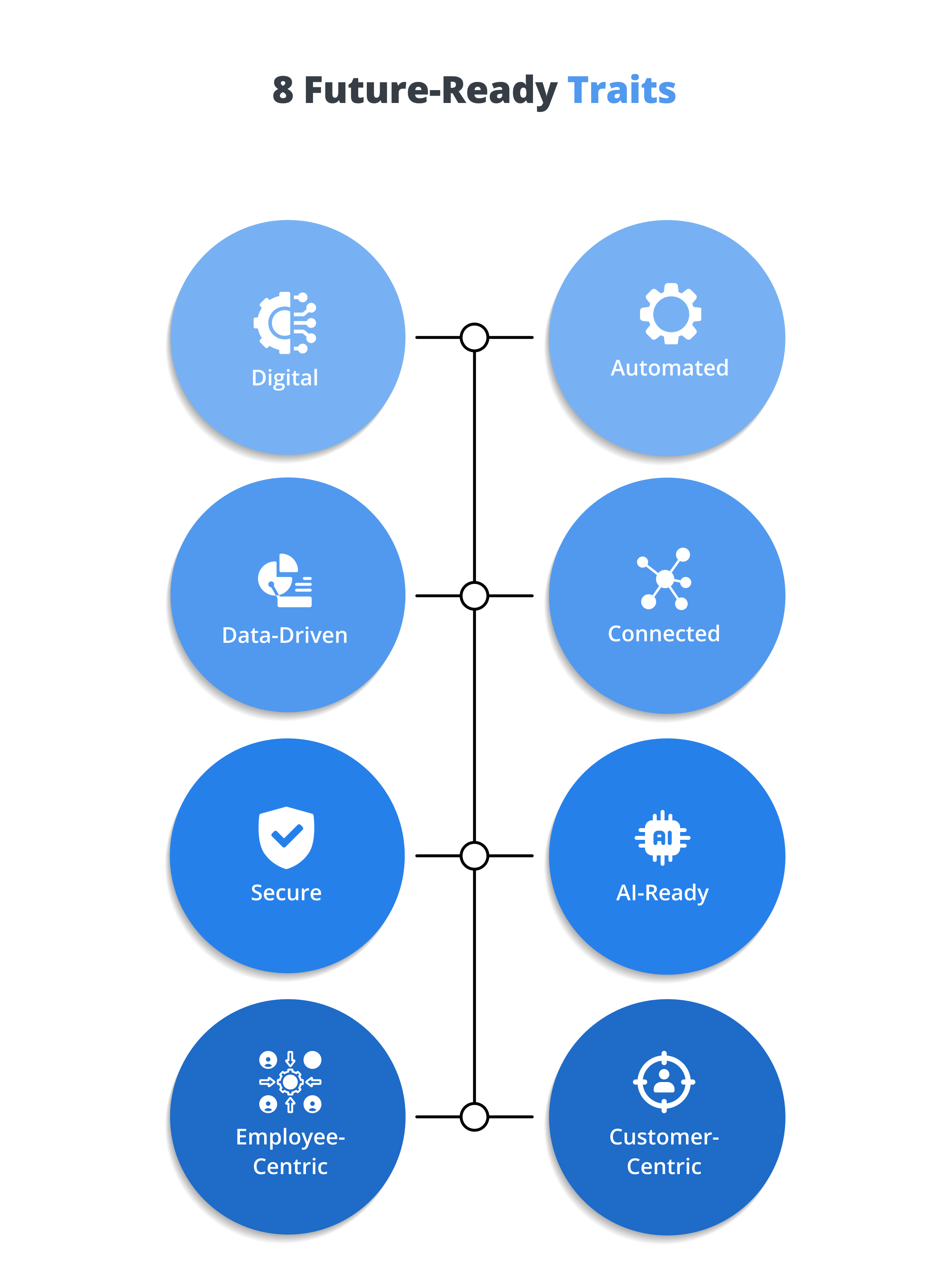
8 characteristics of a future-ready enterprise
Digital-first operations
Future-ready businesses look for opportunities to replace manual and disconnected processes with digital workflows.
Focus areas
- Digital workflows
- Process automation
- Connected applications
- Self-service operations
Intelligent automation
Automation is no longer limited to simple repetitive tasks. Modern businesses can combine automation with AI and analytics to make processes more intelligent.
Focus areas
- Workflow automation
- AI-powered processes
- Intelligent decisions
- Process orchestration
Data-driven decision-making
Future-ready organisations don't simply collect data. They turn it into useful business insights.
Focus areas
- Business intelligence
- Data visualisation
- Real-time insights
- Performance analytics
Connected enterprise systems
Future-ready organisations connect their systems so information can move between functions without unnecessary manual effort.
Focus areas
- System integration
- Shared data
- Connected workflows
- Unified operations
Strong cybersecurity
Digital transformation increases the importance of cybersecurity. A future-ready organisation considers security as part of its digital foundation.
Focus areas
- Asset visibility
- Vulnerability management
- Risk management
- Security operations
AI-ready infrastructure
Artificial Intelligence is becoming part of everyday business operations. Future-ready enterprises prepare their data, processes, systems, and governance frameworks to adopt AI responsibly and effectively.
Focus areas
- AI adoption
- AI agents
- Enterprise data
- AI governance
Employee-centric digital experience
Technology should make work easier, not more complicated. Future-ready businesses focus on giving employees the right tools and digital experience.
Focus areas
- Digital workplace
- Workforce insights
- Employee experience
- Collaboration
Customer-centric operations
Future-ready organisations use technology to understand customers, personalise interactions, simplify service delivery, and build stronger relationships.
Focus areas
- Customer insights
- CRM
- Personalised engagement
- Customer service
Future-ready enterprise vs traditional enterprise
The difference is not simply the technology a business owns. It is how effectively that technology helps the organisation adapt, connect, and act.
| Manual processes | Automated workflows |
|---|---|
| Disconnected systems | Integrated platforms |
| Static reporting | Interactive insights |
| Reactive operations | Proactive operations |
| Technology-focused approach | Business-focused technology |
| Periodic innovation | Continuous innovation |
| Separate data sources | Connected business data |
| Security as an IT function | Security as a business priority |
| Fixed processes | Adaptable processes |
| Limited AI adoption | AI-ready operations |
The technology foundation of a future-ready enterprise
Technology plays an important role in creating a future-ready organisation, but businesses should avoid adopting technology simply because it is new.
Instead, technology should solve real business challenges.
A strong digital foundation typically includes:
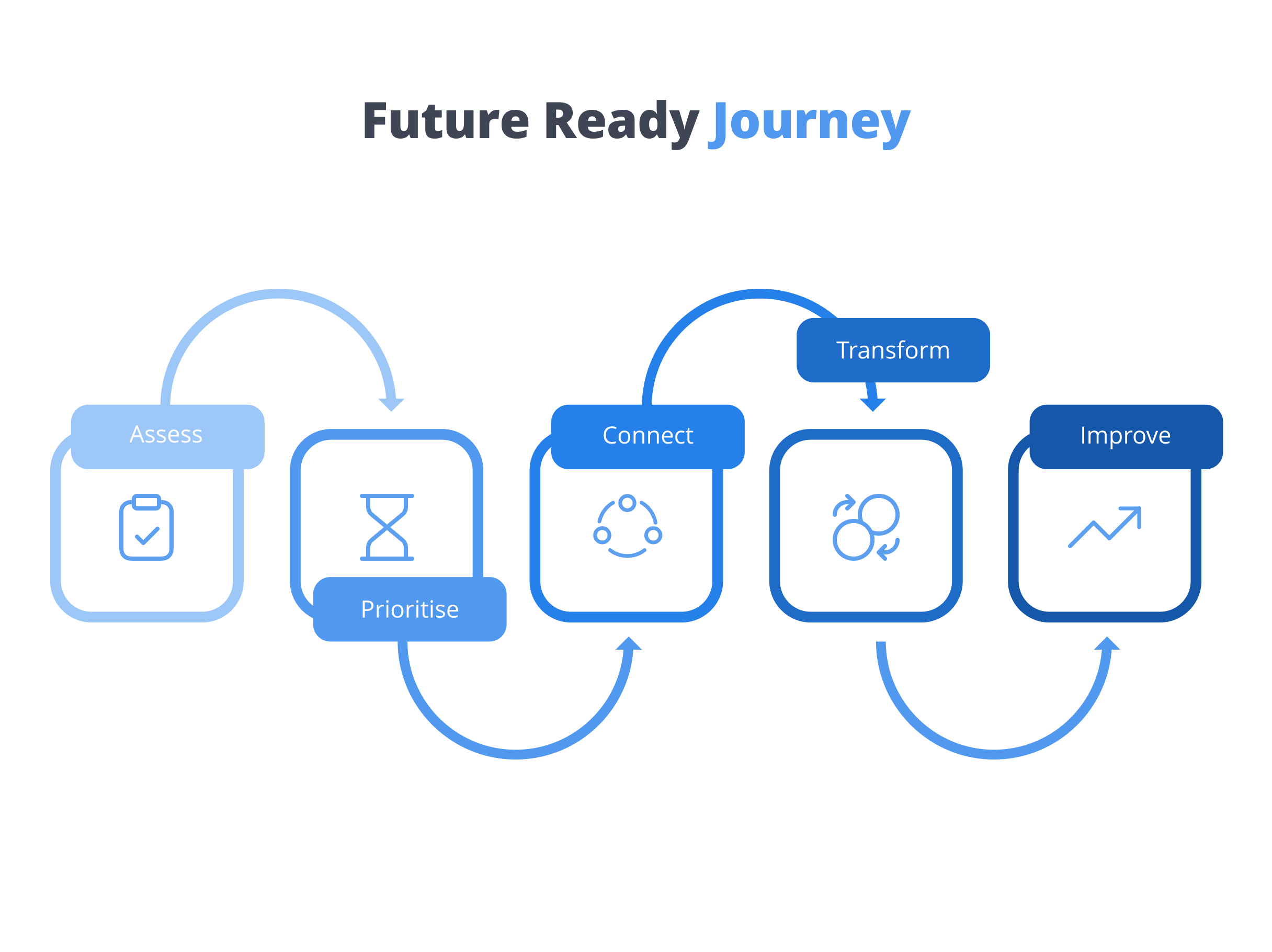
How businesses can become future-ready
Becoming future-ready doesn't require organisations to transform everything at once.
A practical approach is to start with the areas that create the greatest business value.
Identify business gaps
Understand where manual processes, disconnected systems, or limited visibility are creating challenges.
Prioritise high-value opportunities
Focus on processes where automation, integration, or AI can make a meaningful difference.
Build a connected technology environment
Connect business applications and data wherever possible.
Strengthen data foundations
Ensure business data is accessible, reliable, and useful for analytics and AI.
Build security into transformation
Consider security, risk, and governance throughout every digital initiative.
Empower employees
Give employees intuitive tools and digital experiences that support how they work.
Keep improving
Digital transformation should be an ongoing process, not a one-time project.
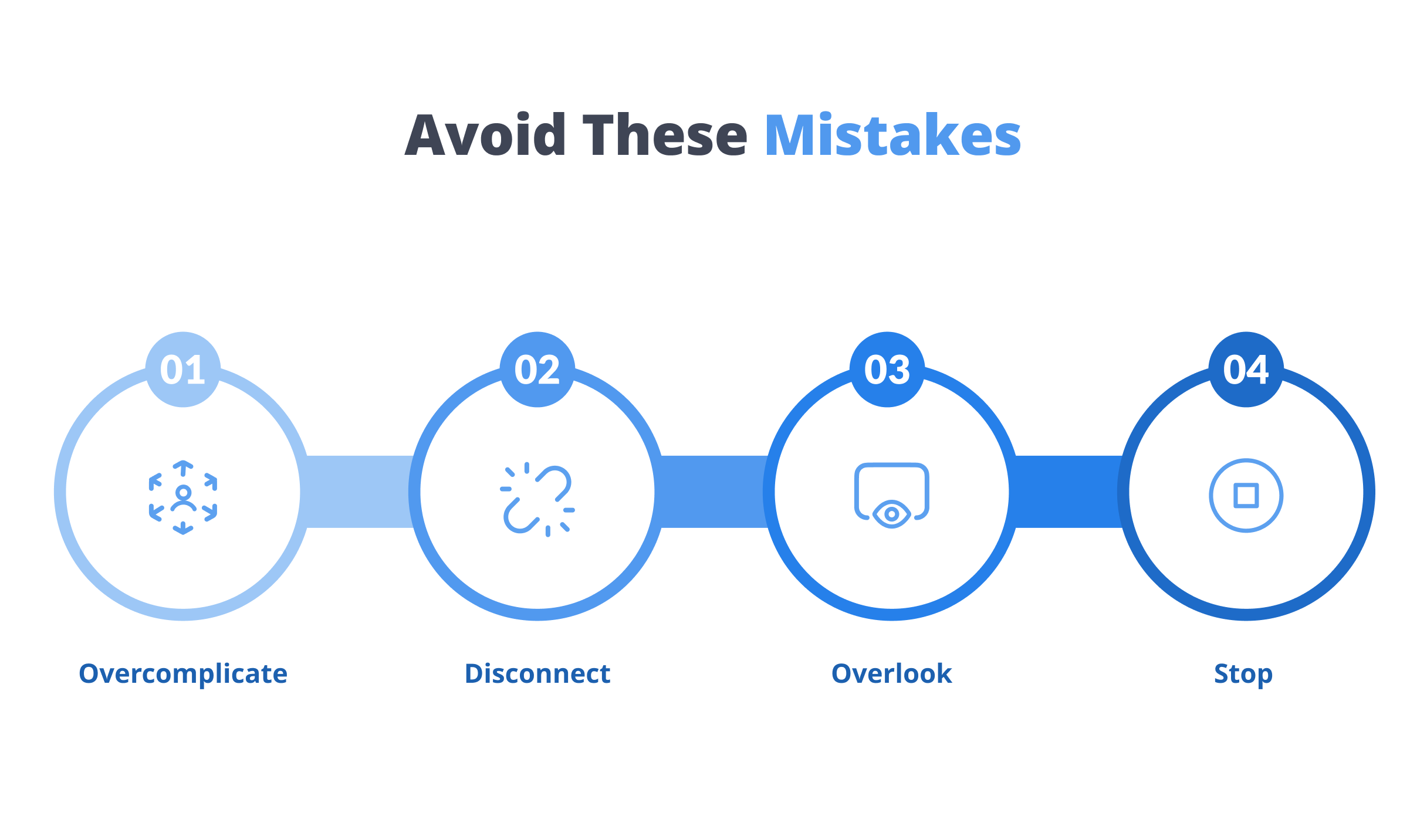
Common mistakes businesses should avoid
Becoming future-ready isn't simply about buying more technology.
Businesses can face challenges when they:
- Adopt technology without a business goal — Technology should solve a business problem, not create another system to manage.
- Create more digital silos — Adding applications without integration can complicate operations.
- Ignore employee experience — A technology solution is only useful when employees can use it effectively.
- Treat data as an afterthought — Poor-quality or disconnected data can limit analytics and AI initiatives.
- Overlook security — Security should be part of every digital transformation initiative.
- Stop after implementation — Technology and business needs keep changing. Digital transformation requires continuous improvement.
How CATS4U helps build a future-ready enterprise
Becoming future-ready often requires organisations to modernise multiple areas of the business at the same time.
IT operations need to become more intelligent. Business processes need automation. Customer relationships need to be connected. Data needs to become actionable. Employees need better digital experiences. And security needs to remain a core priority.
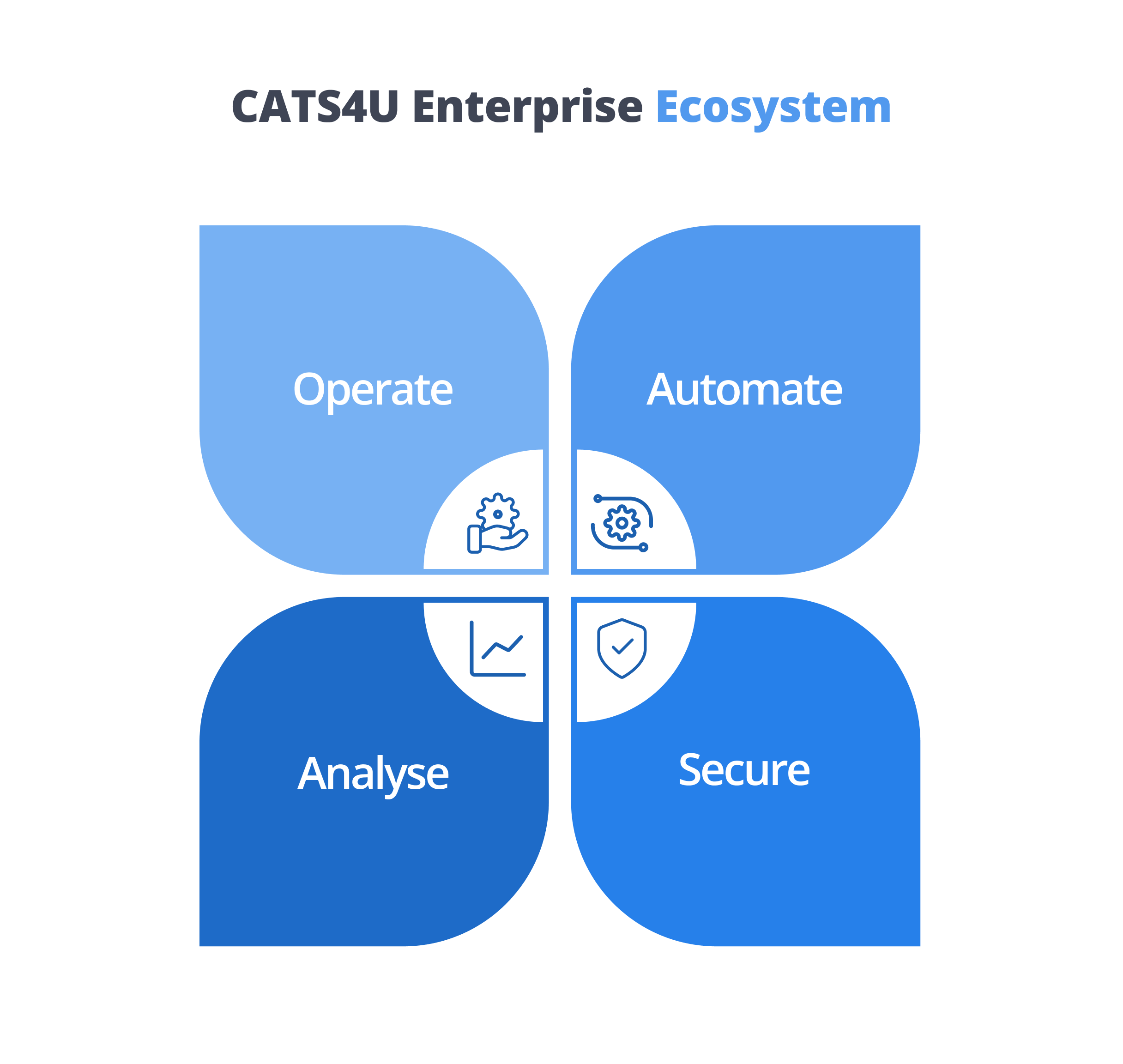
CATS4U brings these capabilities together through an integrated portfolio of enterprise solutions.
CATS4U Digital Enterprise Portfolio:
Together, these solutions help organisations address different areas of digital transformation while creating a more connected technology environment.
Why an integrated enterprise matters
One of the biggest challenges of digital transformation is creating too many disconnected systems.
A business may have separate tools for IT, customer management, finance, processes, security, workforce operations, and analytics. Each tool may solve an individual problem, but disconnected systems can create information silos.
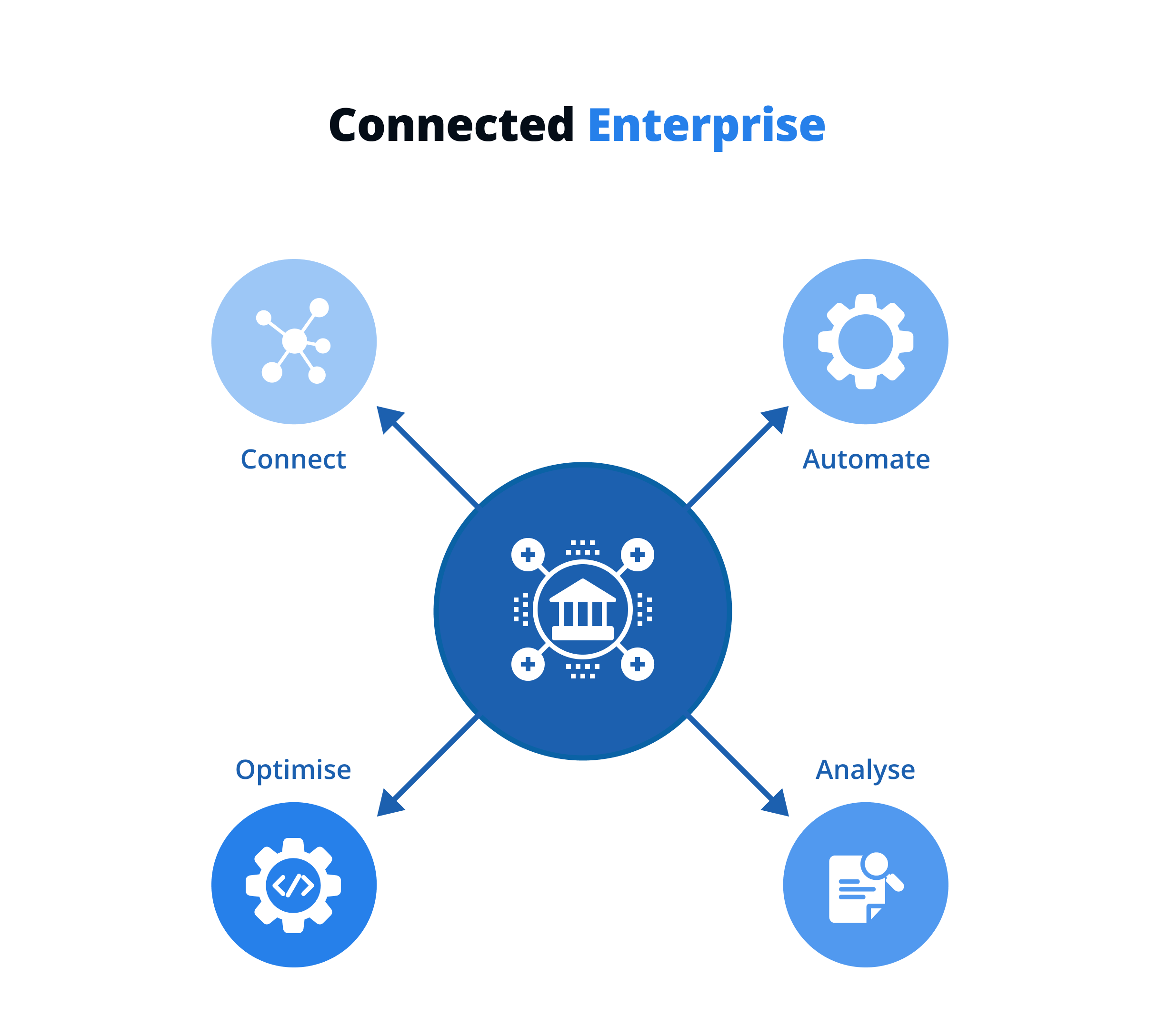
An integrated enterprise approach helps connect these functions.
For example:
Customer → Process → Billing → Analytics
Information can move across business functions, giving teams better context and enabling more connected operations. This is where an enterprise technology ecosystem can create greater value than isolated point solutions.
Conclusion
A future-ready enterprise isn't defined by how many technologies it uses.
It is defined by how well it can adapt to change, connect its operations, use data, empower its people, serve customers, and adopt new technologies responsibly.
The organisations best prepared for the future will be those that build flexibility into their processes and technology foundations today.
Digital transformation should therefore be viewed as an ongoing journey. Businesses need to continuously improve processes, connect systems, strengthen security, adopt AI, and use data to make better decisions.
With its integrated portfolio of enterprise solutions, CATS4U helps organisations modernise different areas of their business while creating a connected foundation for digital transformation.
The future may be difficult to predict — but businesses can prepare by becoming more agile, intelligent, connected, and adaptable today.
Frequently asked questions
A future-ready enterprise is an organisation that can adapt to changing technology, customer expectations, market conditions, and business requirements while continuing to operate efficiently.
Key characteristics include:
- Digital operations
- Intelligent automation
- Data-driven decisions
- Connected systems
- Strong cybersecurity
- AI readiness
- Employee-centric technology
- Customer-centric operations
No. Future readiness is not about adopting every emerging technology. It is about selecting technologies that solve meaningful business challenges and create long-term value.
Integration connects business applications and information, reducing silos and enabling teams to work with better context across different business functions.
AI can help businesses automate tasks, analyse information, assist employees, improve customer experiences, and create more intelligent business processes.
CATS4U provides an integrated portfolio covering IT service management, AIOps, network provisioning, process orchestration, CRM, billing, Business Intelligence, workforce productivity, cybersecurity, and enterprise AI. These solutions help organisations modernise operations and build a more connected digital enterprise.
