


Modern businesses depend on fast, reliable, and secure networks to keep operations running smoothly. From connecting branch offices and data centres to supporting cloud applications and remote users, enterprise networks have become larger and more complex than ever before.
As organisations grow, managing these networks manually becomes increasingly difficult. Configuring new devices, updating network settings, troubleshooting issues, and ensuring consistent policies across multiple locations can consume significant time and increase the risk of human error.
This is where network provisioning plays a vital role.
Network provisioning helps organisations automate the deployment, configuration, and management of network devices and services. Instead of manually configuring each router, switch, firewall, or SDN controller, IT teams can standardise and automate the entire provisioning process.
In this guide, we’ll explore what network provisioning is, how it works, its key benefits, and how solutions like iProvision help enterprises simplify network operations.
What is network provisioning?
Network provisioning is the process of configuring, deploying, and managing network infrastructure so that devices, services, and users can communicate efficiently and securely.
It involves setting up network devices, assigning configurations, applying security policies, enabling connectivity, and ensuring that every component works together as intended.
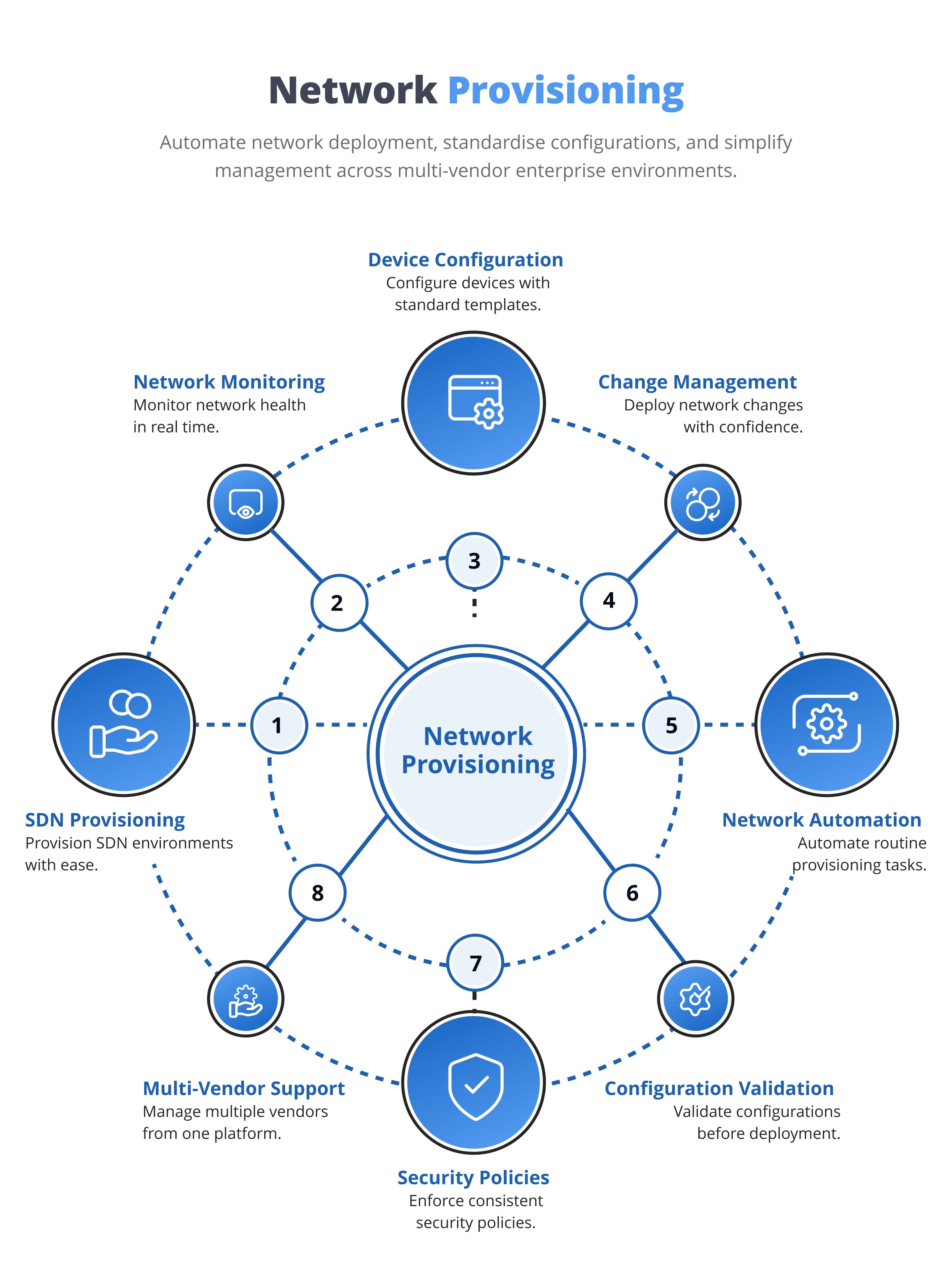
Network provisioning can include:
- Configuring routers and switches
- Setting up firewalls and security policies
- Deploying SDN configurations
- Provisioning VLANs and IP addressing
- Managing network services
- Updating device configurations
- Validating network changes
- Monitoring provisioning status
Rather than configuring every device individually, enterprises can automate these tasks using a centralised provisioning platform.
Why is network provisioning important?
Enterprise networks are constantly evolving. New offices, cloud environments, applications, and users require frequent configuration changes.
Without a structured provisioning process, organisations often face challenges such as:
- Manual device configuration
- Configuration inconsistencies
- Slow deployment of network services
- Increased human errors
- Limited visibility across devices
- Complex multi-vendor environments
- Longer troubleshooting times
Network provisioning simplifies these operations by standardising and automating network deployments.
Key benefits include:
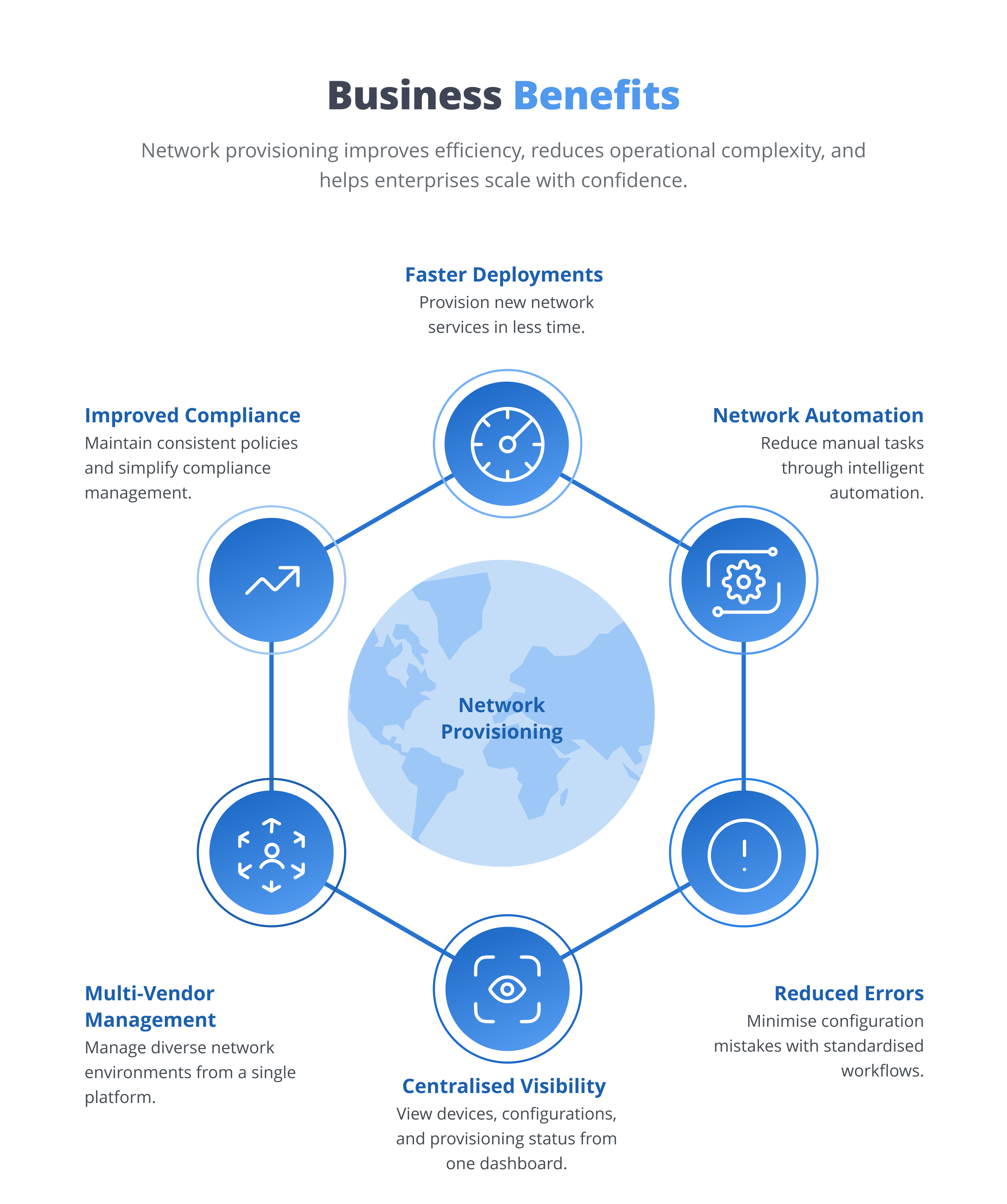
- Faster network deployment
- Consistent configurations
- Improved operational efficiency
- Reduced manual effort
- Better network visibility
- Simplified change management
- Enhanced network reliability
How does network provisioning work?
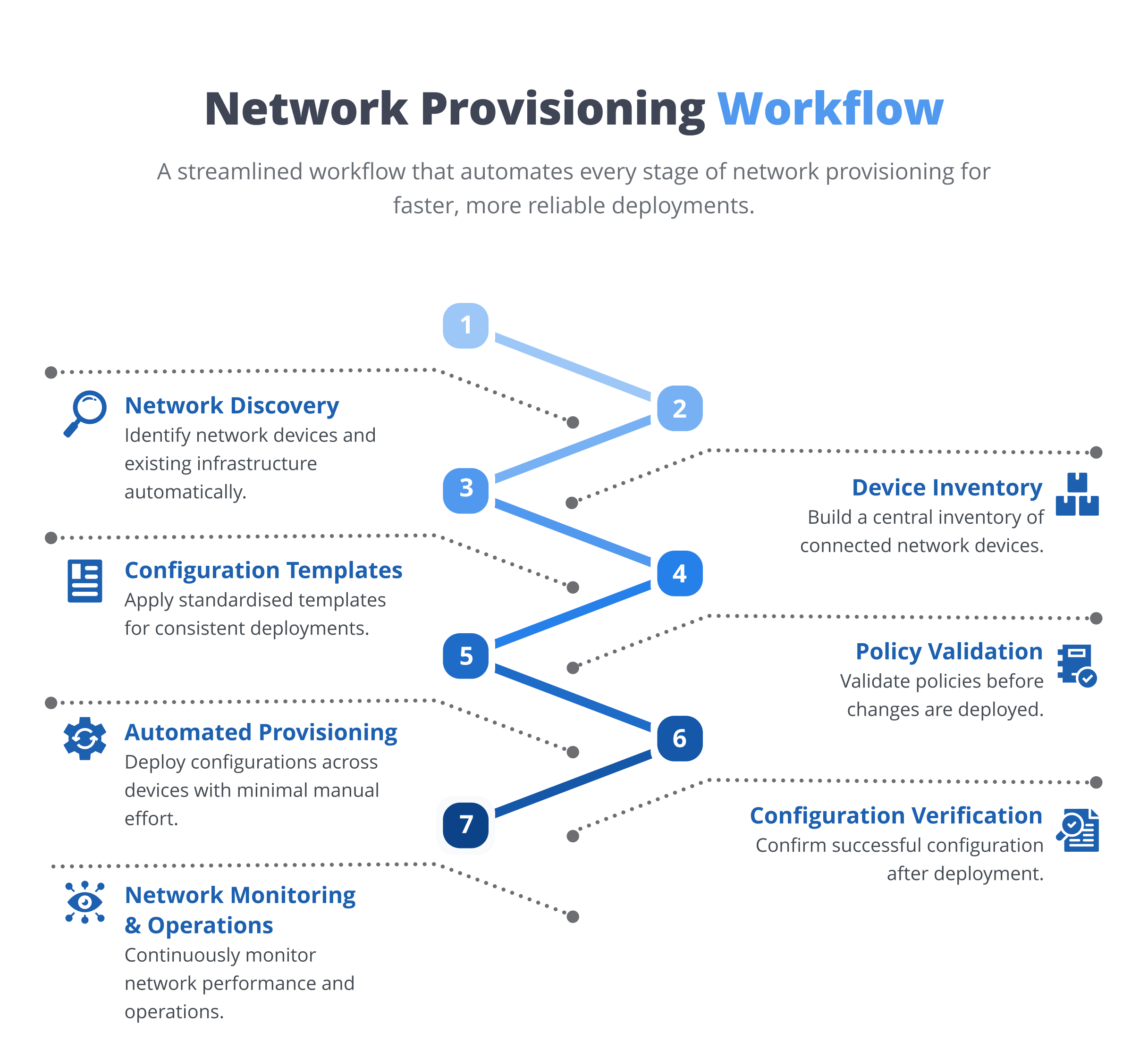
Network provisioning follows a structured workflow that automates configuration and deployment across the network.
A typical process includes:
- Network devices are discovered
- Device inventory is created
- Configuration templates are selected
- Policies and network settings are applied
- Configurations are validated
- Devices are provisioned automatically
- Network health is monitored continuously
This process ensures that every device follows the same standards while reducing deployment time.
Key features of network provisioning
A modern network provisioning solution should provide more than basic device configuration. It should simplify operations across the entire network lifecycle.
Automated device configuration
Automatically configure routers, switches, firewalls, and other network devices using predefined templates.
Benefits
- Faster deployments
- Reduced manual effort
- Consistent configurations
Template-based provisioning
Create standardised configuration templates that can be applied across multiple devices.
Benefits
- Reduced configuration errors
- Faster onboarding
- Simplified management
Multi-vendor network support
Manage devices from multiple vendors through a single platform without switching between different management tools.
Benefits
- Unified operations
- Simplified administration
- Greater flexibility
SDN provisioning
Provision software-defined networking environments while maintaining consistent network policies.
Benefits
- Faster network changes
- Improved scalability
- Better network agility
Configuration validation
Verify configurations before deployment to minimise errors and reduce network disruptions.
Benefits
- Higher reliability
- Reduced downtime
- Improved compliance
Centralised network visibility
View provisioning status, device inventory, and network configurations from a single dashboard.
Benefits
- Better visibility
- Faster troubleshooting
- Improved operational control
Manual network provisioning vs Automated network provisioning
| Manual Network Provisioning | Automated Network Provisioning |
|---|---|
| Device-by-device configuration | Centralised automated provisioning |
| Time-consuming deployments | Faster network rollouts |
| Greater risk of human errors | Standardised configurations |
| Limited visibility | Centralised monitoring |
| Difficult to scale | Easily supports enterprise growth |
| Separate vendor tools | Unified multi-vendor management |
| Manual configuration validation | Automated validation and compliance |
Benefits of network provisioning for modern enterprises
Network provisioning supports faster, more reliable, and more scalable network operations.
Best practices for effective network provisioning
To maximise the benefits of network provisioning, organisations should follow a few best practices:
- Standardise network configuration templates
- Automate repetitive provisioning tasks
- Validate configurations before deployment
- Maintain a central inventory of network devices
- Continuously monitor network health
- Use role-based access controls for configuration management
- Integrate provisioning with network operations and monitoring tools
Following these practices helps organisations maintain secure, consistent, and scalable networks.
Why choose iProvision for enterprise network provisioning?
Managing enterprise networks across multiple locations and vendors requires more than manual configuration. Organisations need an intelligent platform that automates provisioning, standardises configurations, and provides complete network visibility.
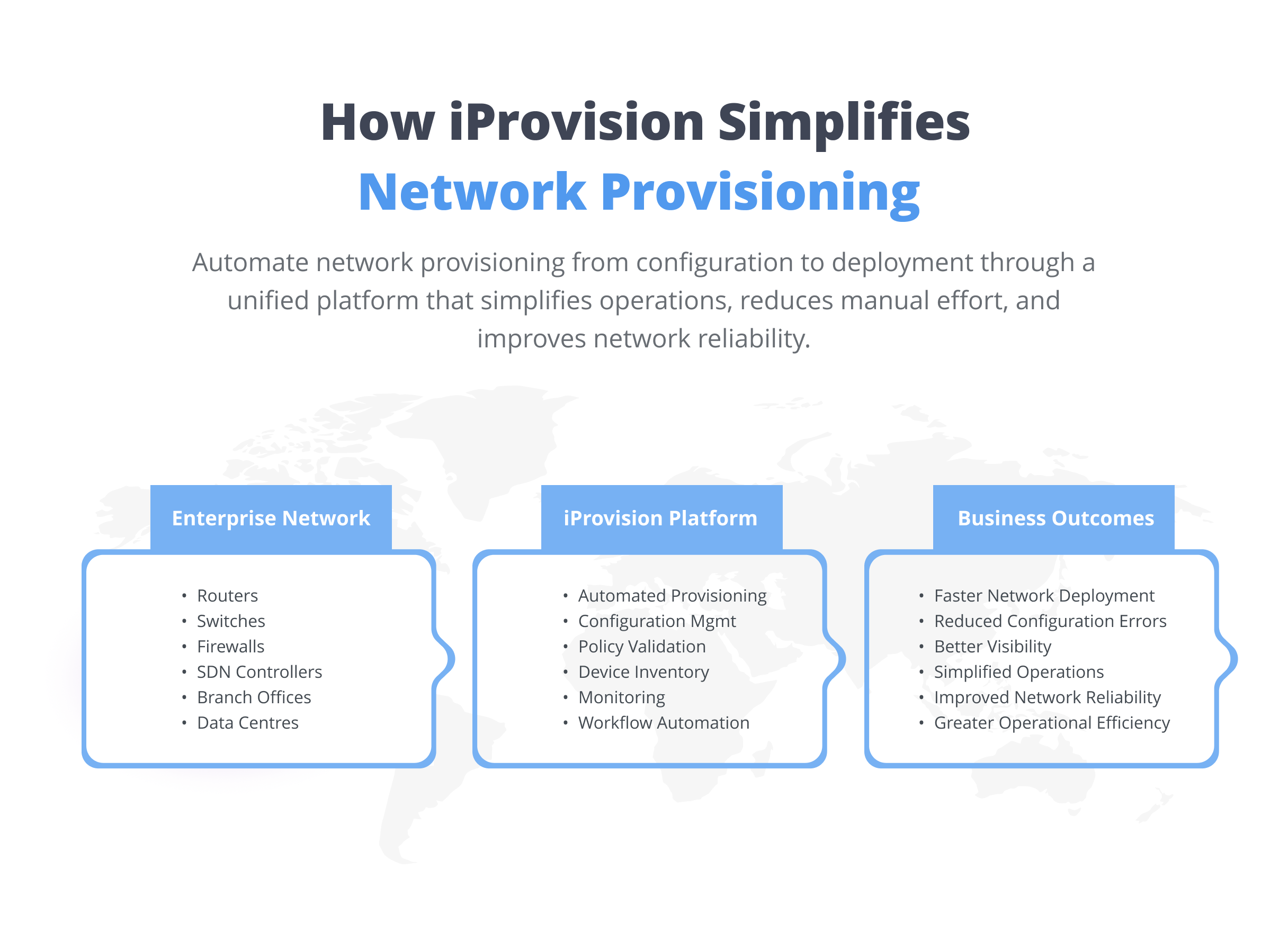
iProvision by CATS4U is an enterprise network provisioning and operations platform designed to simplify network deployment and day-to-day operations. It enables organisations to automate configuration management, streamline provisioning workflows, monitor network performance, and manage multi-vendor environments through a single, unified platform.
Key features of iProvision:
- Automated network provisioning
- Configuration template management
- Multi-vendor device support
- SDN provisioning
- Configuration validation
- Network inventory management
- Centralised monitoring and visibility
- Workflow automation
- Policy-based provisioning
- Native integration across the CATS4U suite
Whether you’re provisioning new network devices, expanding branch connectivity, or managing large enterprise environments, iProvision helps simplify network operations while improving efficiency and reliability.
As enterprise networks continue to grow in size and complexity, manual provisioning methods can slow deployments, increase errors, and make network management more challenging.
Network provisioning provides a smarter approach by automating device configuration, standardising network deployments, and giving IT teams complete visibility into their infrastructure.
By adopting a modern network provisioning solution, organisations can improve operational efficiency, strengthen network reliability, and support future growth with confidence.
With iProvision, businesses can simplify network provisioning, automate configuration management, and gain the visibility needed to operate modern enterprise networks efficiently.
Frequently asked questions
Network provisioning is the process of configuring, deploying, and managing network devices, services, and policies to ensure reliable and secure network operations.
It helps organisations automate network deployments, reduce manual configuration errors, improve consistency, and accelerate the delivery of network services.
Some key benefits include:
- Faster network deployment
- Automated configuration management
- Reduced human errors
- Centralised visibility
- Improved operational efficiency
- Better scalability
Network provisioning solutions can manage routers, switches, firewalls, wireless controllers, SDN environments, and other enterprise network devices.
Yes. Modern network provisioning platforms are designed to manage devices from multiple vendors through a single interface, simplifying administration and improving operational consistency.
iProvision automates network provisioning, configuration management, policy validation, and monitoring while providing complete visibility across SDN and multi-vendor enterprise network environments.
