


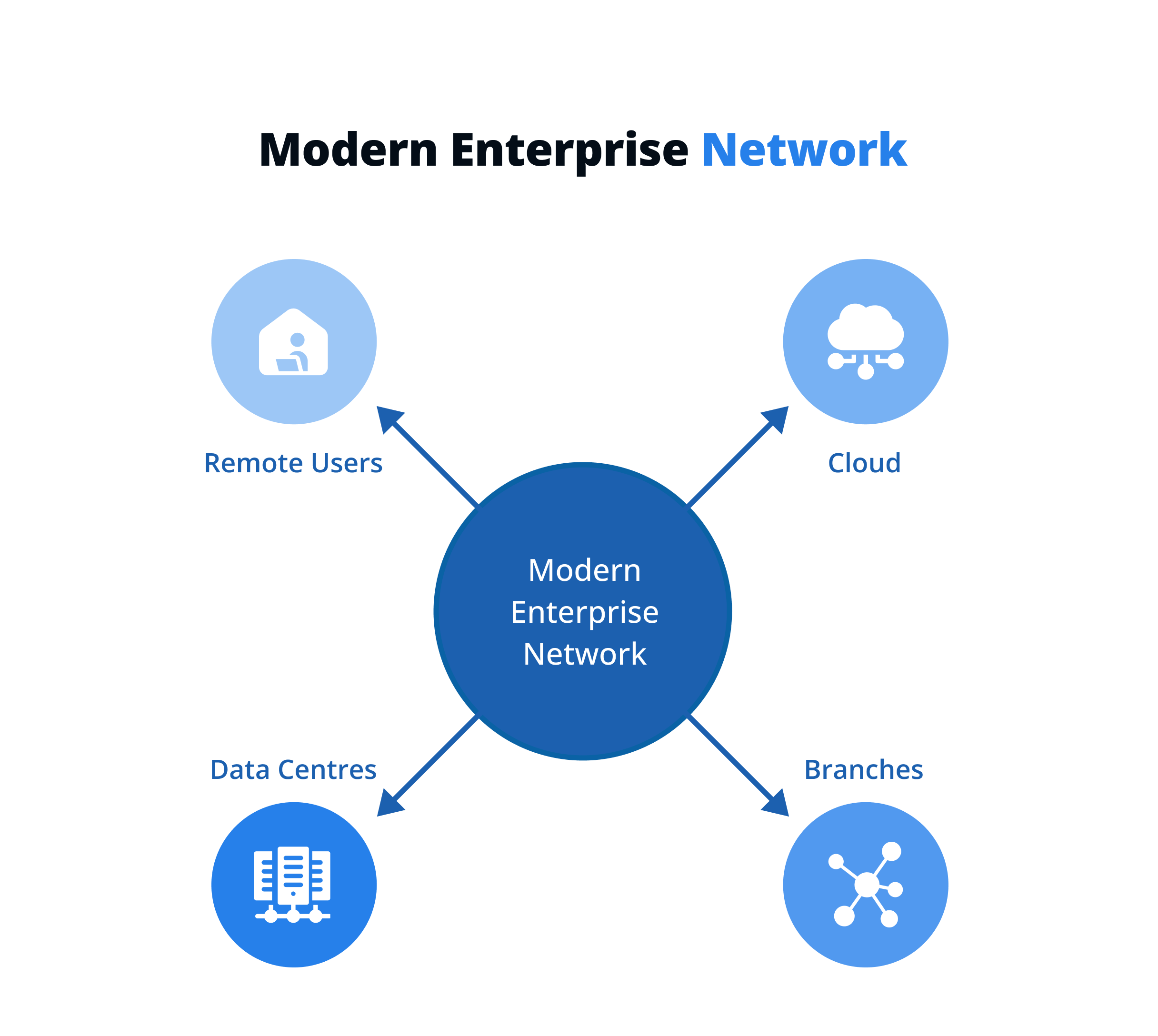
Modern enterprise networks are larger and more complex than ever before. Businesses now manage branch offices, data centres, cloud infrastructure, remote users, firewalls, switches, routers, SD-WAN, and hybrid environments, all working together to keep operations running smoothly.
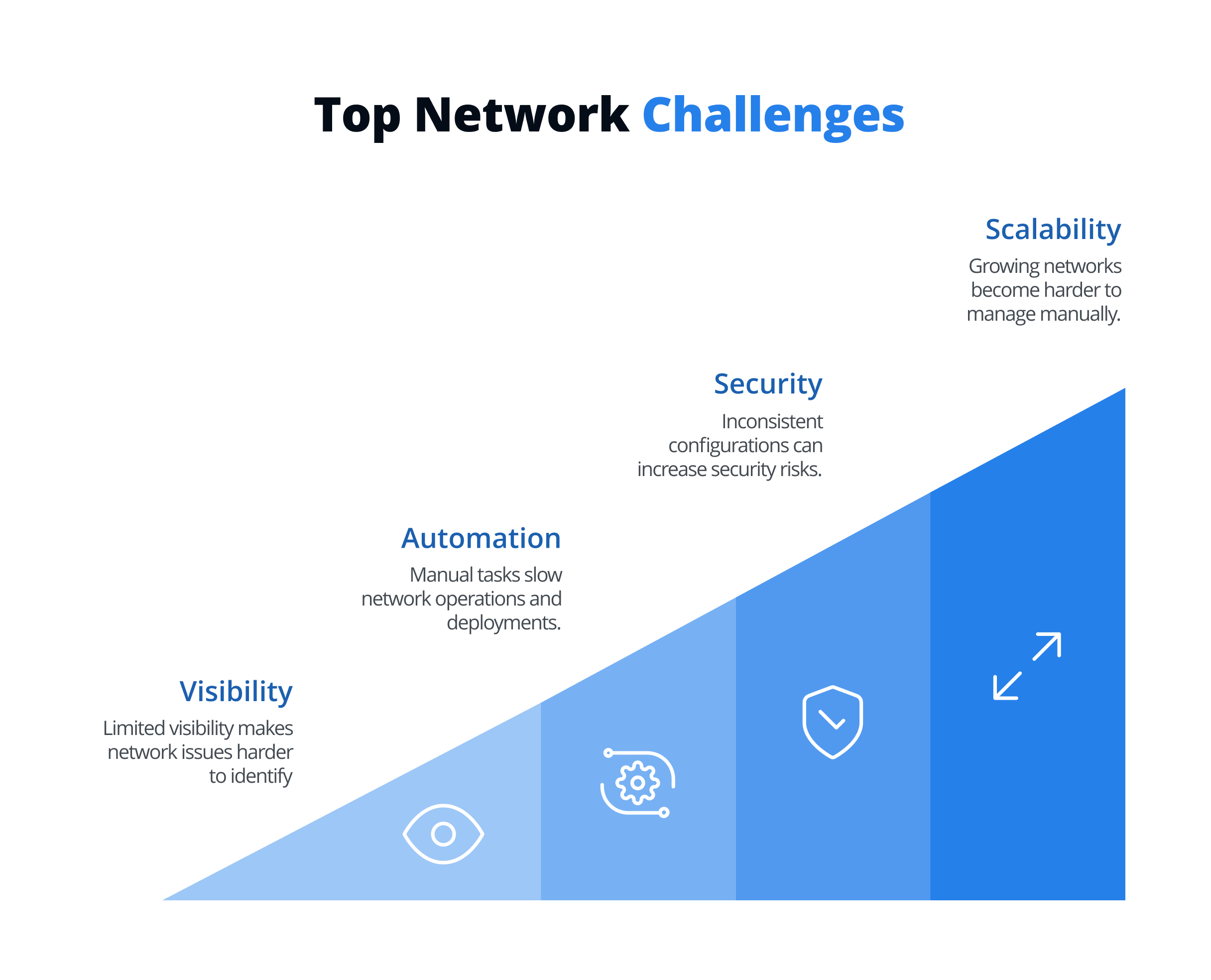
While these technologies offer greater flexibility, they also introduce new management challenges. Manual configurations, inconsistent policies, device sprawl, and limited visibility can make network operations difficult to maintain.
Even a small configuration issue can impact business applications, employee productivity, and customer experiences.
To overcome these challenges, organisations are increasingly adopting intelligent network management solutions that automate provisioning, simplify operations, and improve network visibility.
In this blog, we'll explore ten of the most common network management challenges and how businesses can address them using modern network automation and provisioning platforms like iProvision.
Why modern network management is more challenging than ever
Enterprise networks continue to evolve as organisations embrace cloud computing, hybrid work, IoT devices, and distributed infrastructure.
As networks become more dynamic, IT teams must manage:
- Multiple network devices
- Hybrid infrastructure
- Growing user demands
- Security requirements
- Configuration consistency
- Business continuity
Without the right tools, network management becomes increasingly difficult.
10 common network management challenges
Manual network configuration
Configuring routers, switches, and firewalls manually consumes valuable time and increases the possibility of inconsistent configurations.
Solution
Automate network provisioning using standardised configuration templates.
Configuration inconsistencies
Different devices may be configured differently over time, making troubleshooting and maintenance more difficult.
Solution
Use centralised configuration management to apply consistent policies across the network.
Limited network visibility
When information is spread across multiple tools, understanding the health of the network becomes challenging.
Solution
Use a unified platform that provides complete network visibility.
Slow network provisioning
Deploying new devices or services manually often delays business initiatives.
Solution
Automate provisioning workflows to accelerate network deployments.
Managing large numbers of devices
As organisations grow, managing hundreds or thousands of devices manually becomes increasingly difficult.
Solution
Maintain a centralised network inventory with automated device management.
Policy management challenges
Applying security and operational policies consistently across every device can be time-consuming.
Solution
Use policy-based automation to standardise configurations.
Difficult troubleshooting
Finding the root cause of network issues often requires reviewing multiple devices individually.
Solution
Use centralised dashboards and operational insights for faster problem identification.
Hybrid network complexity
Managing on-premises infrastructure alongside cloud environments requires greater coordination.
Solution
Adopt a unified platform that supports hybrid network management.
Increasing operational workload
Routine configuration changes and repetitive administrative tasks consume significant IT resources.
Solution
Automate repetitive workflows to improve operational efficiency.
Scaling the network
As the business expands, the network must grow without increasing operational complexity.
Solution
Build an automated, scalable provisioning framework.
Traditional network management vs intelligent network management
Modern network management focuses on automation, consistency, and operational simplicity rather than manual administration.
| Manual device configuration | Automated provisioning |
|---|---|
| Separate management tools | Unified network platform |
| Limited operational visibility | Centralised dashboards |
| Device-by-device management | Policy-based automation |
| Time-consuming deployments | Faster provisioning |
| Reactive troubleshooting | Proactive operations |
| Difficult to scale | Supports enterprise growth |
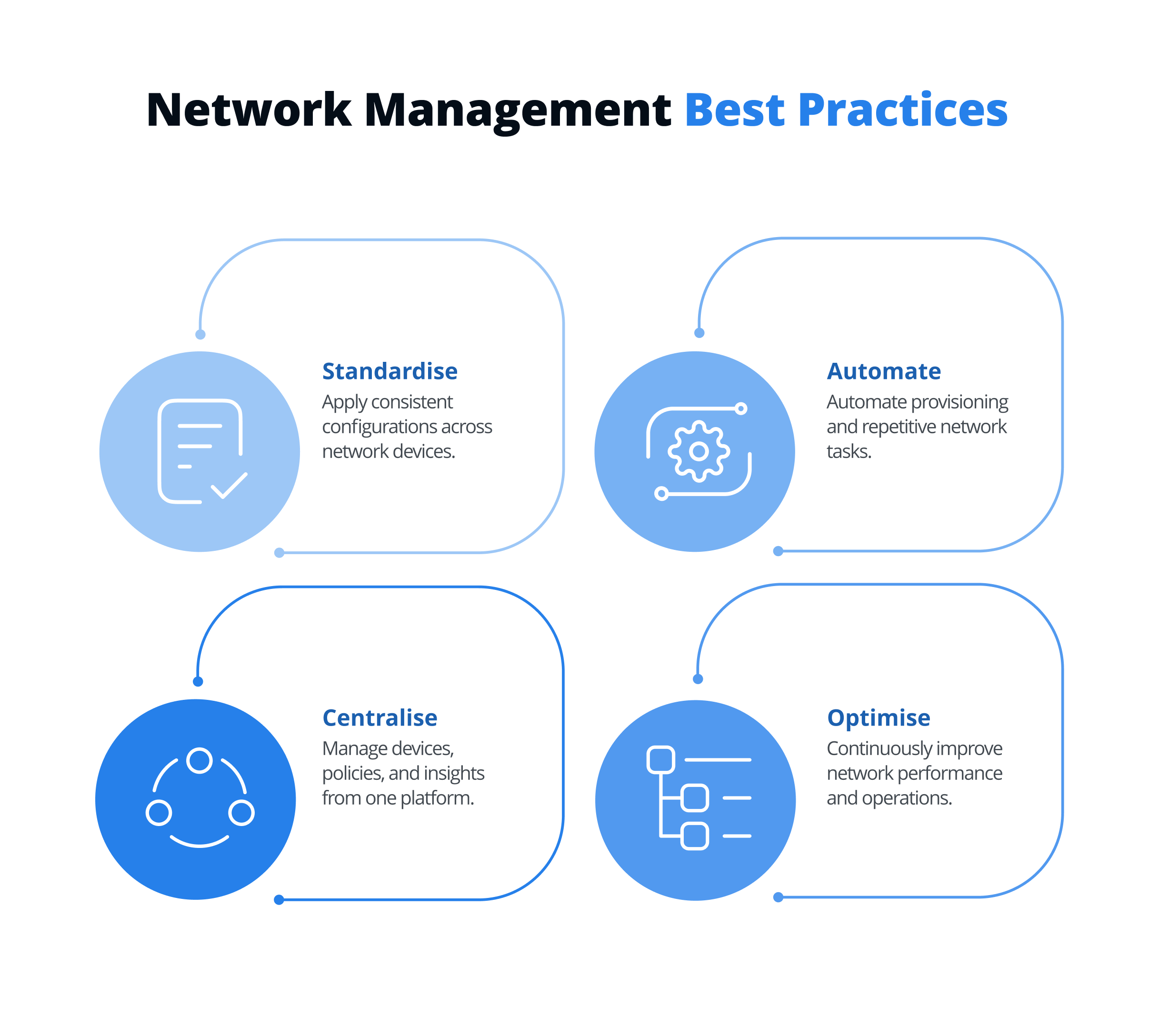
Best practices for modern network management
Businesses can simplify network operations by following these best practices:
- Standardise network configurations
- Automate provisioning workflows
- Centralise device management
- Maintain accurate network inventories
- Simplify policy management
- Continuously review network performance
These practices improve operational efficiency while supporting business growth.
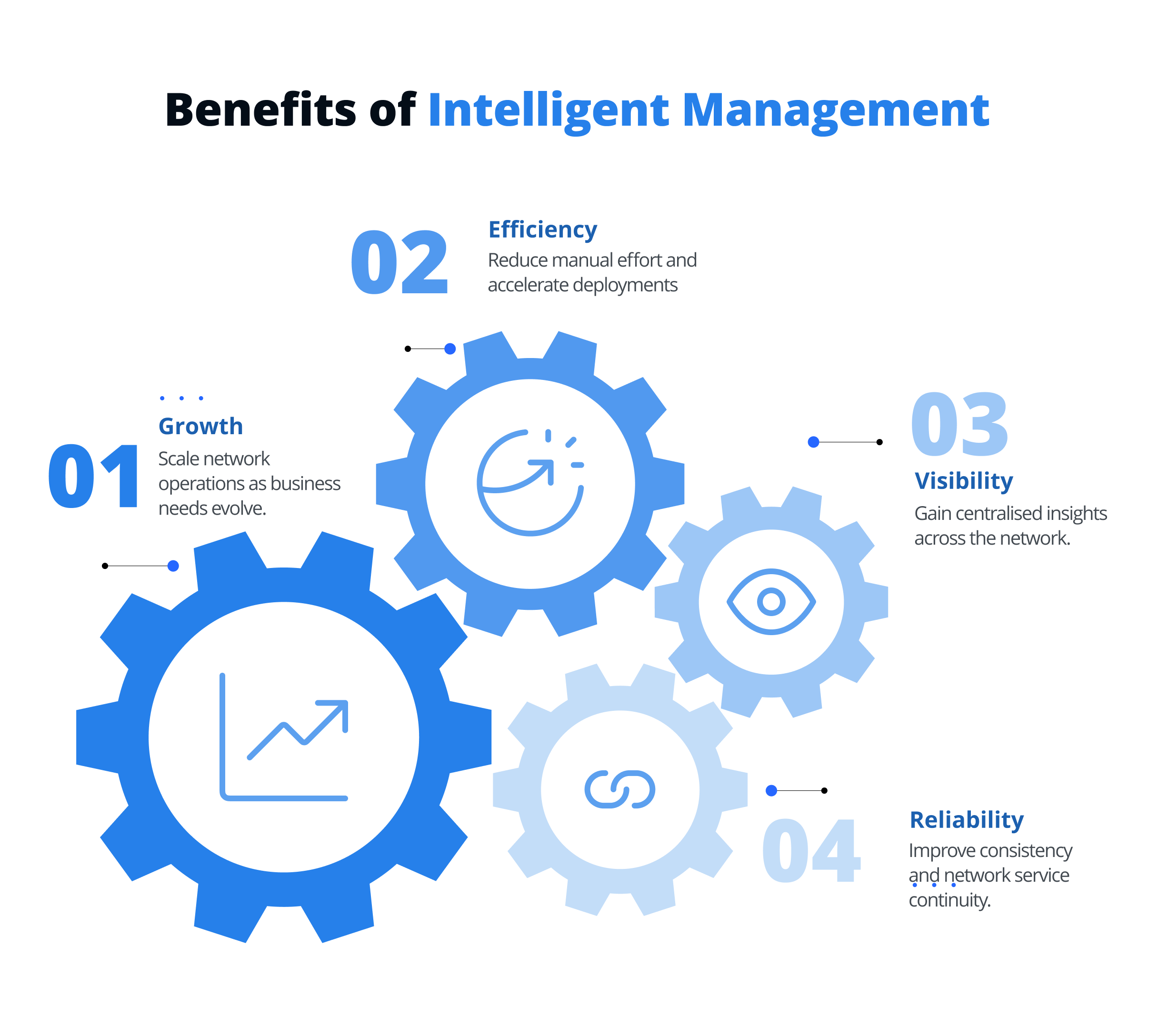
Benefits of intelligent network management
Modern network management solutions help organisations improve both operational efficiency and network reliability.
Why choose iProvision for network management?
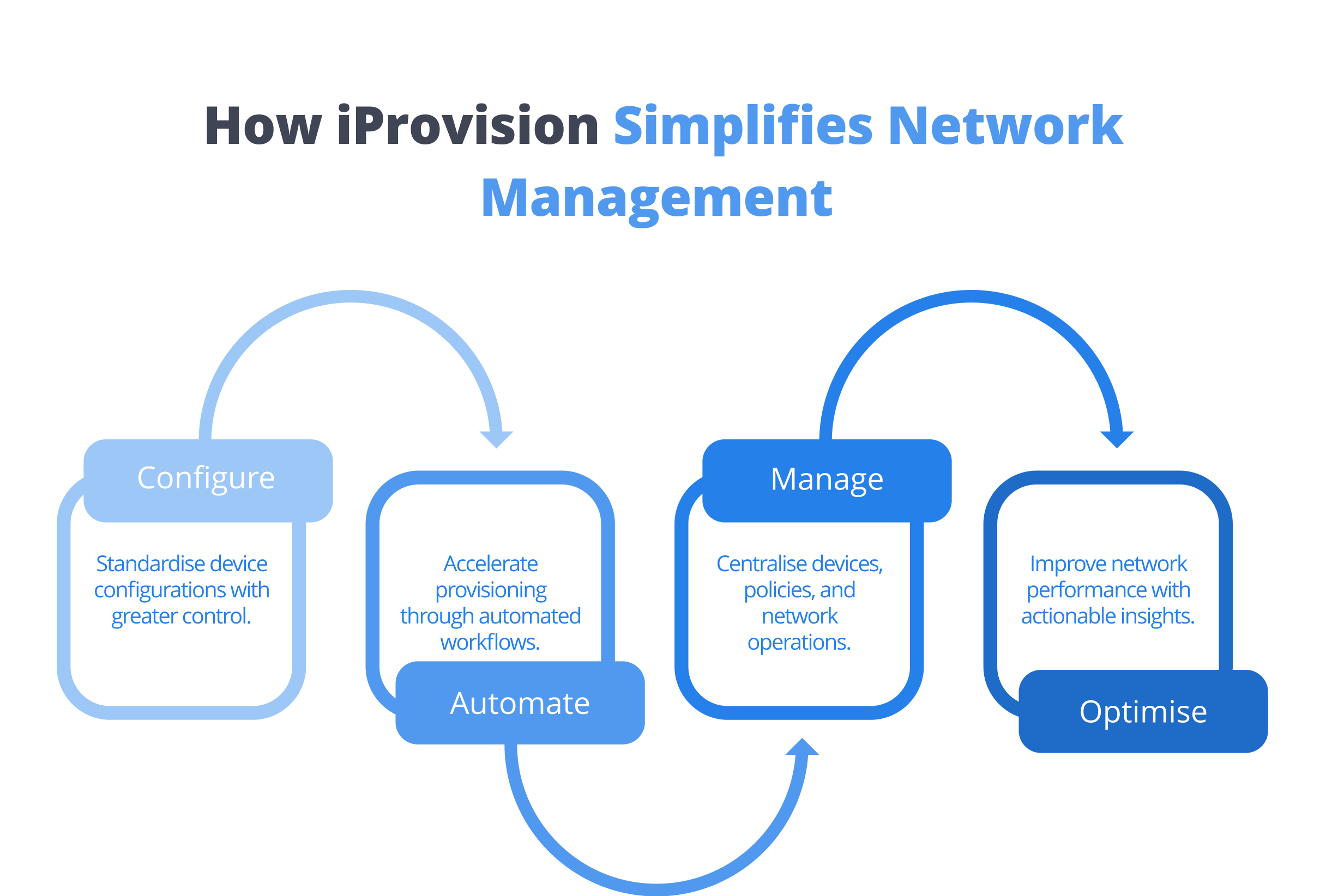
Managing enterprise networks requires more than configuring individual devices. Organisations need a platform that centralises provisioning, standardises configurations, automates workflows, and provides complete visibility across the network.
iProvision by CATS4U is an intelligent network provisioning and management platform designed to simplify enterprise network operations through automation and centralised control.
It enables organisations to provision, configure, and manage network infrastructure while reducing manual effort and improving operational consistency.
Key features of iProvision:
- Automated network provisioning
- Configuration management
- Policy validation
- Device inventory
- Workflow automation
- Centralised dashboards
- Network monitoring integration
- Compliance support
- Multi-vendor compatibility
- Native integration across the CATS4U suite
Whether you're managing branch offices, data centres, SD-WAN, or hybrid networks, iProvision helps simplify network operations while supporting reliable and scalable infrastructure management.
Conclusion
Modern enterprise networks demand more than manual administration. As infrastructures expand across cloud environments, branch offices, and distributed locations, traditional network management approaches become increasingly difficult to maintain.
By embracing automation, standardisation, and centralised visibility, organisations can simplify network operations, reduce configuration errors, and improve service reliability.
With iProvision, businesses can automate network provisioning, streamline configuration management, and build a scalable network foundation that supports long-term growth and digital transformation.
Frequently asked questions
Some common challenges include:
- Manual configurations
- Limited visibility
- Device management
- Hybrid infrastructure
- Policy consistency
- Scalability
Network automation reduces manual effort, improves consistency, accelerates deployments, and simplifies network operations.
Network provisioning is the process of configuring, deploying, and managing network devices and services to support business operations.
Businesses can improve network management by:
- Automating configurations
- Centralising device management
- Standardising policies
- Using unified dashboards
- Maintaining accurate inventories
Key benefits include:
- Faster provisioning
- Better visibility
- Improved reliability
- Operational efficiency
- Easier scalability
- Reduced manual effort
iProvision provides automated provisioning, configuration management, policy validation, workflow automation, centralised dashboards, and device inventory management, helping organisations simplify enterprise network operations through one unified platform.
