


Every business relies on processes to keep operations moving. Whether it’s onboarding a new employee, approving purchase requests, processing invoices, handling customer queries, or managing compliance, these activities form the backbone of daily operations.
Yet, many organisations still depend on manual processes involving emails, spreadsheets, paper forms, and disconnected applications. While these methods may work for smaller teams, they quickly become inefficient as businesses grow.
Manual processes slow down decision-making, create bottlenecks, increase the risk of errors, and make it difficult to maintain visibility across operations. As a result, organisations spend more time managing processes than improving them.
This is why enterprises are increasingly moving towards intelligent process orchestration and automation.
In this blog, we’ll explore why manual business processes are holding enterprises back, the challenges they create, and how platforms like iProcess help organisations automate, orchestrate, and optimise workflows for greater efficiency.
What are manual business processes?
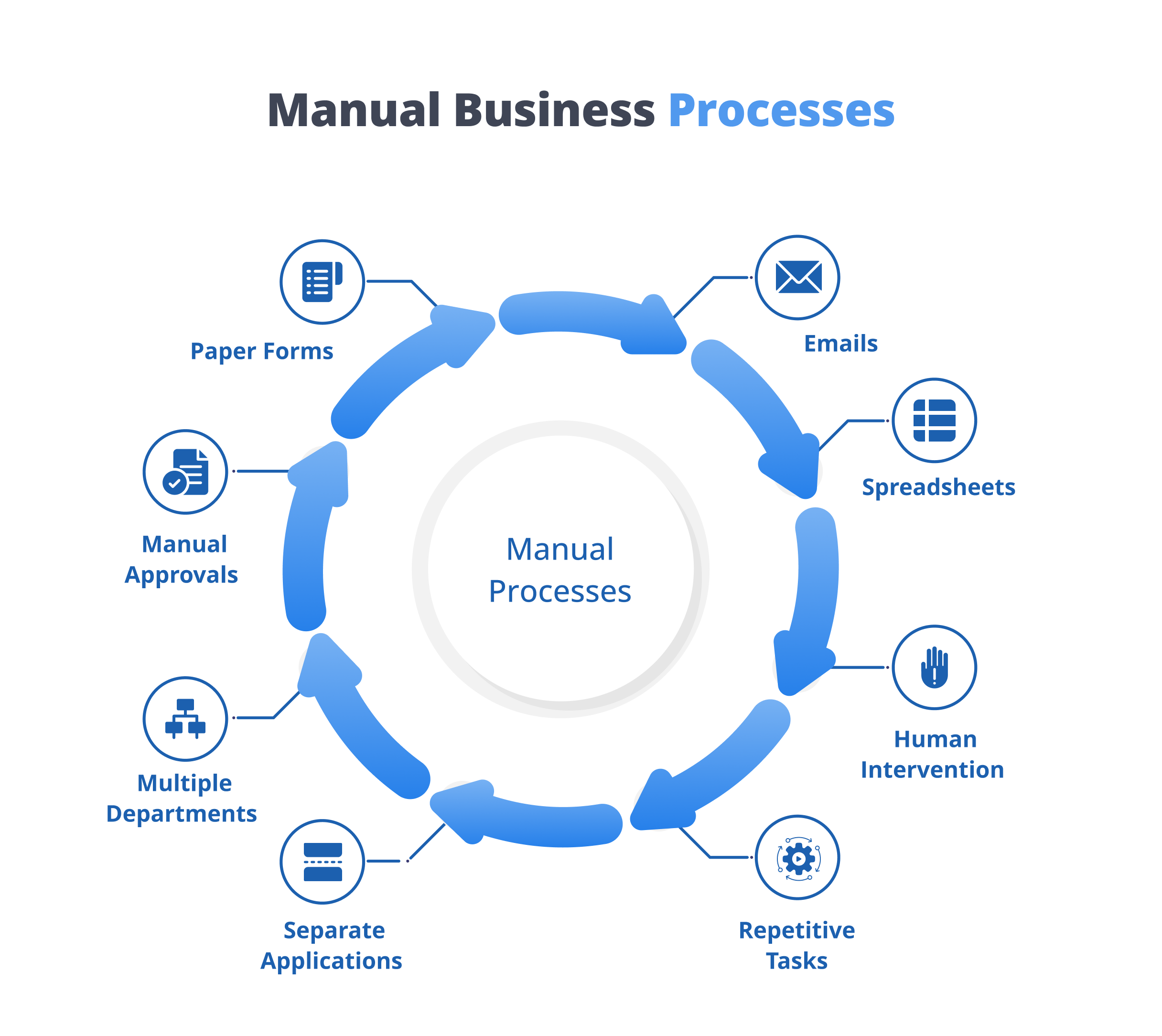
Manual business processes are workflows that rely primarily on human effort to complete tasks.
These processes often involve multiple people, emails, spreadsheets, printed documents, and separate software applications.
Examples include:
- Employee onboarding
- Purchase approvals
- Invoice processing
- Leave management
- Vendor onboarding
- Customer service requests
- Expense approvals
- Compliance documentation
While these activities are essential, managing them manually often creates unnecessary delays and operational inefficiencies.
Why are manual processes holding enterprises back?
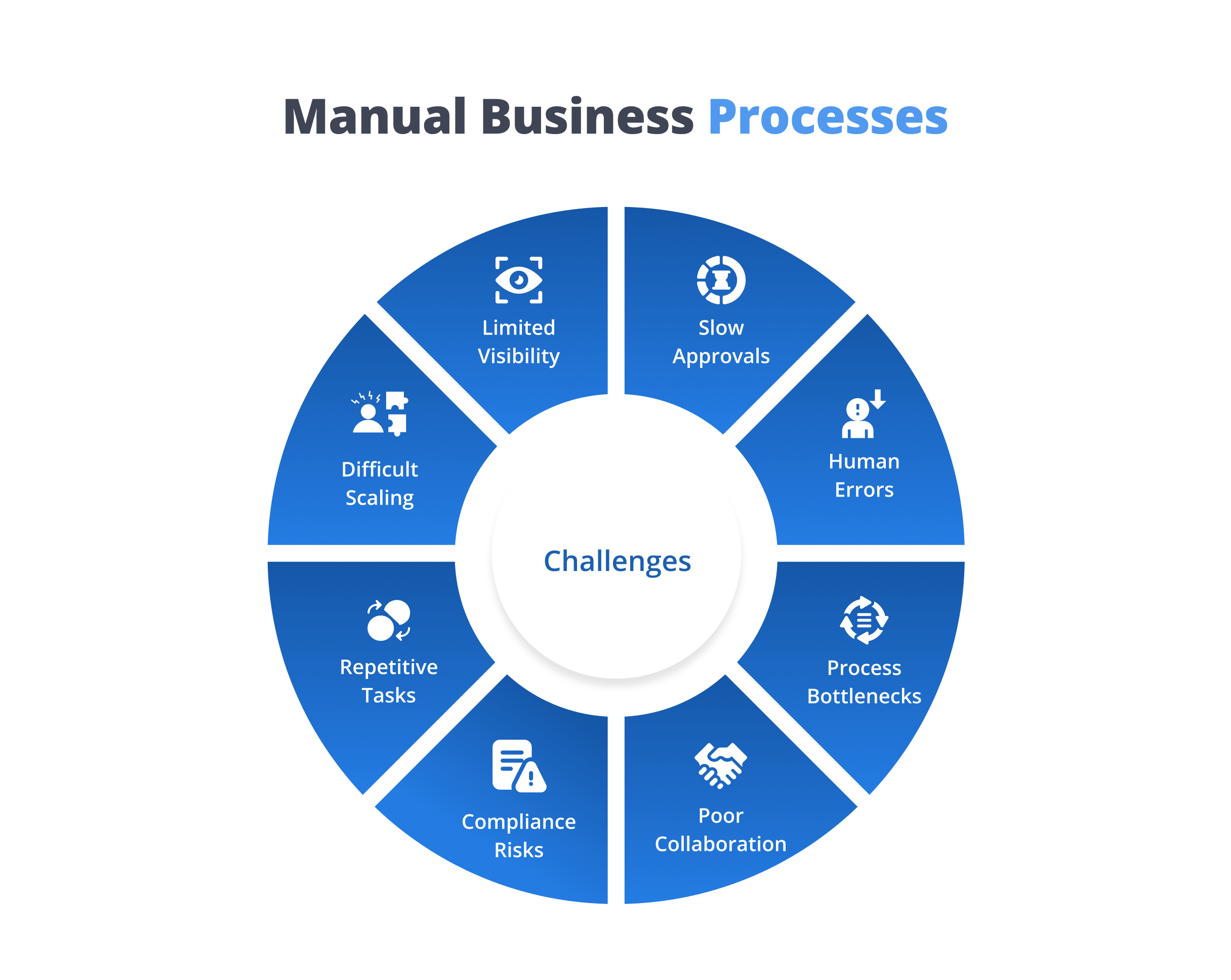
As organisations expand, manual processes become increasingly difficult to manage. Here are some of the biggest challenges enterprises face.
Slower decision-making
Every manual approval adds another step to the process. When requests move through emails or paperwork, decisions often take longer than necessary.
This leads to
- Delayed approvals
- Longer turnaround times
- Reduced operational efficiency
Increased human errors
Manual data entry increases the chances of mistakes.
Common issues include
- Incorrect information
- Duplicate entries
- Missed approvals
- Inconsistent records
Even small errors can create larger operational challenges later.
Limited process visibility
With information spread across emails, spreadsheets, and different systems, it’s difficult to understand where a process stands.
This makes it harder to
- Track approvals
- Identify bottlenecks
- Monitor performance
- Ensure accountability
Poor collaboration
Business processes often involve multiple teams.
Without a connected workflow, departments may struggle with:
- Communication gaps
- Duplicate work
- Delayed handoffs
- Inconsistent information
Difficult to scale
As the business grows, manual processes become more difficult to manage.
Adding more employees or customers often means adding more manual work rather than improving efficiency.
Compliance challenges
Manual processes make it harder to maintain audit trails, standardise workflows, and demonstrate compliance.
Without consistent documentation, organisations may struggle during internal reviews or external audits.
Manual processes vs automated business processes
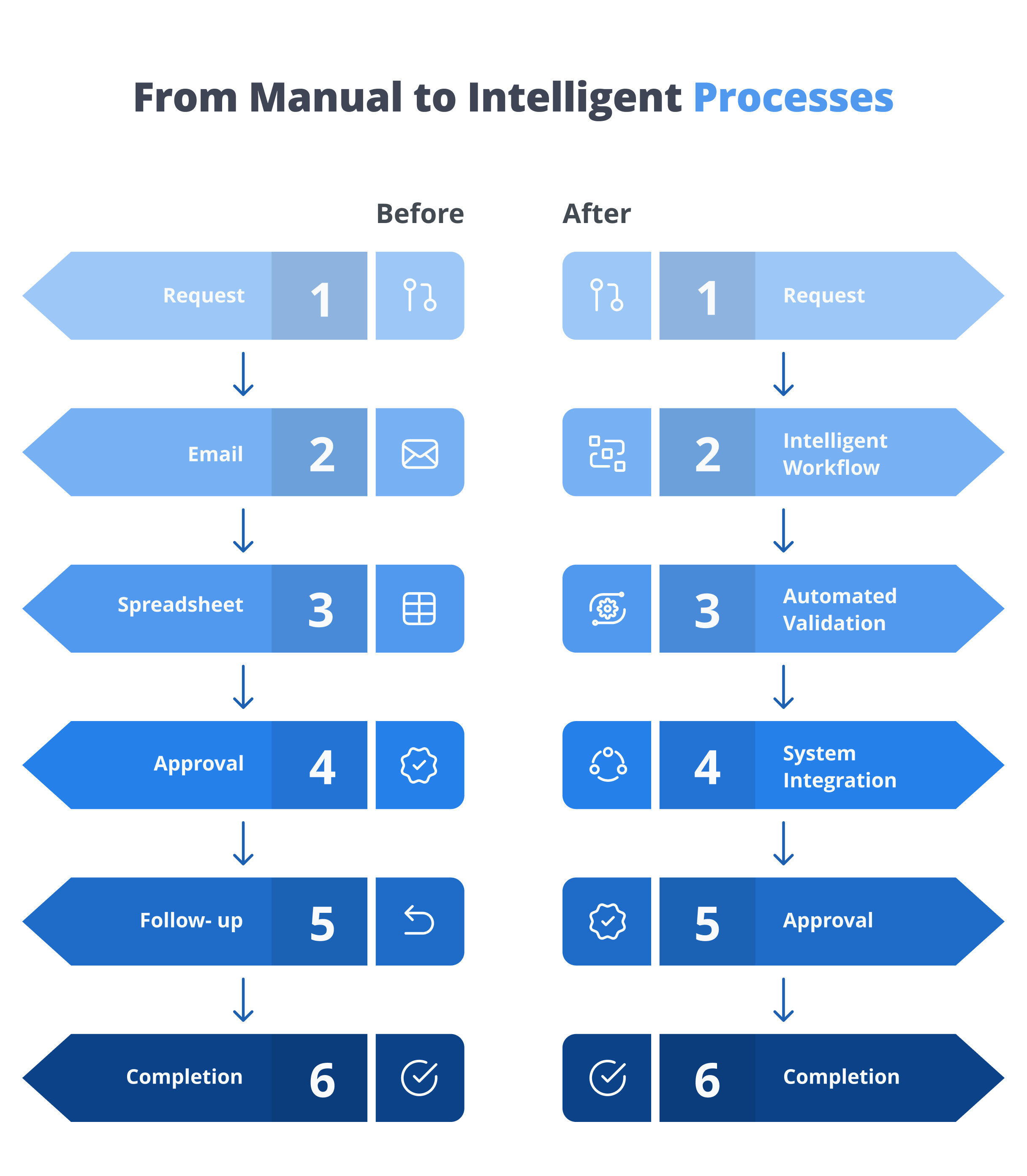
| Manual Business Processes | Automated Business Processes |
|---|---|
| Email and paper-based workflows | Digital workflows |
| Manual approvals | Automated approval routing |
| Repetitive data entry | Intelligent automation |
| Limited visibility | Real-time process tracking |
| Disconnected systems | Integrated enterprise applications |
| Higher risk of errors | Standardised and consistent execution |
| Difficult to scale | Easily adapts to business growth |
Automation doesn’t replace people; it empowers them by eliminating repetitive work and allowing them to focus on higher-value activities.
How process orchestration solves these challenges
Process orchestration connects people, systems, data, and business rules into a single intelligent workflow.
Instead of manually moving requests between departments, an orchestration platform automatically routes tasks, validates information, integrates applications, and provides complete visibility into every stage of the process.
With process orchestration, organisations can:
- Automate approvals
- Connect multiple business applications
- Eliminate repetitive manual work
- Standardise business processes
- Improve collaboration
- Gain end-to-end visibility
- Accelerate decision-making
Benefits of automating business processes
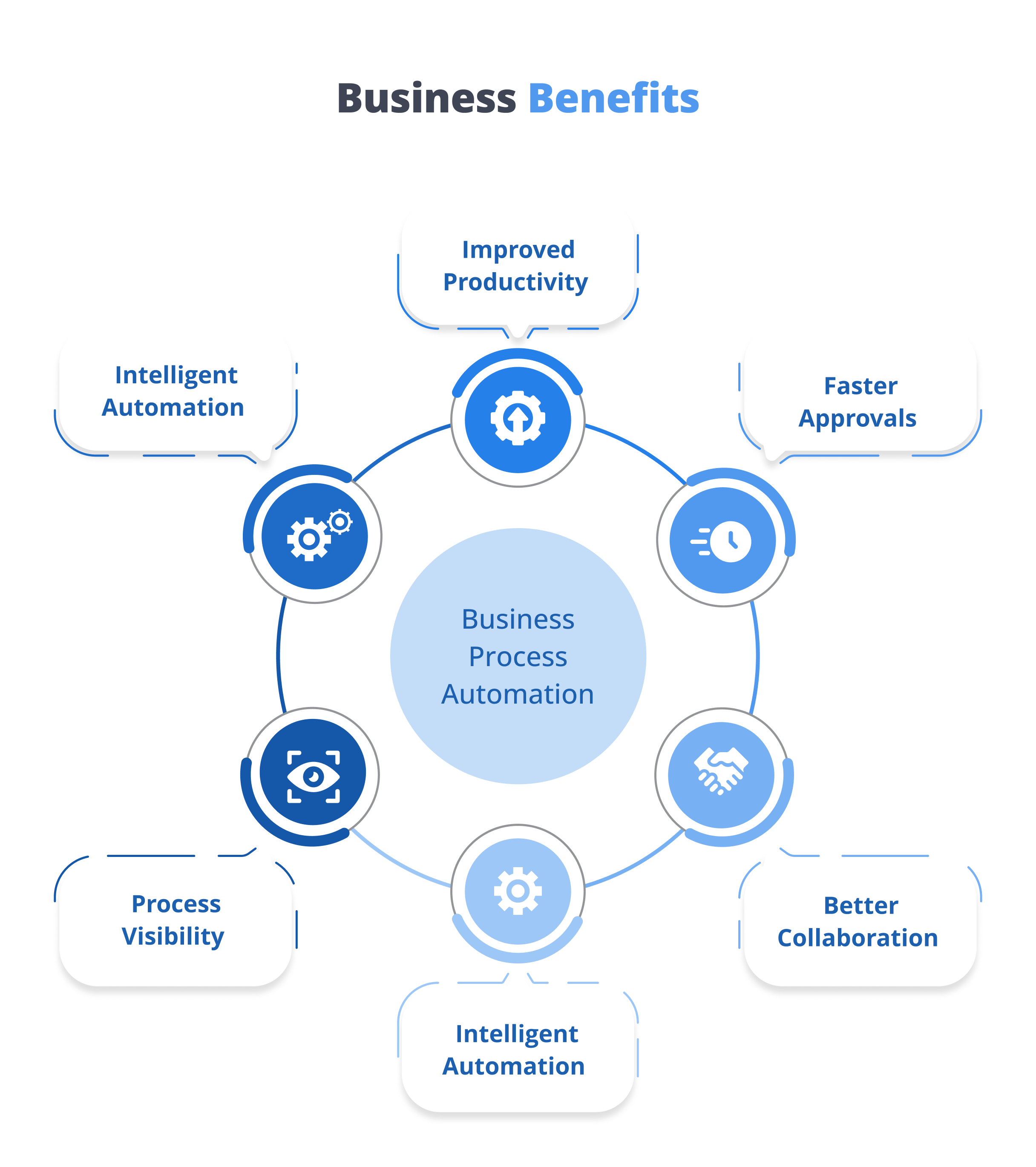
Modern enterprises are embracing automation to improve productivity, consistency, and customer experience.
Common business processes that can be automated
Almost every department can benefit from automation and orchestration.
Why choose iProcess for enterprise process automation?
Replacing manual workflows requires more than simply digitising forms. Enterprises need a platform that intelligently orchestrates business processes across people, systems, and applications.
iProcess by CATS4U is a low-code enterprise process orchestration and automation platform designed to simplify complex business operations.
It enables organisations to design, automate, and manage intelligent workflows without extensive coding while connecting enterprise systems through a single platform.
Key features of iProcess:
- Low-code workflow designer
- Intelligent process orchestration
- Business rules engine
- AI-powered automation
- Workflow approvals
- Enterprise system integrations
- Process dashboards and analytics
- Document and task management
- Role-based access controls
- Native integration across the CATS4U suite
Whether you’re automating finance approvals, HR workflows, customer onboarding, or enterprise operations, iProcess helps eliminate manual work, improve collaboration, and accelerate digital transformation.
Conclusion
Manual business processes may have supported organisations in the past, but they are no longer sufficient for today’s fast-moving enterprise environment.
As businesses grow, relying on disconnected workflows, manual approvals, and repetitive tasks creates unnecessary delays, operational inefficiencies, and limited visibility.
By adopting process orchestration and automation, organisations can streamline operations, improve collaboration, and create consistent, scalable workflows that support long-term growth.
With iProcess, enterprises can replace manual processes with intelligent, low-code workflows that connect people, systems, and data, enabling faster decisions, greater efficiency, and a more agile business.
Frequently asked questions
Manual business processes are workflows that rely on human intervention, emails, spreadsheets, paper forms, or disconnected systems to complete business activities.
Manual processes often lead to delays, human errors, limited visibility, inconsistent execution, and increased operational effort, especially as organisations grow.
Automated processes use workflow automation and process orchestration to execute tasks, route approvals, integrate systems, and provide real-time visibility, reducing manual intervention.
Common examples include:
- Employee onboarding
- Invoice processing
- Procurement approvals
- Expense management
- Customer onboarding
- IT service requests
- Vendor management
Key benefits include:
- Faster workflows
- Reduced manual effort
- Better collaboration
- Improved process visibility
- Fewer errors
- Greater scalability
iProcess enables organisations to automate and orchestrate end-to-end workflows through a low-code platform that connects people, systems, data, and AI, improving efficiency, visibility, and operational agility.
