


The workplace has changed significantly over the past few years. Employees are no longer limited to working from a single office location. Today, many organisations operate with a mix of office-based, remote, and hybrid teams, giving employees greater flexibility in how and where they work.
While hybrid work offers many advantages, it also introduces new challenges for businesses. Leaders need to ensure employees remain connected, have access to the right technology, collaborate effectively, and enjoy a consistent work experience regardless of location.
Traditional workforce management methods were designed for office-centric environments and often struggle to support today's flexible workplace.
This is why organisations are adopting modern workforce management solutions that provide meaningful workplace insights, improve employee experience, and help create more productive digital workplaces.
In this blog, we'll explore how hybrid work is changing workforce management, the challenges organisations face, and how ProWatch helps businesses build a smarter and more connected workplace.
What is hybrid workforce management?
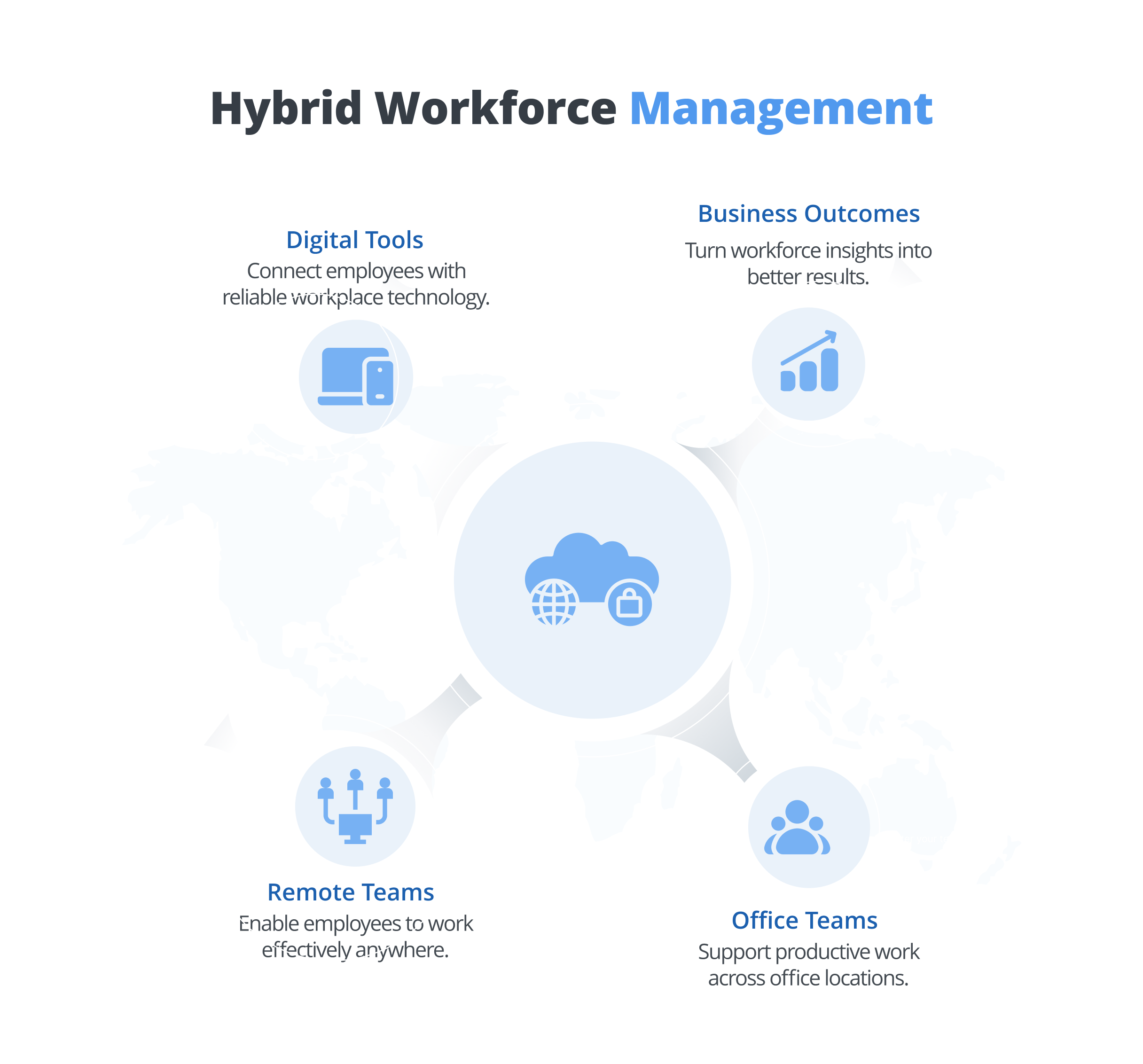
Hybrid workforce management is the practice of supporting, coordinating, and optimising employees who work across different locations, including offices, homes, client sites, and remote environments.
Rather than focusing on where employees work, hybrid workforce management focuses on providing:
- Consistent employee experiences
- Reliable technology
- Workplace collaboration
- Workforce insights
- Operational efficiency
- Better business outcomes
The goal is to ensure every employee has the resources and support needed to perform effectively, regardless of their work location.
Why hybrid work is transforming workforce management
Managing hybrid teams requires a different approach from traditional workforce management.
Organisations must balance flexibility with productivity while ensuring employees remain connected to business processes and digital resources.
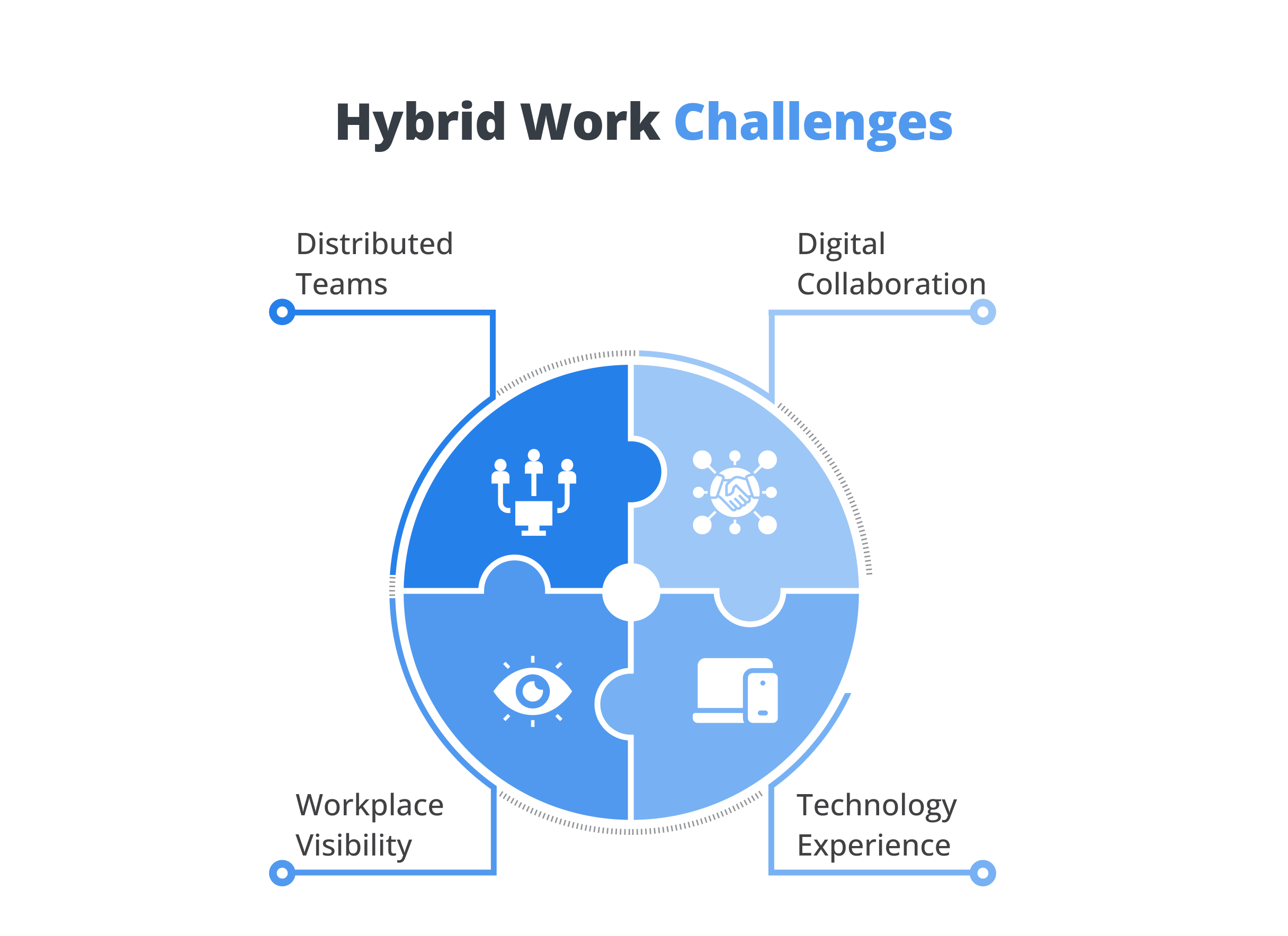
Some common challenges include:
- Inconsistent employee experiences
- Limited visibility into workplace trends
- Technology-related disruptions
- Collaboration across distributed teams
- Resource planning across multiple locations
- Maintaining operational consistency
Modern workforce management solutions help organisations address these challenges through workplace intelligence and actionable insights.
How hybrid work is changing workforce management
Hybrid work is encouraging organisations to rethink how they manage people, technology, and workplace operations.
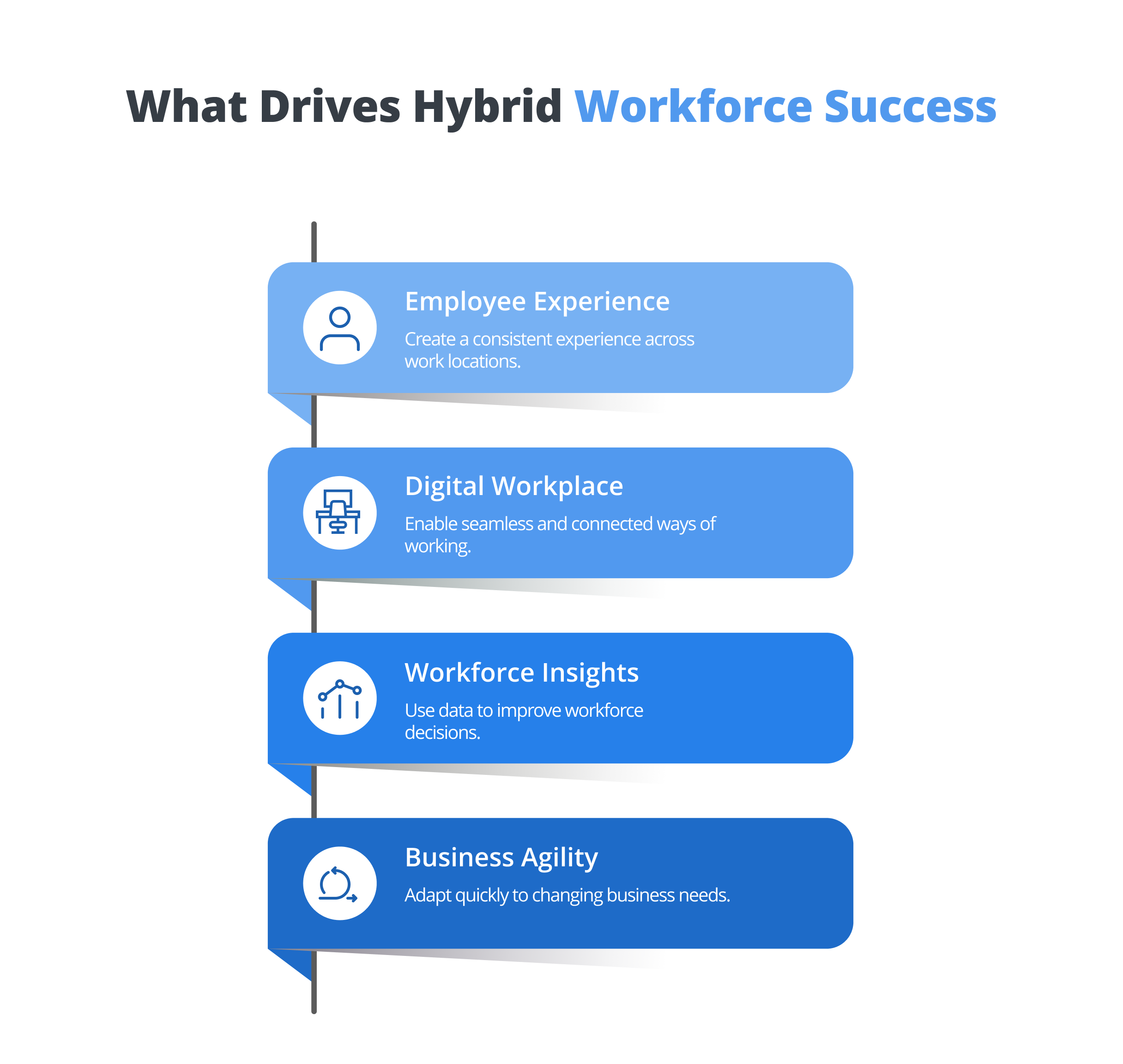
Employee experience takes priority
Successful hybrid workplaces focus on creating a consistent experience for employees, regardless of where they work.
Benefits
- Better engagement
- Improved workplace satisfaction
Technology becomes the workplace
Employees rely on digital tools, business applications, and connected devices throughout the workday. Organisations need reliable technology that supports seamless collaboration.
Benefits
- Better digital experience
- Improved work continuity
Workforce insights drive better decisions
Understanding workplace trends helps organisations improve resource planning, technology investments, and employee support.
Benefits
- Better planning
- Smarter decisions
Collaboration extends beyond the office
Modern workplaces depend on connected teams rather than physical proximity. Digital collaboration tools help employees work together more effectively.
Benefits
- Improved teamwork
- Faster communication
Workplace flexibility supports business growth
Hybrid work enables organisations to adapt more easily to changing business requirements while supporting employee flexibility.
Benefits
- Greater agility
- Improved scalability
Data supports continuous improvement
Organisations can continuously improve workplace experiences by understanding workforce trends and operational patterns.
Benefits
- Better resource utilisation
- Ongoing optimisation
Traditional workforce management vs hybrid workforce management
| Traditional Workforce Management | Hybrid Workforce Management |
|---|---|
| Office-focused operations | Supports office, remote, and hybrid teams |
| Limited workplace flexibility | Flexible work environments |
| Separate management tools | Unified workforce platform |
| Manual reporting | Interactive dashboards and insights |
| Reactive workplace planning | Data-driven workforce planning |
| Location-centric approach | Employee experience-centric approach |
| Static work models | Adaptive and scalable workforce strategies |
Modern workforce management is centred on enabling employees rather than managing locations.
Benefits of hybrid workforce management
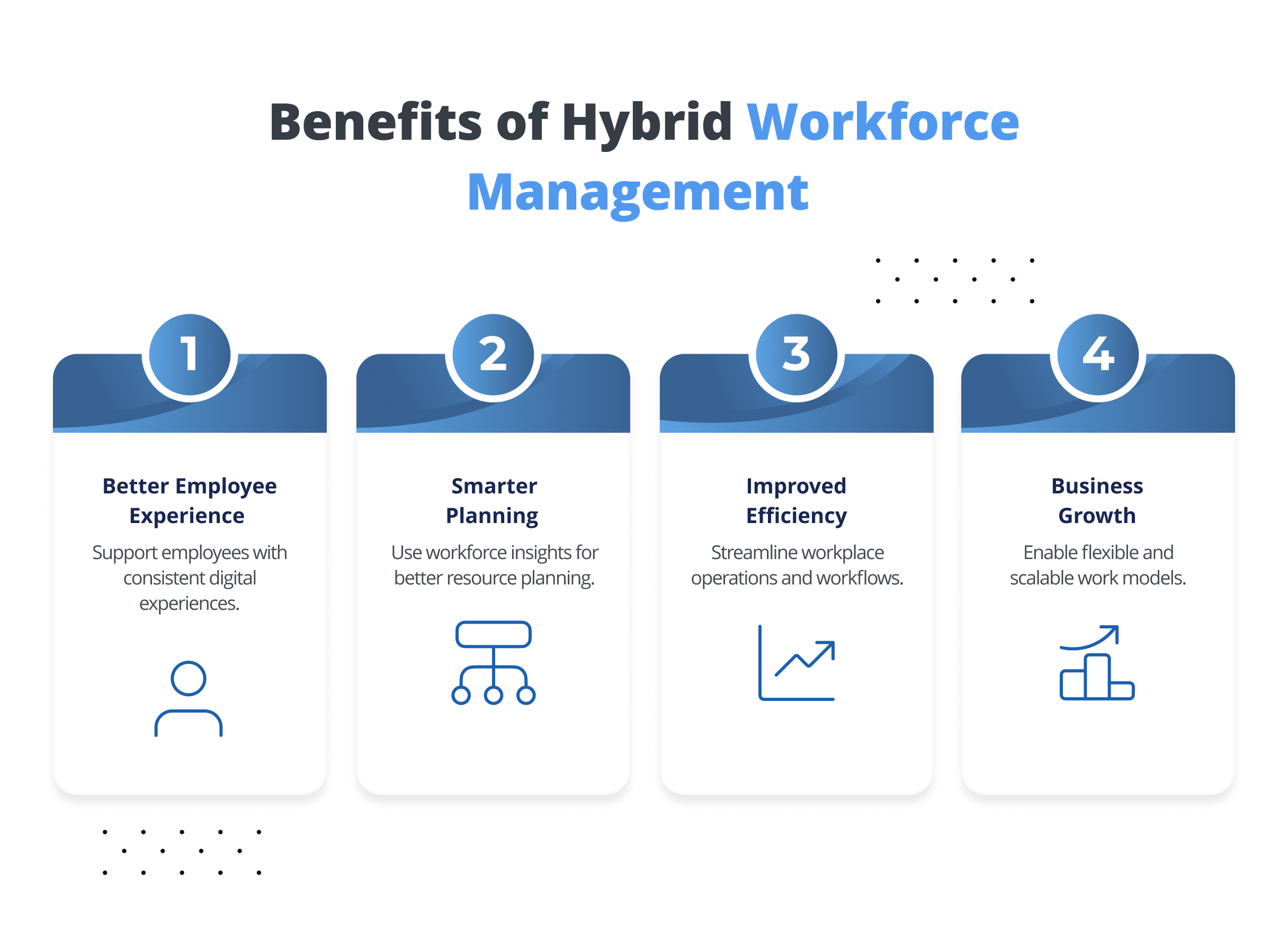
Organisations that embrace hybrid workforce management can create better experiences for employees while improving operational performance.
Best practices for managing a hybrid workforce
Organisations can maximise the benefits of hybrid work by following a few simple practices:
- Create consistent digital workplace experiences
- Equip employees with reliable technology
- Encourage seamless collaboration across teams
- Use workplace insights to support decision-making
- Continuously improve workflows and employee experiences
- Standardise processes across all work locations
These practices help businesses create a more connected, productive, and flexible workplace.
Why choose ProWatch for hybrid workforce management?
Managing a hybrid workforce requires more than communication tools. Organisations need meaningful insights into their digital workplace to improve employee experiences and operational efficiency continuously.
ProWatch by CATS4U is a workforce productivity and digital workplace intelligence platform designed to help organisations create connected, efficient, and productive hybrid work environments.
By bringing together workforce insights, device health visibility, application usage insights, and workplace analytics, ProWatch enables organisations to make informed decisions that improve both employee experience and business performance.
Key features of ProWatch:
- Workforce productivity insights
- Digital workplace analytics
- Device health visibility
- Application usage insights
- Employee experience dashboards
- Workforce trends and reporting
- Location intelligence
- Centralised analytics
- Automated reporting
- Native integration across the CATS4U suite
Whether employees work from the office, remotely, or in hybrid environments, ProWatch helps organisations improve workplace experiences, optimise digital resources, and support a more productive workforce.
Conclusion
Hybrid work has permanently changed the way organisations operate. Supporting employees across multiple locations requires a new approach to workforce management; one that prioritises employee experience, digital workplace efficiency, and data-driven decision-making.
Rather than focusing solely on where work happens, businesses must create an environment where employees have the tools, support, and insights needed to succeed wherever they are.
With ProWatch, organisations can better understand workplace trends, improve digital experiences, and make informed decisions that help build a more productive, flexible, and future-ready workforce.
Frequently asked questions
Hybrid workforce management is the practice of supporting employees who work across office, remote, and hybrid environments while ensuring consistent experiences, collaboration, and operational efficiency.
Hybrid work requires organisations to rethink how they support employees, provide technology, encourage collaboration, and improve workplace experiences across different work locations.
Some key benefits include:
- Better employee experience
- Greater workplace flexibility
- Improved operational efficiency
- Better collaboration
- Smarter workforce planning
- Increased business agility
Common challenges include:
- Distributed teams
- Technology consistency
- Collaboration
- Workplace visibility
- Resource planning
- Employee engagement
Businesses can improve hybrid workforce management by creating consistent digital workplace experiences, supporting collaboration, using workforce insights, and continuously improving business processes.
ProWatch provides workforce productivity insights, digital workplace analytics, employee experience dashboards, device health visibility, and workplace intelligence that help organisations improve hybrid work experiences and make informed operational decisions.
