


Artificial Intelligence has been changing business operations for years, but Generative AI is taking that transformation further.
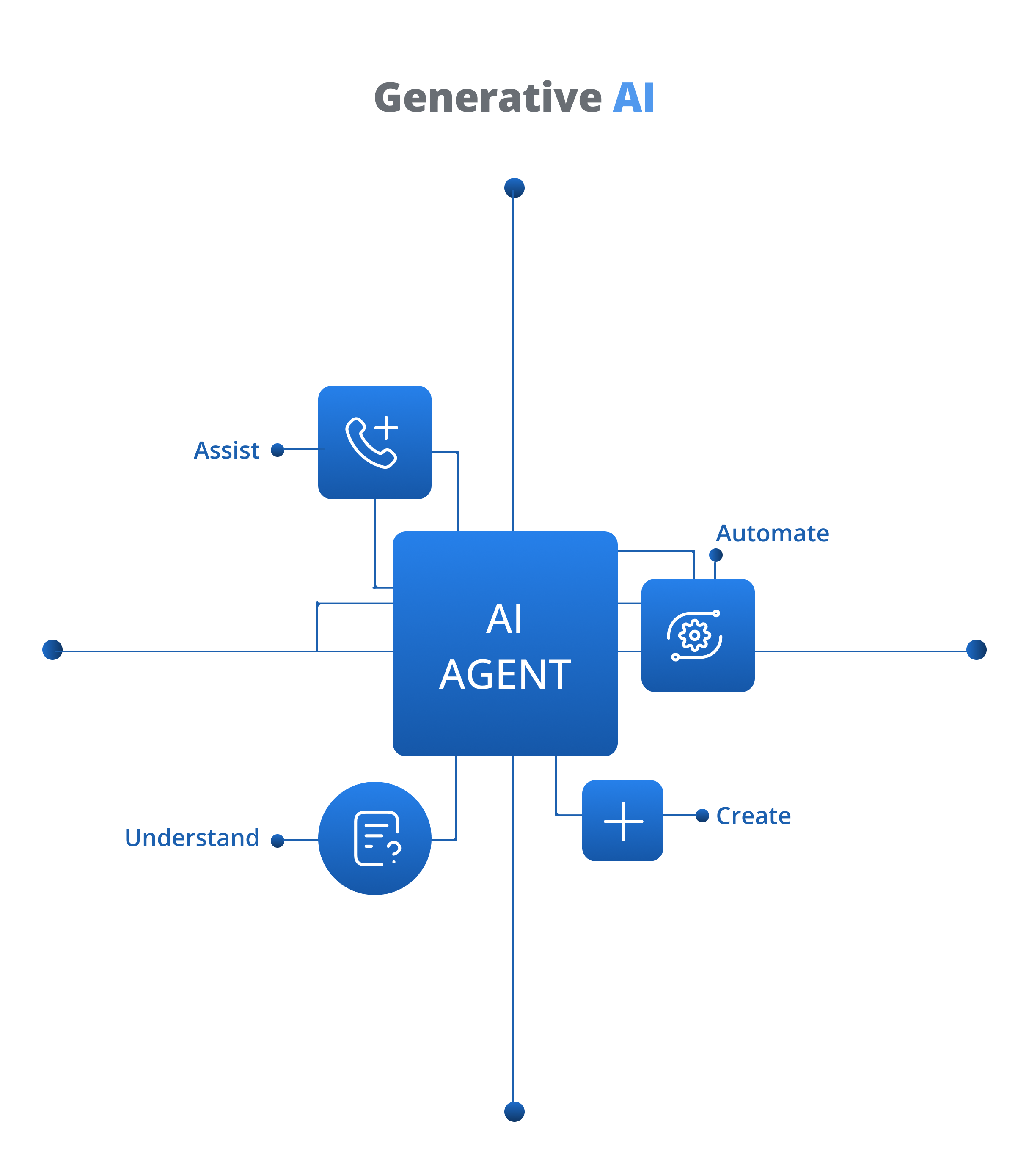
Instead of simply analysing existing information, Generative AI can create new content, summarise information, answer questions, generate ideas, assist with decisions, and interact with users using natural language.
This makes AI easier to use across different parts of an organisation.
Employees can use it to draft documents, summarise meetings, create reports, find information, or assist customers. Businesses can use it to automate workflows, improve service delivery, and connect AI capabilities with existing enterprise systems.
However, the real opportunity isn’t simply adding an AI chatbot to a business.
The bigger opportunity is integrating Generative AI into the way work gets done.
In this blog, we’ll explore how Generative AI is changing business operations, where enterprises can use it, the benefits and challenges involved, and how AI-Craft helps organisations turn Generative AI into practical enterprise solutions.
Generative AI
Generative AI is a type of Artificial Intelligence that can create new content based on instructions and the information available to it.
It can generate:
- Text
- Images
- Summaries
- Reports
- Ideas
- Responses
- Code
- Business content
Unlike traditional software that follows predefined instructions, Generative AI can understand natural language and produce context-aware responses.
This makes it useful for both employee-facing and customer-facing business applications.
Why is generative AI changing business operations?
Traditional business processes often require employees to move between applications, search for information, copy data, prepare documents, and complete repetitive tasks.
Generative AI can simplify many of these activities.
For example, an employee could ask an AI assistant to:
“Summarise the latest customer interactions and prepare a follow-up.”
Instead of manually reviewing multiple records, the AI can process the available information and help prepare the required response.
This changes the role of AI from simply providing information to actively supporting everyday work.
7 ways generative AI is changing the way businesses work
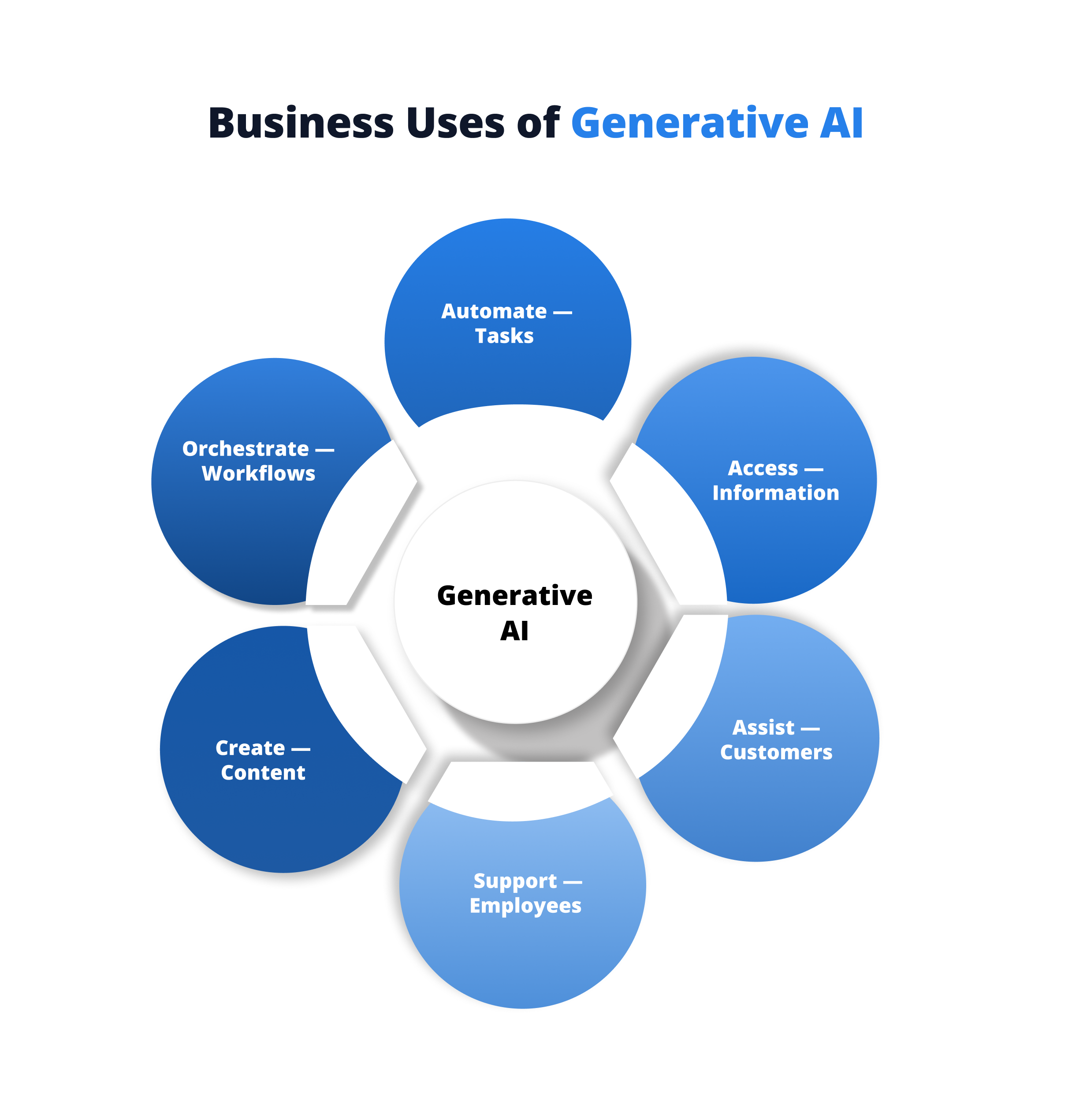
Automating repetitive tasks
Employees spend considerable time on routine activities such as drafting emails, summarising documents, preparing reports, and processing information. Generative AI can assist with these tasks and reduce repetitive manual effort.
Business benefits
- Faster workflows
- More productive teams
Making business information easier to access
Businesses have information spread across documents, applications, databases, and knowledge bases. Generative AI can provide a natural-language interface for accessing this information. Employees can ask questions instead of manually searching through multiple sources.
Business benefits
- Faster information access
- Better employee experience
Improving customer service
Generative AI can help customer service teams respond to common questions, summarise customer history, and prepare relevant responses. AI assistants can also help route more complex requests to the appropriate teams.
Business benefits
- Faster responses
- Consistent service
Supporting employees
Generative AI can act as a digital assistant for employees across different departments. For example:
- HR teams can get assistance with policy questions.
- Finance teams can summarise financial information.
- IT teams can access knowledge articles.
- Sales teams can prepare customer communications.
Business benefits
- Faster assistance
- Better productivity
Improving content creation
Marketing and business teams can use Generative AI to create first drafts of:
- Emails
- Proposals
- Product descriptions
- Reports
- Presentations
- Knowledge articles
Employees can then review, refine, and approve the content.
Business benefits
- Faster content creation
- Reduced manual effort
Making workflows more intelligent
Generative AI can be combined with business workflows to make automation more flexible. Instead of simply following fixed rules, AI can understand requests, analyse information, and determine the next step within a defined workflow.
Business benefits
- Smarter automation
- More flexible processes
Supporting better decisions
Generative AI can summarise large amounts of information and highlight relevant patterns, helping decision-makers understand complex business information more easily. AI doesn’t replace business judgement. Instead, it can provide useful context that supports better decisions.
Business benefits
- Faster analysis
- Better-informed decisions
Generative AI vs traditional automation
Generative AI doesn’t necessarily replace traditional automation. Instead, the two technologies can work together.
| Traditional Automation | Generative AI |
|---|---|
| Follows predefined rules | Understands natural-language instructions |
| Best for structured processes | Handles more flexible interactions |
| Performs defined actions | Generates and interprets content |
| Requires fixed inputs | Can work with natural-language inputs |
| Predictable workflows | Context-aware assistance |
| Repetitive task automation | Intelligent task assistance |
| Rule-driven | AI-driven |
The strongest enterprise solutions often combine traditional automation with Generative AI.
Automation handles predictable processes, while Generative AI adds intelligence where interpretation and natural language are involved.
Benefits of generative AI for businesses
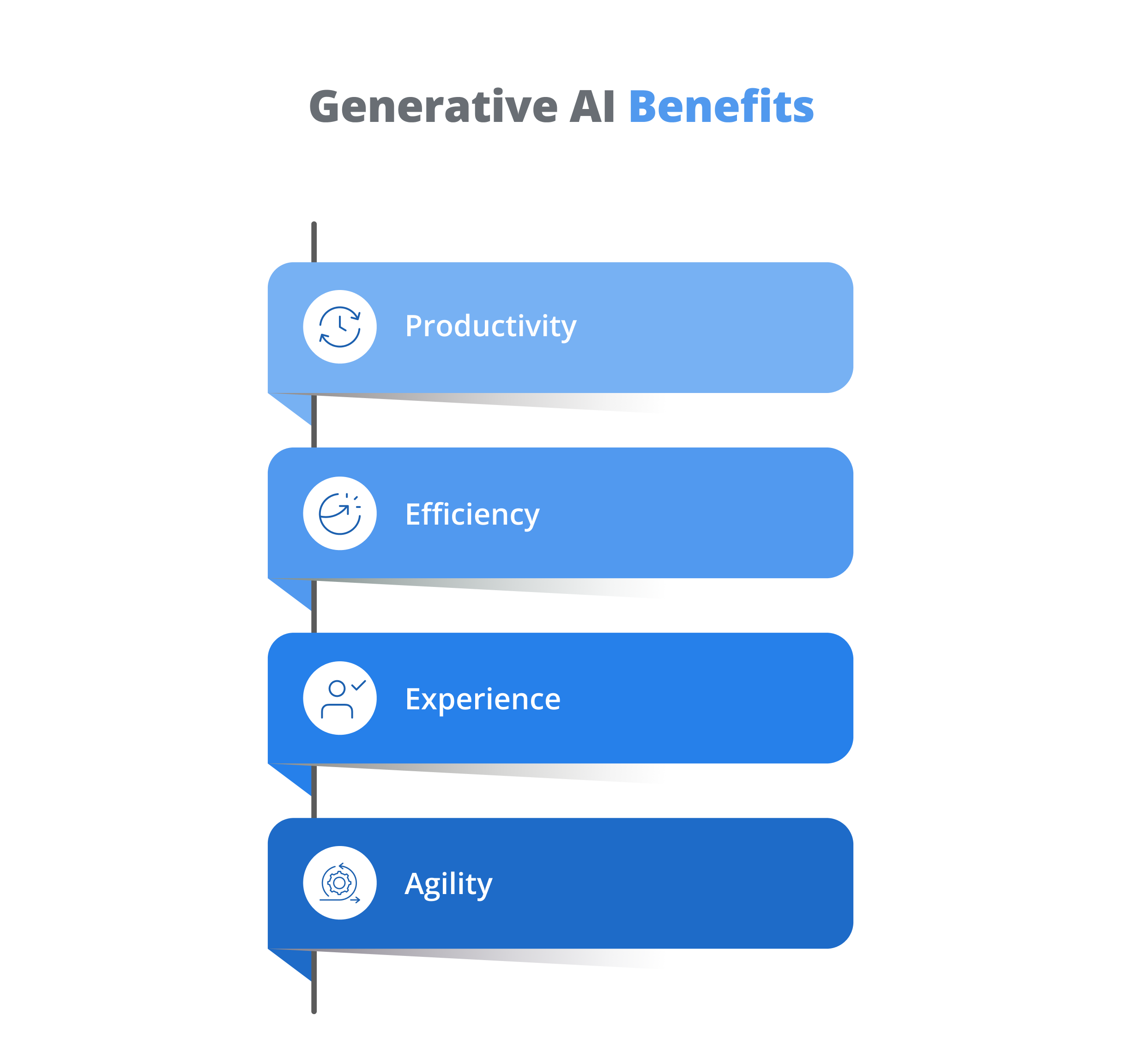
Generative AI can create value across multiple areas of an organisation.
Challenges businesses should consider
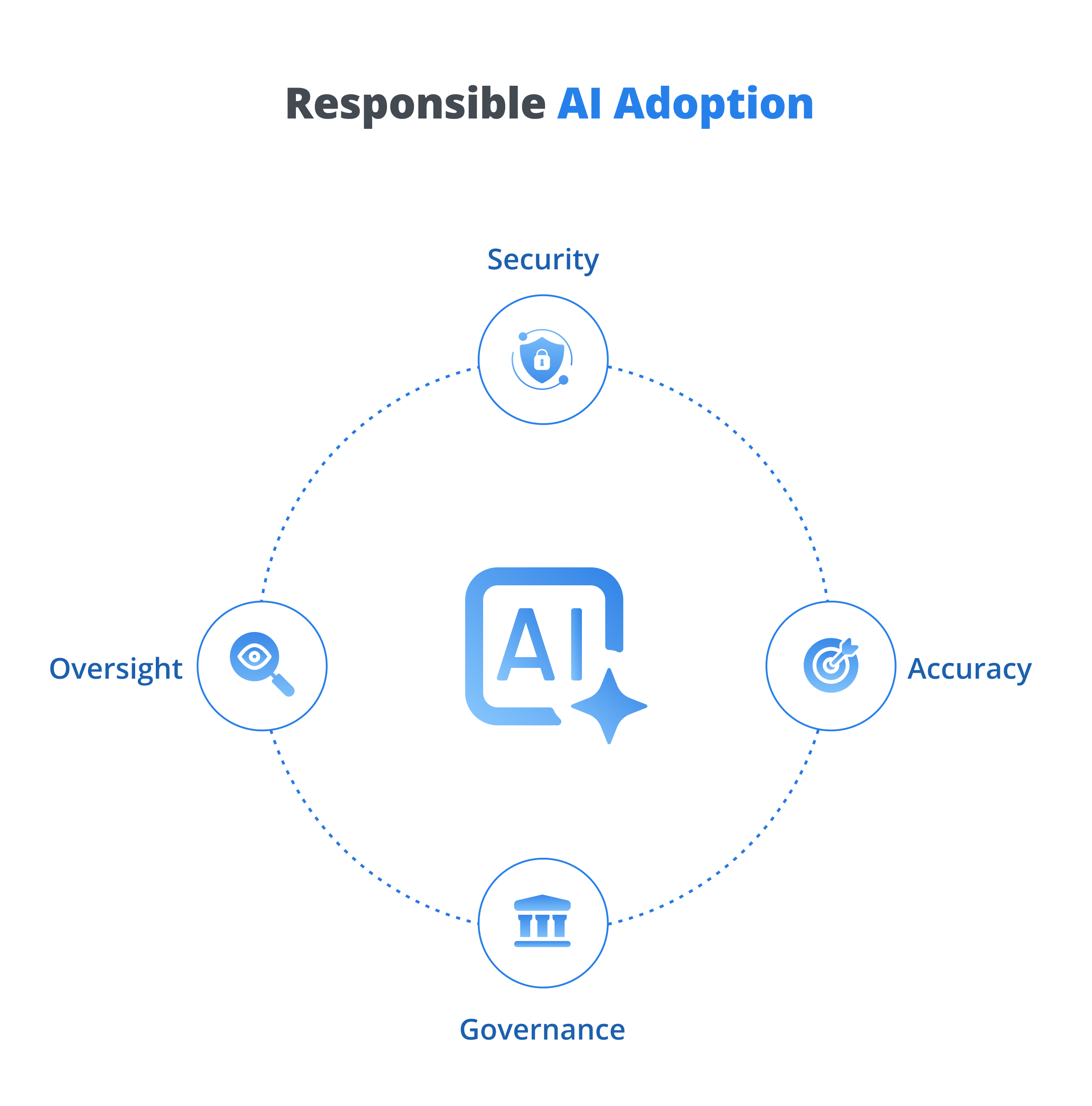
Generative AI offers significant opportunities, but organisations should adopt it responsibly.
Data security
Businesses need to ensure sensitive information is handled appropriately when using AI solutions.
Accuracy
AI-generated responses should be reviewed where accuracy is critical.
Governance
Organisations need clear policies around AI usage, access, data, and business rules.
Integration
AI becomes more useful when it can work with existing enterprise applications and information.
Employee adoption
Employees need clear guidance on how and when to use AI effectively.
Human oversight
Important business decisions should retain appropriate human involvement and accountability.
Best practices for adopting generative AI
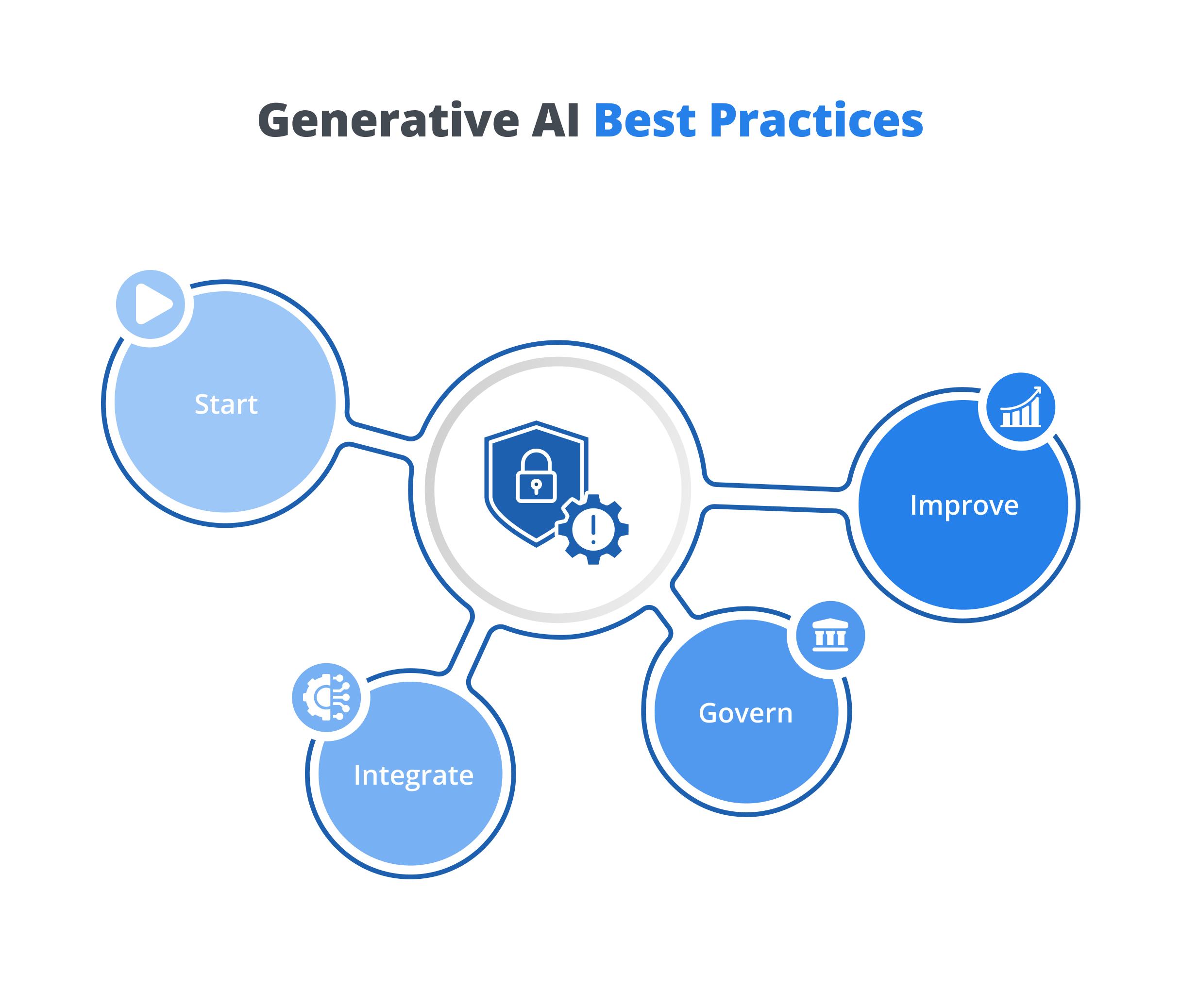
Businesses can create a stronger foundation for Generative AI by following a practical approach.
Start with business problems
Identify processes where AI can solve a genuine business challenge.
Begin with practical use cases
Start with areas such as knowledge assistance, customer service, document processing, and workflow support.
Connect AI to business data
AI becomes more useful when it can access relevant and authorised business information.
Integrate with existing systems
Connect AI solutions with CRM, ERP, ITSM, HR, and other enterprise applications where appropriate.
Establish governance
Define rules for data access, security, human review, and responsible AI usage.
Measure business outcomes
Evaluate whether AI is improving productivity, efficiency, customer experience, or decision-making.
Why choose AI Craft for enterprise generative AI?
The real value of Generative AI comes from connecting it to business processes, not simply using it as a standalone chatbot.
Organisations need a platform that can bring together AI, enterprise data, workflows, integrations, and business rules.
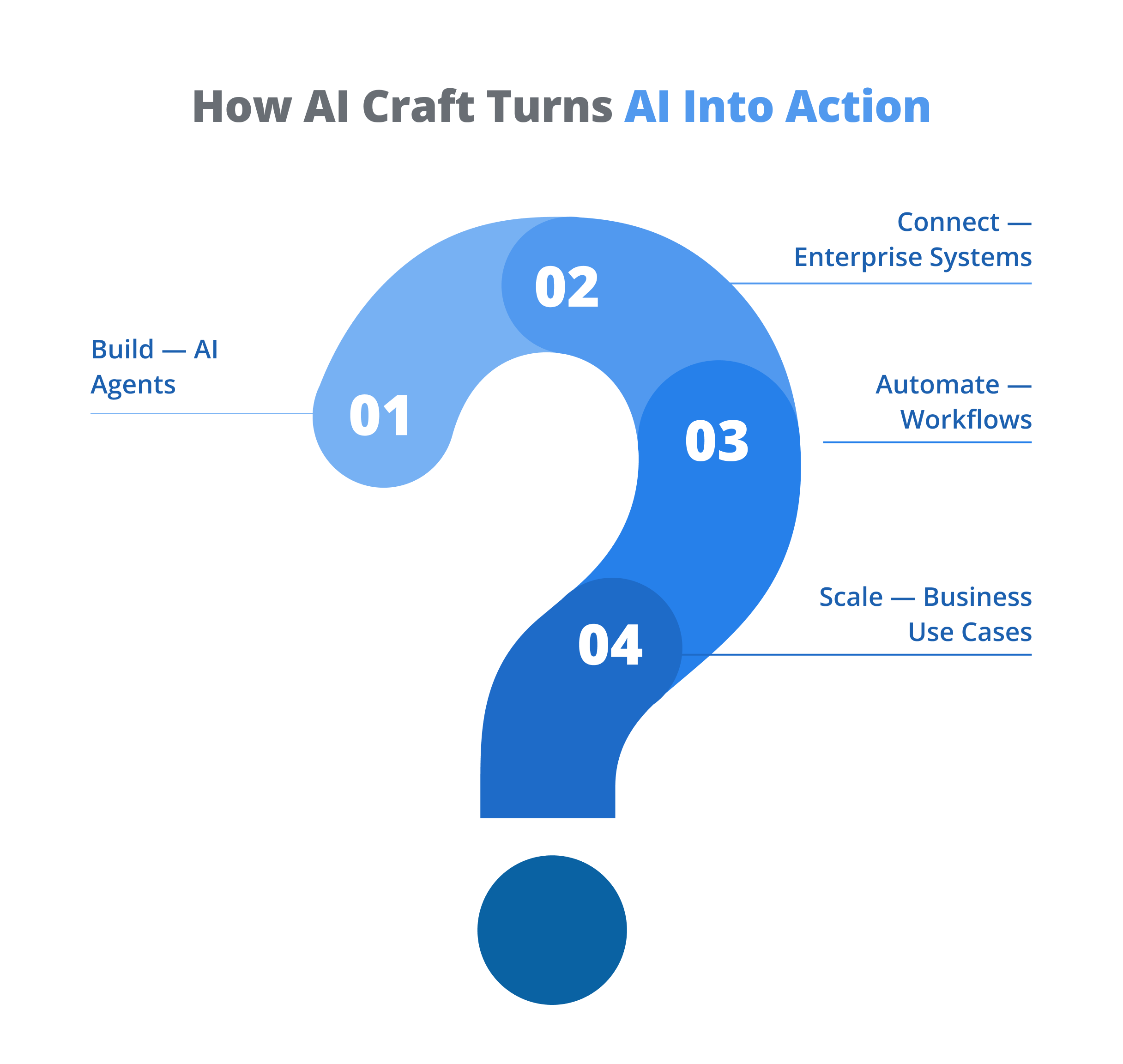
AI Craft by CATS4U is a no-code enterprise AI platform that helps organisations build AI agents, automate workflows, connect business systems, and create AI-powered business solutions.
With AI Craft, organisations can turn Generative AI capabilities into practical applications that support employees, customers, and business operations.
Key features of AI Craft:
- No-code AI agent builder
- Generative AI integration
- AI-powered workflows
- Enterprise system integrations
- Knowledge-based AI agents
- Business rules
- Workflow orchestration
- Prompt and agent management
- AI governance and controls
- Analytics and performance insights
- Native integration across the CATS4U suite
For example, an organisation could create an AI agent that understands a customer request, retrieves relevant information, follows defined business rules, and initiates the appropriate workflow.
This moves Generative AI from simply answering questions to helping complete business processes.
From generative AI to agentic business processes
The next stage of enterprise AI is moving beyond content generation toward AI agents that can perform tasks and participate in workflows.
Imagine an employee submitting a request in natural language.
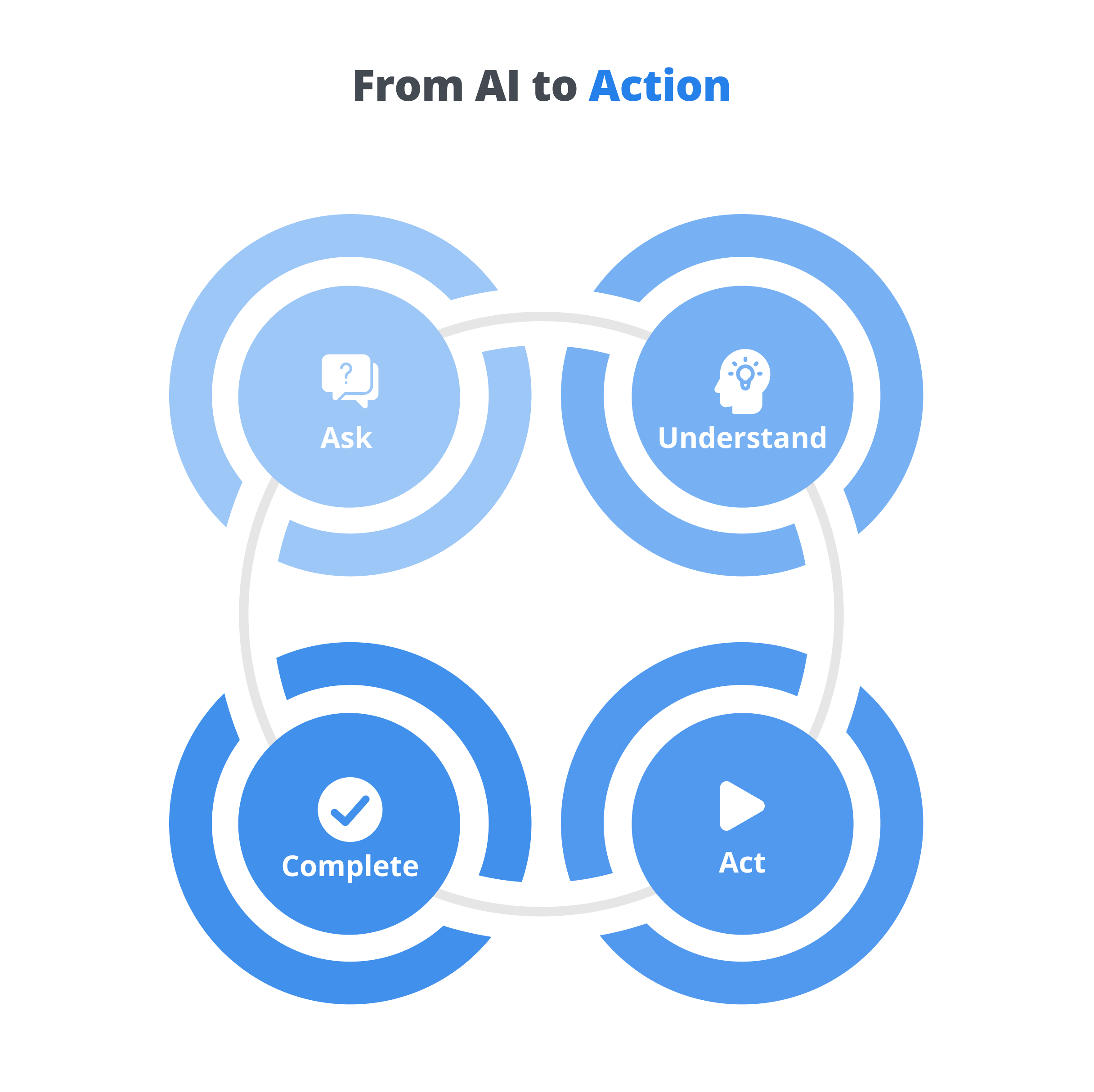
An AI agent could:
- Understand the request.
- Find the relevant information.
- Apply business rules.
- Interact with enterprise systems.
- Initiate the required workflow.
- Return the outcome to the employee.
This combination of Generative AI + AI Agents + Workflow Automation can create a more intelligent way of working.
AI Craft helps organisations bring these capabilities together through a no-code platform.
Conclusion
Generative AI is changing business operations by making technology more conversational, intelligent, and accessible.
It can help employees create content, find information, support customers, analyse business data, and automate repetitive activities. When connected with workflows and enterprise applications, its value extends beyond content generation into everyday business operations.
However, successful adoption requires more than simply introducing an AI tool. Businesses need secure data, strong governance, appropriate human oversight, and meaningful integration with existing systems.
With AI Craft, organisations can move from experimenting with Generative AI to building practical enterprise solutions. Its no-code AI agent platform enables businesses to connect AI with workflows, business systems, and processes, helping teams work smarter while creating a stronger foundation for the future of enterprise AI.
Frequently asked questions
Generative AI is a type of Artificial Intelligence that can create new content such as text, images, summaries, reports, code, and responses based on user instructions and available information.
Generative AI helps businesses automate repetitive work, improve information access, assist employees, support customers, create content, simplify workflows, and analyse business information.
Yes. When integrated with workflows, business rules, and enterprise applications, Generative AI can support processes by understanding requests, retrieving information, and helping initiate or complete defined actions.
Generative AI primarily creates or interprets content, while AI agents can use AI capabilities to understand goals, make decisions, interact with systems, and perform tasks within defined workflows.
Businesses should consider:
- Data security
- AI accuracy
- Governance
- Enterprise integration
- Employee adoption
- Human oversight
AI Craft enables organisations to build no-code AI agents, connect Generative AI with enterprise systems, automate workflows, apply business rules, and create practical AI-powered business solutions without extensive coding.
