


Artificial Intelligence is no longer a futuristic concept; it is becoming an essential part of how modern businesses operate. From automating routine tasks and improving customer experiences to supporting data-driven decisions, AI is helping organisations work smarter and faster.
However, adopting AI is about much more than implementing a new technology. It requires the right strategy, well-defined business goals, quality data, and seamless integration with existing systems.
Many organisations begin their AI journey with enthusiasm but soon encounter challenges such as disconnected data, complex implementation, employee adoption, and governance concerns. Without a clear roadmap, AI initiatives can become difficult to scale and deliver limited business value.
This is why successful enterprises approach AI adoption strategically rather than treating it as a standalone technology project.
In this blog, we'll explore the common challenges businesses face during AI adoption, the best practices for successful implementation, and how AI Craft helps organisations build and deploy enterprise AI solutions with confidence.
What does AI adoption mean?
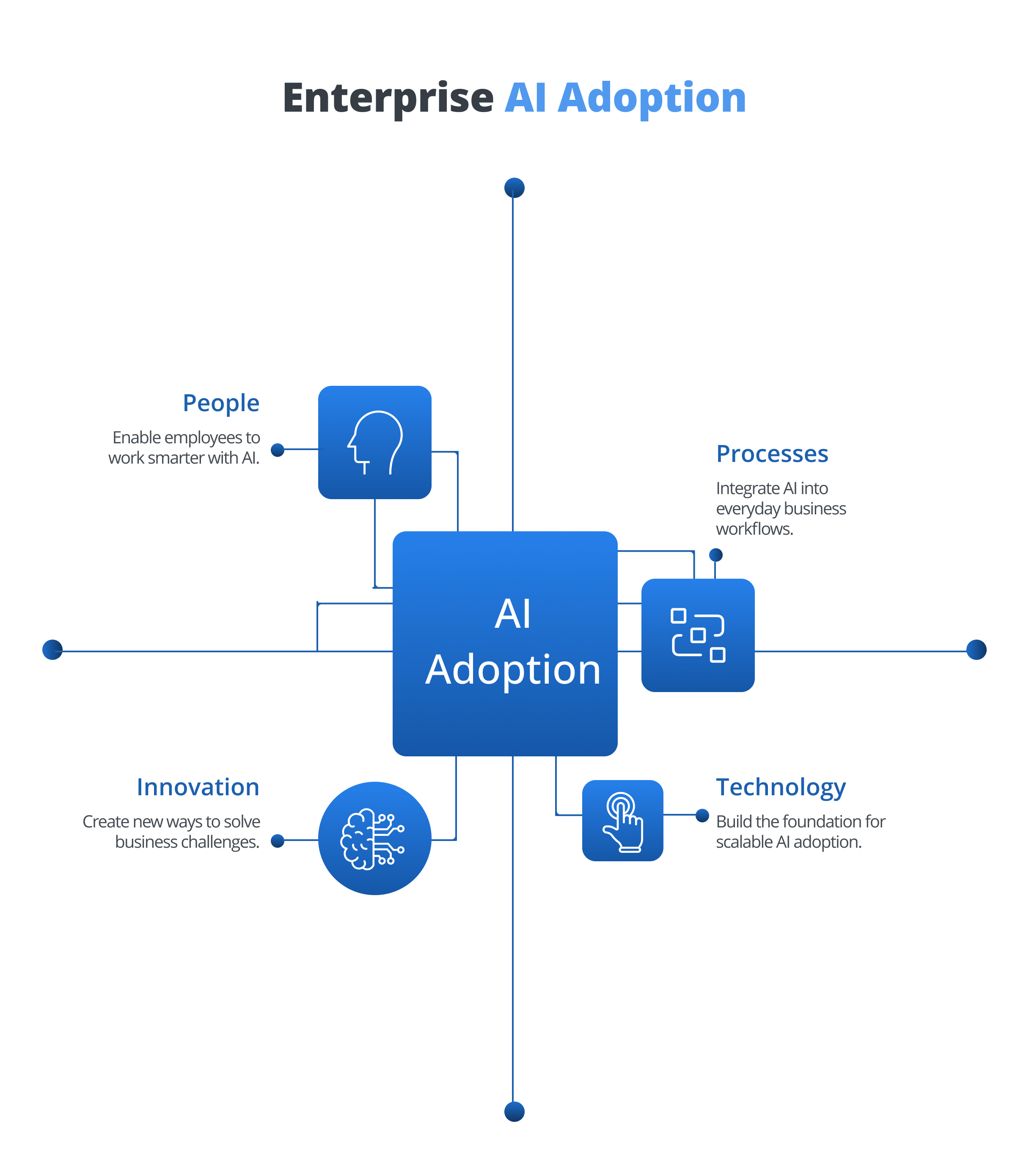
AI adoption refers to the process of integrating Artificial Intelligence into business operations to improve efficiency, automate processes, and support better decision-making.
Rather than replacing existing systems, AI works alongside them to enhance business processes and enable intelligent automation.
AI adoption can include:
- AI agents
- Workflow automation
- Customer support
- Knowledge assistants
- Process automation
- Business analytics
- Intelligent decision support
- Enterprise integrations
Successful AI adoption focuses on solving real business challenges while delivering measurable value.
Why are enterprises investing in AI?
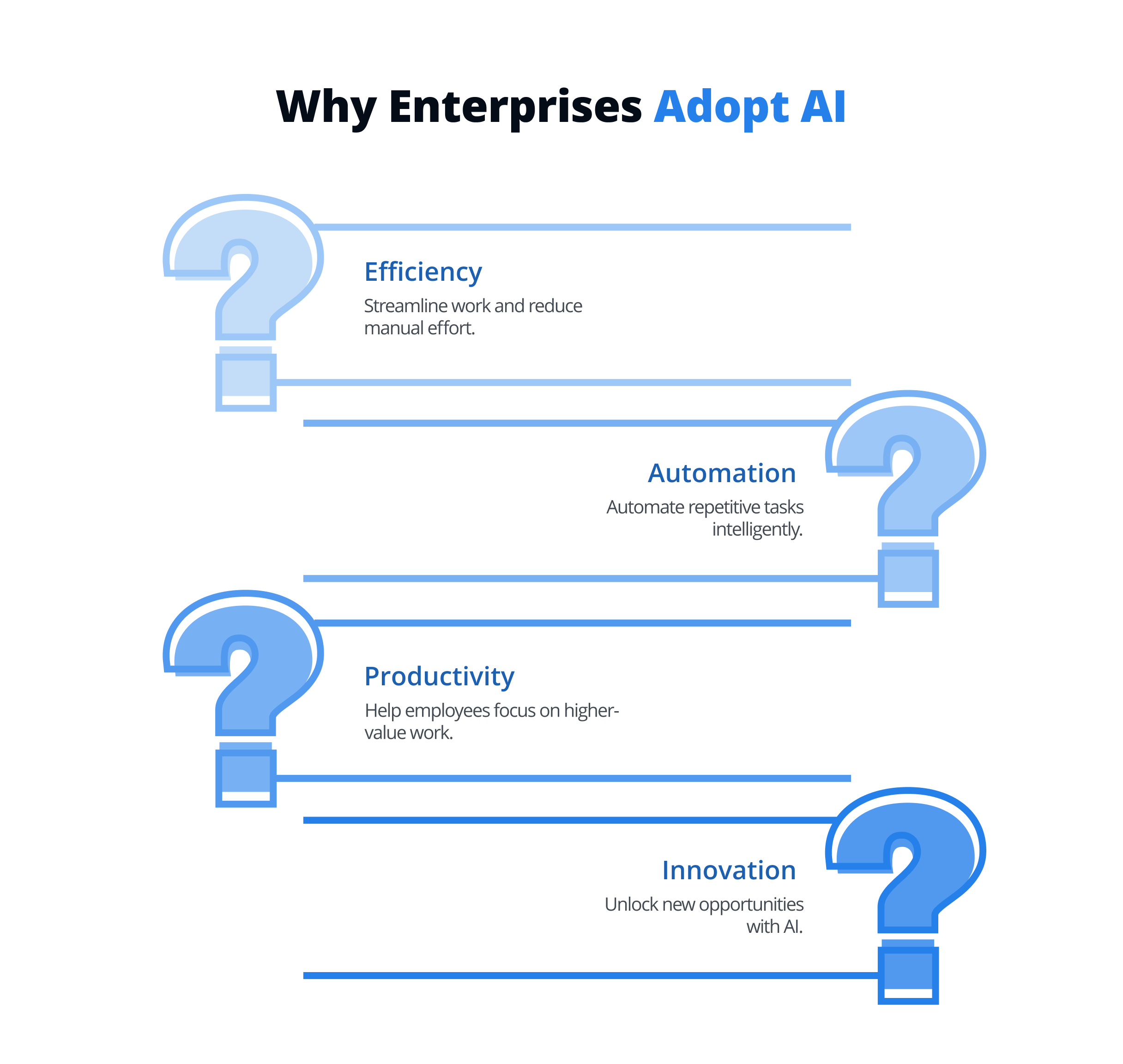
Businesses are increasingly adopting AI to improve operations and remain competitive in a rapidly evolving digital landscape.
AI enables organisations to:
- Automate repetitive work
- Improve employee productivity
- Enhance customer experiences
- Support faster decision-making
- Simplify complex workflows
- Improve operational efficiency
When implemented correctly, AI becomes a valuable business capability rather than simply another technology investment.
Common challenges in AI adoption
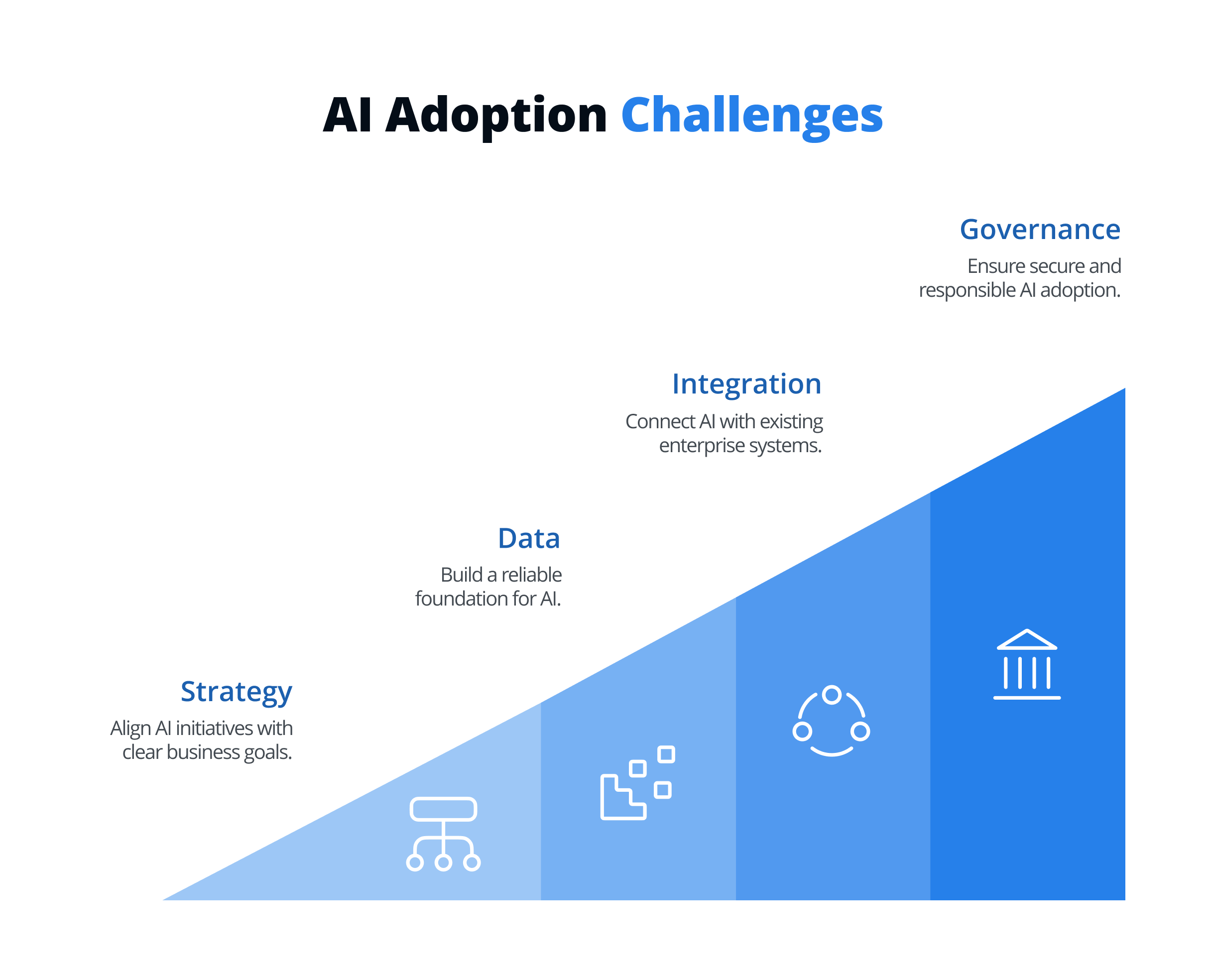
While the opportunities are significant, AI implementation also comes with challenges that organisations should address early.
Unclear business objectives
Many AI initiatives begin without clearly identifying the business problem they are intended to solve. Without defined objectives, organisations may struggle to measure success or prioritise AI use cases.
Best practice
Start with business goals rather than technology.
Data readiness
AI depends on accurate, reliable, and well-organised data. Disconnected or inconsistent information can reduce the effectiveness of AI solutions.
Best practice
Create a strong data foundation before implementing AI.
Integration with existing systems
AI delivers greater value when it connects with enterprise applications such as CRM, ERP, HRMS, ITSM, and business workflows. Poor integration limits AI's effectiveness.
Best practice
Choose platforms that support seamless enterprise integrations.
Employee adoption
Employees may hesitate to use AI if they do not understand how it supports their work. Successful adoption depends on building trust and providing the right guidance.
Best practice
Position AI as a tool that enhances productivity rather than replacing people.
Governance and security
Enterprises need clear governance policies to ensure AI is used responsibly and securely. This includes access controls, business rules, compliance, and data protection.
Best practice
Establish governance from the beginning of the AI journey.
Scaling AI across the organisation
Many organisations succeed with small AI pilots but struggle to expand AI across multiple departments.
Best practice
Build reusable AI solutions that can scale across the enterprise.
Best practices for successful AI adoption
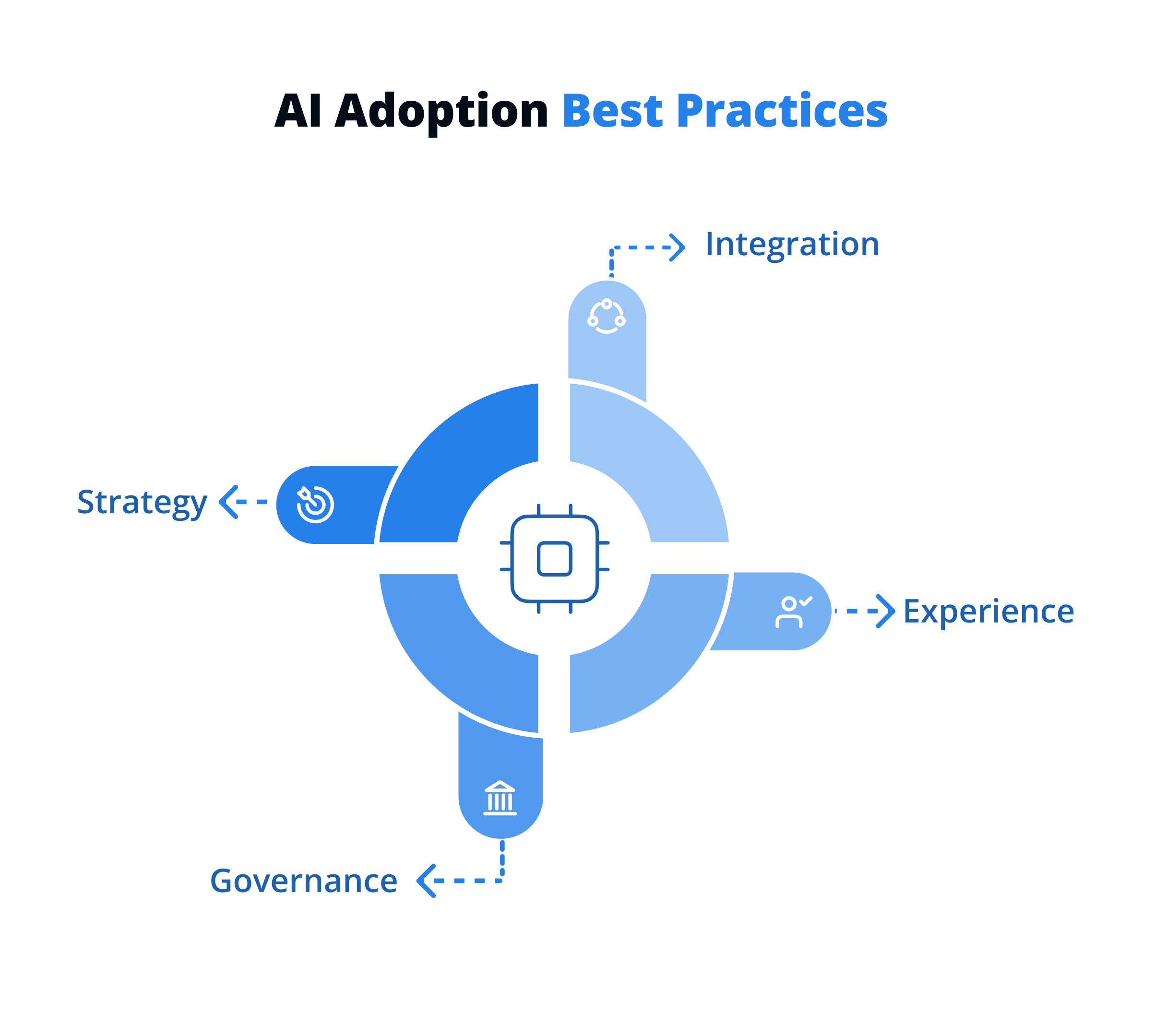
A structured approach helps organisations maximise the value of AI investments.
Traditional automation vs enterprise AI
| Traditional Automation | Enterprise AI |
|---|---|
| Rule-based workflows | Intelligent decision-making |
| Fixed process execution | Context-aware responses |
| Limited adaptability | Learns from interactions |
| Manual rule updates | Dynamic recommendations |
| Focused on repetitive tasks | Supports complex business processes |
| Limited business context | Understands business information |
| Process automation | Intelligent enterprise assistance |
Enterprise AI extends traditional automation by adding intelligence, context, and adaptability.
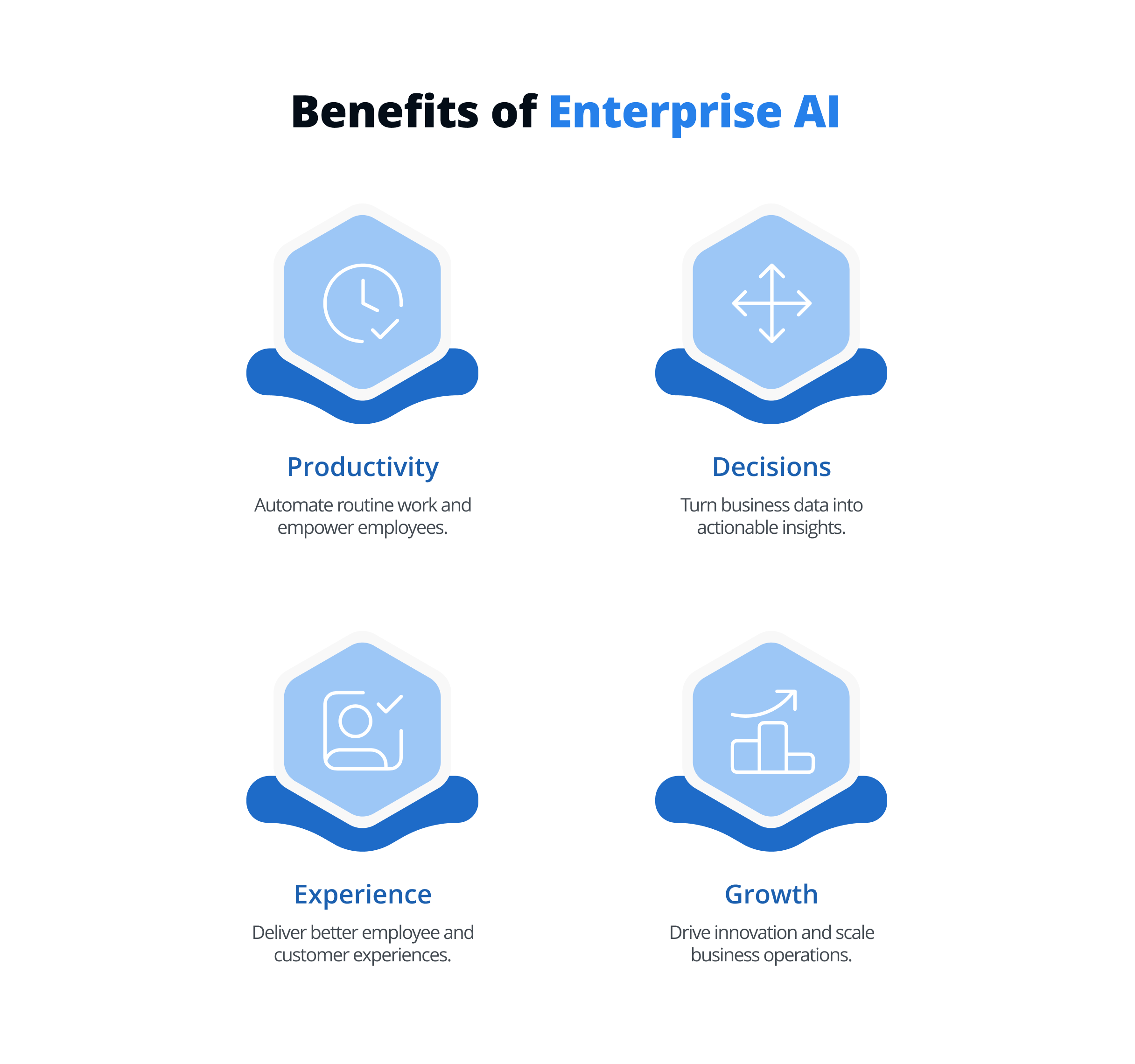
Benefits of successful AI adoption
Organisations that successfully adopt AI can improve performance across multiple business functions.
Why choose AI Craft for enterprise AI?
Adopting AI should not require complex development projects or specialised coding expertise. Businesses need a platform that simplifies AI implementation while providing the flexibility to build enterprise-ready solutions.
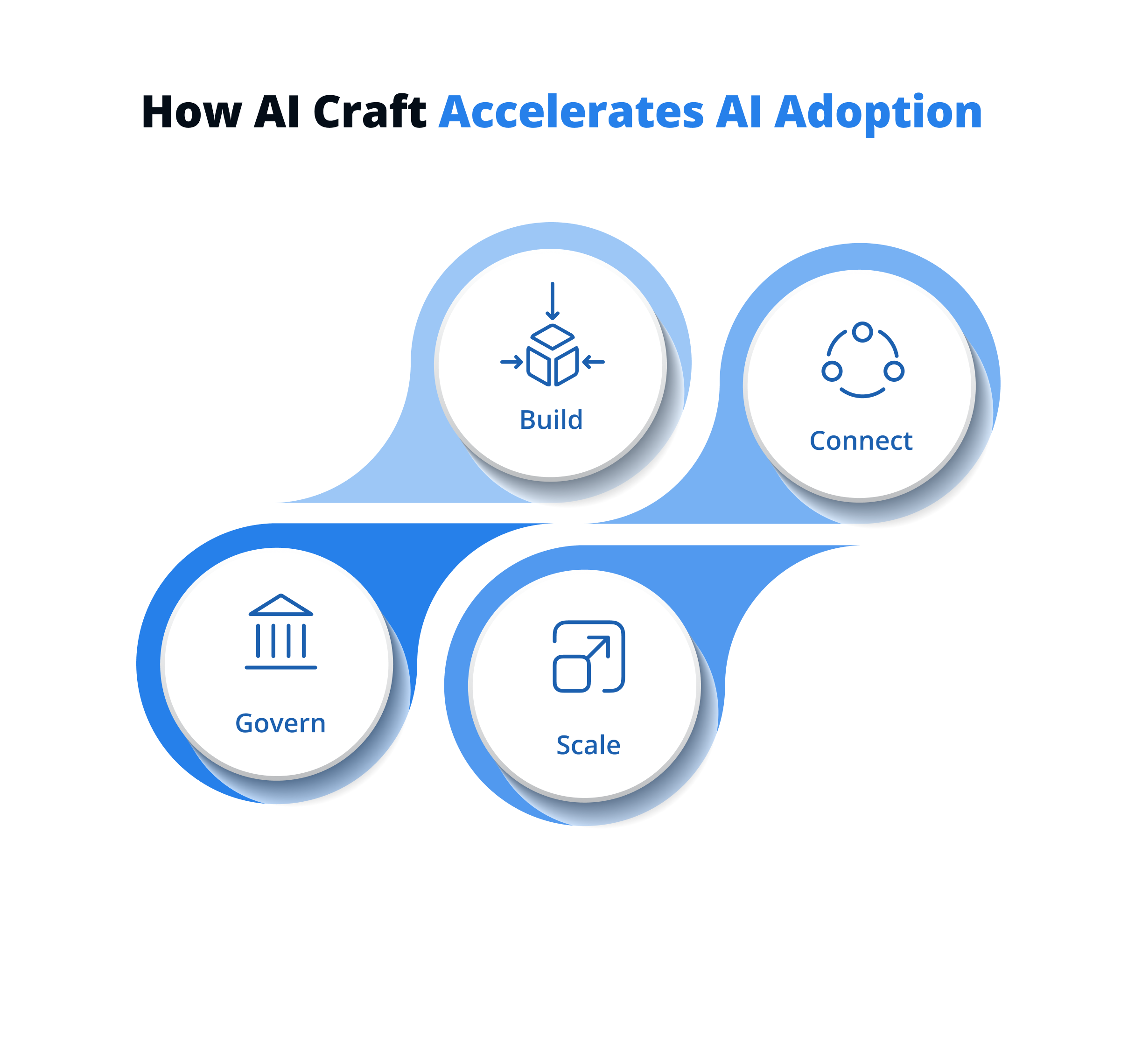
AI Craft by CATS4U is a no-code enterprise AI platform that enables organisations to build, deploy, and govern intelligent AI agents and business workflows from a single platform.
With AI Craft, businesses can rapidly create AI-powered assistants, automate enterprise processes, integrate with existing applications, and manage AI solutions securely without extensive development effort.
Key features of AI Craft:
- No-code AI agent builder
- Enterprise workflow automation
- AI-powered business processes
- Multi-system integrations
- Knowledge-based AI agents
- Business rules engine
- Prompt and agent management
- AI governance and controls
- Analytics and performance insights
- Native integration across the CATS4U suite
Whether you're beginning your AI journey or expanding AI across multiple departments, AI Craft provides the tools needed to accelerate adoption while maintaining governance, scalability, and business control.
Conclusion
AI adoption is no longer simply about introducing new technology; it's about creating smarter, more efficient ways of working across the enterprise.
Organisations that approach AI with clear objectives, strong governance, reliable data, and well-planned integrations are better positioned to achieve long-term success. By focusing on practical business outcomes instead of isolated AI experiments, enterprises can unlock greater productivity, improve customer experiences, and drive continuous innovation.
With AI Craft, businesses can simplify AI adoption by building intelligent AI agents, automating workflows, and governing enterprise AI from a single no-code platform. This enables organisations to adopt AI confidently while creating scalable solutions that grow alongside the business.
Frequently asked questions
AI adoption is the process of integrating Artificial Intelligence into business operations to improve efficiency, automate workflows, support decision-making, and enhance customer and employee experiences.
Some common challenges include:
- Defining business objectives
- Preparing quality data
- Integrating with existing systems
- Employee adoption
- AI governance
- Scaling AI across the organisation
Successful AI adoption involves:
- Starting with clear business goals
- Building on existing systems
- Ensuring data readiness
- Focusing on user experience
- Establishing AI governance
- Continuously improving AI solutions
AI can support:
- Customer service
- Human resources
- Finance
- IT
- Operations
- Sales
- Procurement
AI governance helps organisations ensure responsible AI usage by maintaining security, compliance, transparency, and consistent business policies.
AI Craft is a no-code enterprise AI platform that enables organisations to build, deploy, integrate, and govern AI agents and intelligent business workflows while supporting scalability, security, and enterprise-wide adoption.
