


Billing is one of the most important business functions. Every invoice, payment, and financial record directly impacts cash flow, customer satisfaction, and business growth.
Yet many organisations still rely on spreadsheets, manual calculations, disconnected systems, and repetitive processes to manage billing. While these methods may work in the early stages of a business, they often become difficult to manage as transaction volumes grow.
Manual billing can lead to delays, billing errors, duplicate work, missed payments, and limited visibility into financial performance. Over time, these challenges consume valuable resources and affect both operational efficiency and customer experience.
Modern businesses need a faster, more accurate, and scalable approach.
In this blog, we'll explore why manual billing is becoming a barrier to business growth, the challenges it creates, and how iCollect helps organisations simplify billing through intelligent automation and centralised revenue management.
What is manual billing?
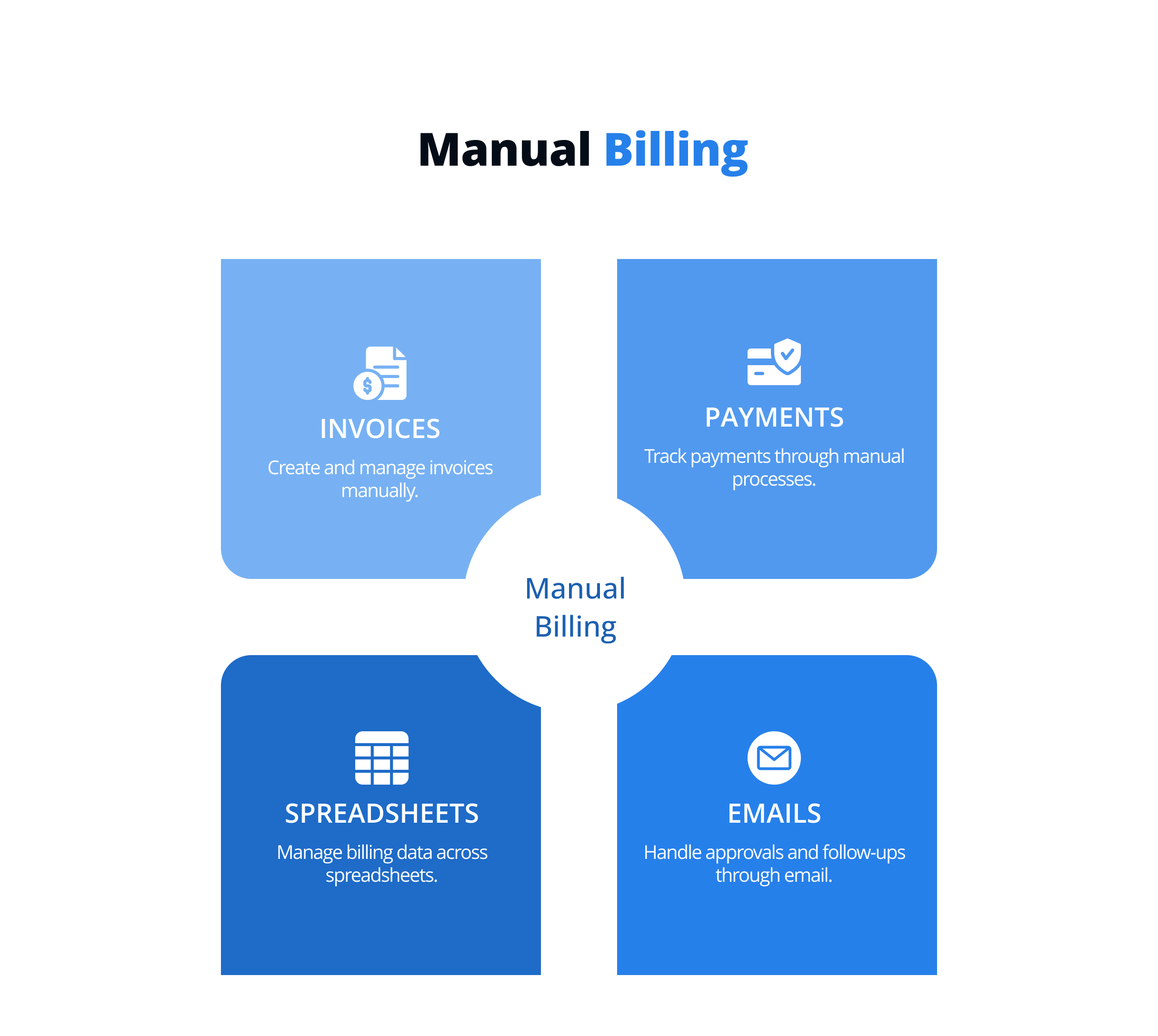
Manual billing is the process of creating invoices, calculating charges, recording payments, and managing billing activities with minimal automation.
Businesses often rely on:
- Spreadsheets
- Manual calculations
- Email-based approvals
- Separate billing systems
- Paper records
- Repetitive data entry
Although these methods may seem manageable initially, they become increasingly complex as the business expands.
Why is manual billing becoming a challenge?
As businesses grow, billing processes become more complex.
Managing multiple customers, pricing models, payment schedules, and financial records manually can create unnecessary operational challenges.
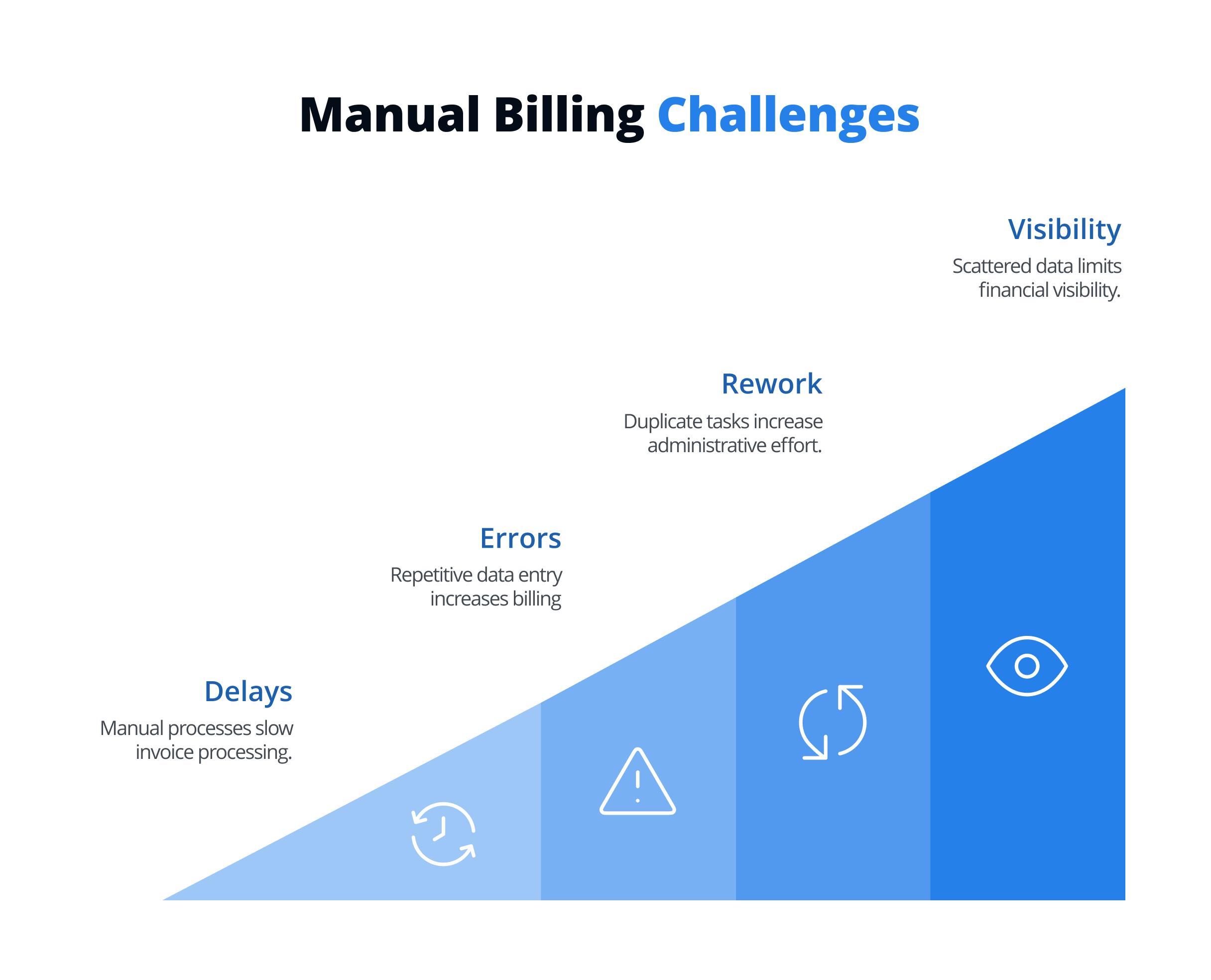
Common issues include:
- Billing delays
- Manual errors
- Duplicate data entry
- Missed payment follow-ups
- Limited financial visibility
- Time-consuming reporting
These challenges affect both finance teams and customers.
How manual billing impacts business growth
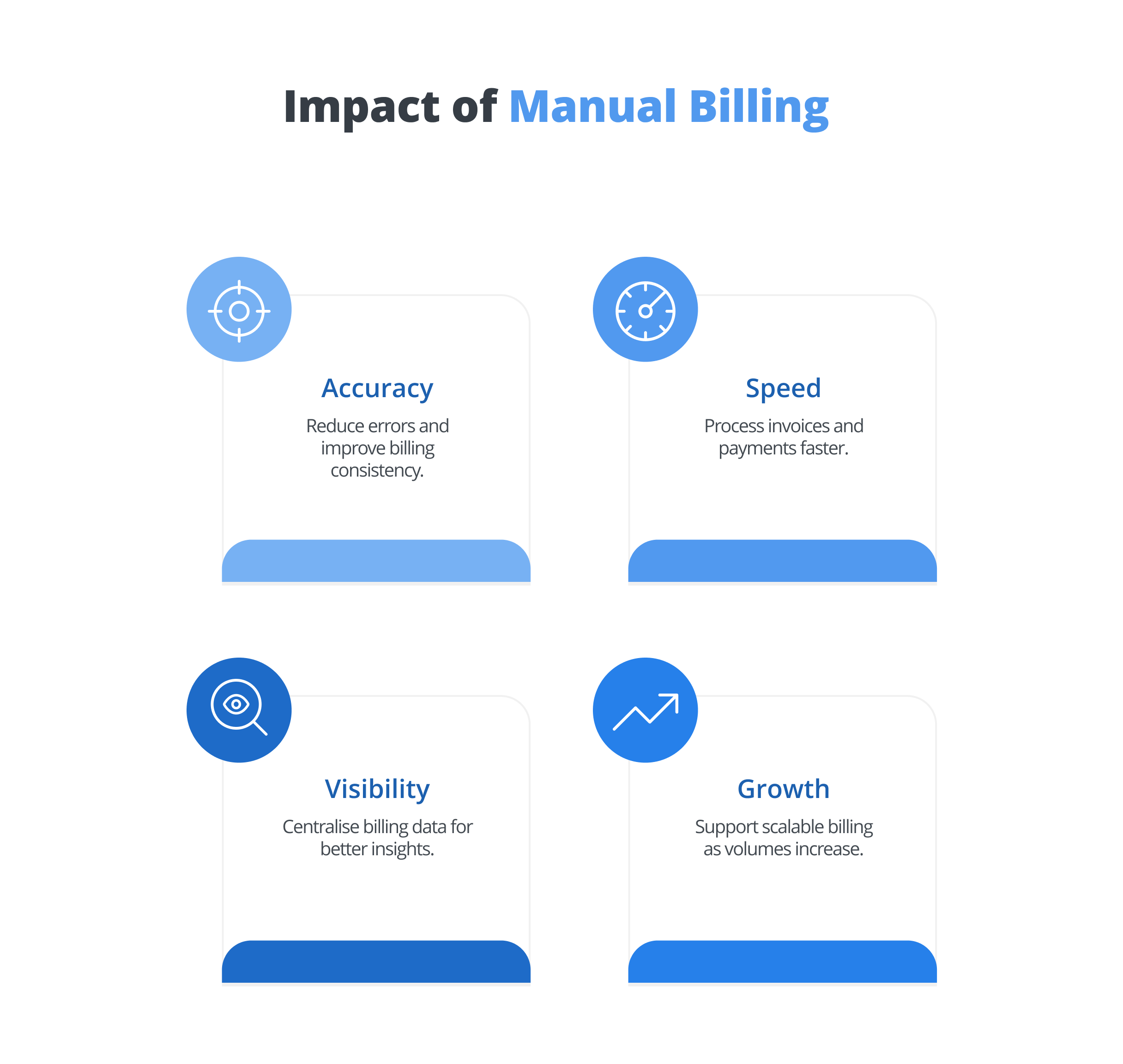
Manual billing affects more than just finance operations—it directly impacts business scalability and customer satisfaction.
Increased billing errors
Manual calculations and repetitive data entry increase the likelihood of mistakes.
Benefits of automation
- Better accuracy
- Consistent billing
Slower invoice processing
Manual invoicing often delays the billing cycle.
Benefits of automation
- Faster invoicing
- Quicker processing
Limited financial visibility
When billing information is spread across different systems, it becomes difficult to understand overall financial performance.
Benefits of automation
- Centralised data
- Better insights
More administrative work
Finance teams spend valuable time on repetitive activities that could be automated.
Benefits of automation
- Reduced manual effort
- Higher productivity
Poor customer experience
Delayed invoices or billing inaccuracies can affect customer confidence and payment experiences.
Benefits of automation
- Timely communication
- Better customer experience
Difficult to scale
As transaction volumes increase, manual processes become increasingly difficult to manage.
Benefits of automation
- Flexible growth
- Scalable operations
Manual billing vs automated billing
The difference between manual and automated billing extends far beyond speed—it affects accuracy, scalability, and customer experience.
| Manual Billing | Automated Billing |
|---|---|
| Spreadsheet-based processes | Centralised billing platform |
| Manual invoice creation | Automated invoice generation |
| Repetitive manual calculations | Automated pricing and billing |
| Separate payment records | Unified payment management |
| Manual reporting and analysis | Real-time financial dashboards |
| Difficult to scale with growth | Supports business growth |
| Higher operational effort | Streamlined billing operations |
Automated billing improves efficiency while helping businesses manage growing financial operations with greater accuracy and speed.
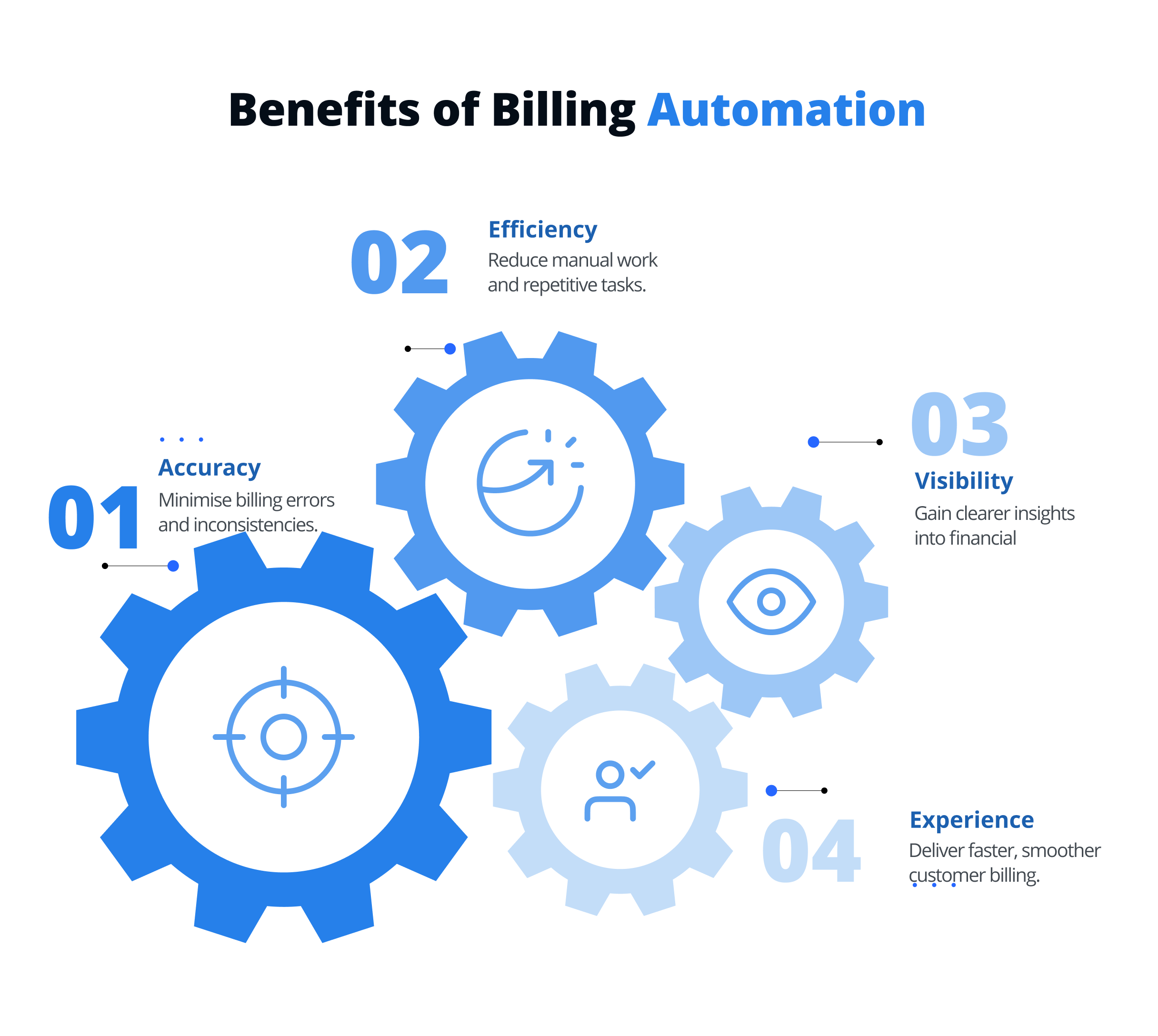
Benefits of billing automation
Modern billing platforms simplify financial operations while improving customer experiences.
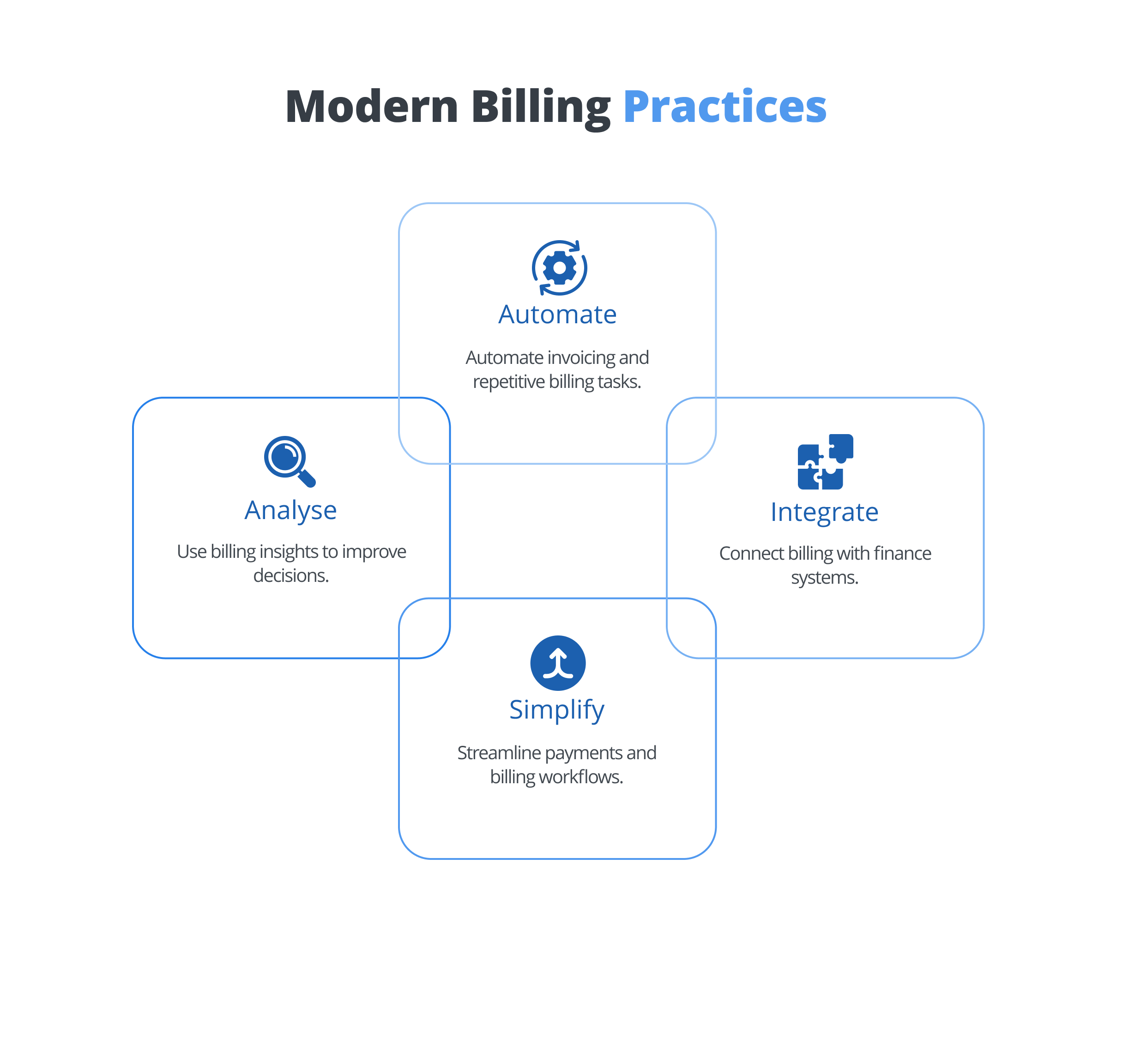
Best practices for modern billing
Businesses can improve billing operations by following a few simple practices:
- Automate invoice generation
- Centralise billing information
- Integrate billing with finance systems
- Simplify payment processes
- Review billing performance regularly
- Use reporting to improve decision-making
These practices help create a more efficient and scalable billing process.
Why choose iCollect for enterprise billing?
Managing billing manually becomes increasingly difficult as businesses grow. Organisations need a solution that centralises billing, automates financial workflows, and provides complete visibility into revenue operations.
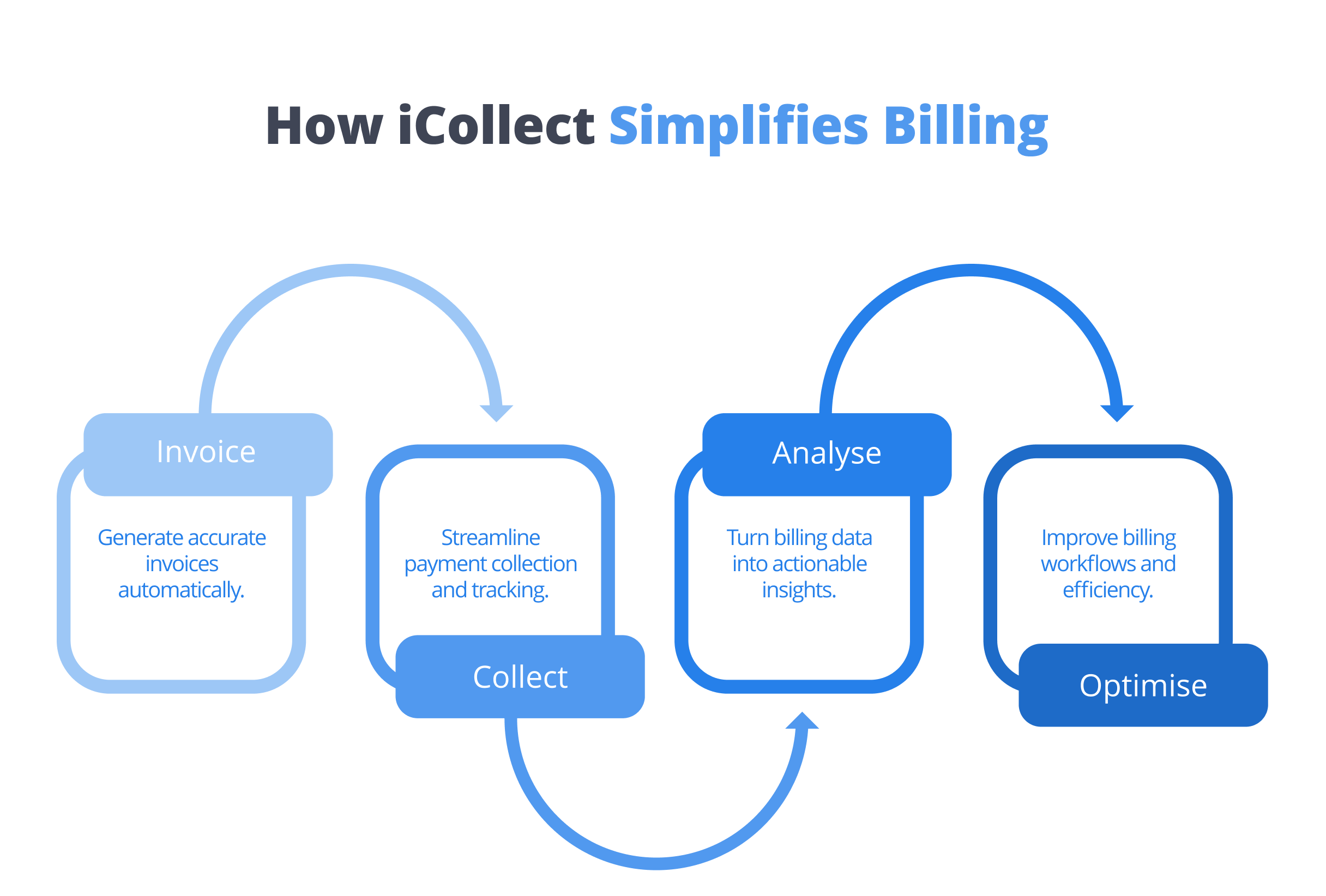
iCollect by CATS4U is an enterprise billing and revenue management platform designed to simplify invoice generation, payment management, and financial operations through intelligent automation.
By bringing together billing, invoicing, payment tracking, reporting, and analytics into a single platform, iCollect helps organisations improve accuracy, reduce manual effort, and deliver a better customer experience.
Key features of iCollect:
- Automated invoice generation
- Revenue management
- Payment management
- Customer billing
- Financial dashboards
- Billing analytics
- Automated payment notifications
- Custom reports
- Workflow automation
- Native integration across the CATS4U suite
Whether you’re managing subscription billing, enterprise invoicing, recurring payments, or complex billing operations, iCollect provides the tools needed to simplify financial processes and support business growth.
Conclusion
Manual billing may work for smaller operations, but as businesses grow, it often creates unnecessary complexity, delays, and operational inefficiencies.
By replacing spreadsheets and repetitive manual processes with automated billing, organisations can improve accuracy, simplify financial operations, and create better experiences for both finance teams and customers.
Modern billing is no longer just about generating invoices; it is about creating connected, efficient revenue processes that support long-term growth.
With iCollect, businesses can automate billing, improve financial visibility, streamline payment management, and build a scalable revenue management process that grows alongside the organisation.
Frequently asked questions
Manual billing is the process of creating invoices, recording payments, and managing billing activities using spreadsheets, manual calculations, or disconnected systems.
Manual billing increases administrative effort and can lead to billing errors, delayed invoices, limited financial visibility, and challenges as transaction volumes grow.
Key benefits include:
- Faster invoicing
- Better billing accuracy
- Improved financial visibility
- Reduced manual work
- Better customer experience
- Easier scalability
Businesses of all sizes can benefit, particularly those managing recurring billing, subscription services, enterprise invoicing, or large customer bases.
Automated billing enables timely invoice delivery, accurate billing information, streamlined payment processes, and consistent customer communication.
iCollect provides automated invoice generation, payment management, revenue analytics, financial dashboards, workflow automation, and reporting through one unified enterprise billing platform.
